
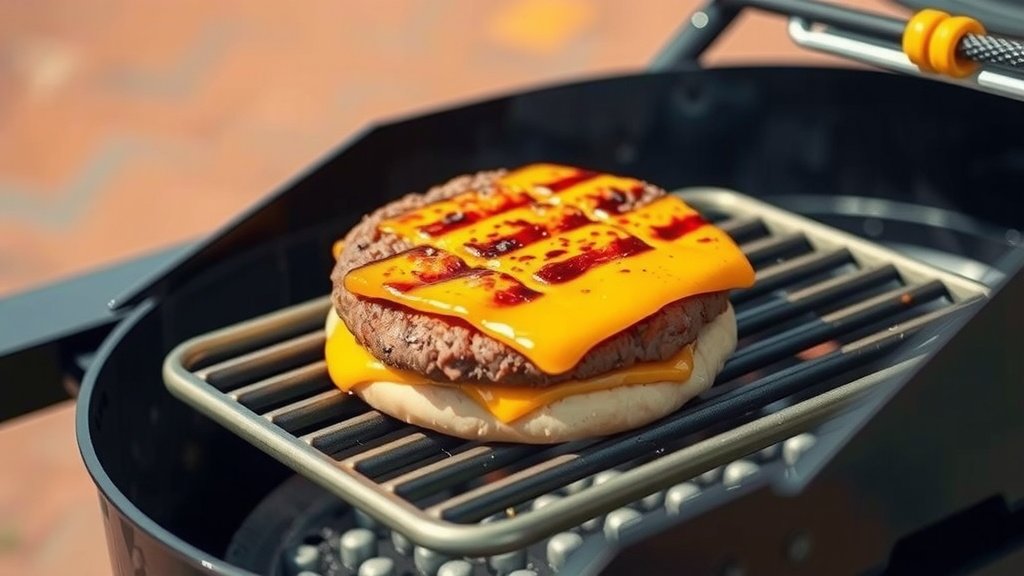
For mouth-watering hamburgers on a pellet grill, aim for a cooking temperature between 350°F to 425°F.
This range allows for a great sear on your patties while ensuring they cook through evenly to a safe internal temperature.
Here’s the quick lowdown on grilling hamburgers on your pellet grill:
- Target 350-425°F for the ideal cooking temperature.
- Always cook your burgers to a safe internal temperature of 160°F (USDA).
- Give your grill plenty of time to preheat before adding patties.
- Flip your burgers just once for a beautiful crust and even cooking.
- Let those delicious burgers rest for a few minutes before serving to keep them juicy.
What Temperature Do You Cook Hamburgers On A Pellet Grill?
You’ll want to cook hamburgers on your pellet grill at 350°F to 425°F. This temperature range creates that fantastic smoky flavor and crust you love.
Why This Temperature Range Works Wonders
Think of it like this: a slightly higher heat, around 375°F to 400°F, gives you a beautiful sear. This sear locks in those amazing juices. We found that cooking within this range helps develop a flavorful crust without drying out the inside of your burger. It’s a sweet spot for both texture and taste.
Getting Your Pellet Grill Ready
Preheating is not just a suggestion; it’s a must! Just like your oven, your pellet grill needs to reach the target temperature before you add the food. This ensures even cooking from the moment your patties hit the grates. Many experts say a good 20-minute preheat is essential for consistent results.
Monitoring Your Grill Temperature
Your pellet grill likely has a digital display, but it’s still smart to have an independent grill thermometer. This helps you double-check the accuracy of your grill’s built-in sensor. Consistency in temperature means consistency in your delicious burgers, which is exactly what we’re aiming for.
Choosing the Right Pellets
Did you know your pellet choice can actually change the flavor of your burger? For hamburgers, many people enjoy using hickory, oak, or competition blend pellets. These types add a robust, smoky taste that really complements beef. Consider what kind of smoke profile you enjoy most!
Patty Thickness: A Game-Changer
The thickness of your hamburger patties directly affects cooking time. Thinner patties, about a quarter-pound, will cook faster than thicker, half-pound burgers. When you’re forming your patties, remember to make them uniformly thick for even cooking. Also, pressing a small dimple in the center helps prevent puffing.
Seasoning Your Burgers for Success
Before they even hit the heat, proper seasoning is key. A simple blend of salt, black pepper, and garlic powder works wonders. Don’t be shy! We found that seasoning just before grilling helps keep the patties moist and maximizes flavor absorption. A little bit of oil on the outside can also help with searing.
The Grilling Process: Step-by-Step
Once your pellet grill is screaming hot at your chosen temperature, it’s time to get cooking! Place your seasoned patties directly on the grates. Close the lid to let the smoke and heat do their magic. Resisting the urge to constantly open the lid is hard, but it’s worth the wait for that perfect burger.
When to Flip Your Hamburgers
You might wonder, “How often should I flip?” For the best results, aim for just one flip. Wait until you see a nice crust forming and the edges start to turn gray. This usually takes about 4-6 minutes per side for a standard 1/3-pound patty. Flipping too much can interfere with that delicious sear.
Doneness and Internal Temperature
This is where food safety comes in! The U.S. Department of Agriculture (USDA) recommends cooking ground beef to an internal temperature of 160°F (71°C) for safety. A meat thermometer is your best friend here. Insert it into the side of the thickest part of the patty for the most accurate reading. Don’t guess – measure!
Here’s a quick guide to internal temperatures for different doneness levels, though always aim for 160°F for ground beef (USDA):
| Doneness Level | Internal Temperature (Approx.) | Appearance |
|---|---|---|
| Medium-Rare | 130-135°F | Warm red center |
| Medium | 135-140°F | Warm pink center |
| Medium-Well | 140-150°F | Slightly pink center |
| Well-Done (Recommended for ground beef) | 160°F+ | No pink, cooked through |
The Importance of Resting Your Burgers
Once your hamburgers reach that perfect 160°F, take them off the grill! But don’t dive in just yet. Let them rest for about 5 minutes on a cutting board or plate. This resting period allows the juices to redistribute throughout the patty, making every bite incredibly moist and flavorful. It’s a small step that makes a huge difference.
Adding Cheese and Toppings
For cheeseburgers, add your favorite slice of cheese during the last 1-2 minutes of cooking. This gives it just enough time to melt beautifully without burning. After you take the burgers off to rest, that’s your cue to get those buns toasted and all your wonderful toppings ready for assembly!
Common Pellet Grill Burger Hurdles
Sometimes, things don’t go exactly as planned. If your burgers are drying out, your grill might be too hot or you’re cooking them for too long. If they lack a good sear, your grill might not be hot enough when the patties go on. Remember, practice makes perfect, and each grill is unique.
Preventing Flare-Ups (and What to Do)
Pellet grills typically have fewer flare-ups than gas grills, but they can still happen, especially with fattier burgers. If you see one, close the lid to smother the flames quickly. Moving the burger to a cooler spot on the grill can also help. Keeping your grill clean reduces grease buildup, which often causes flare-ups.
A Checklist for Perfect Pellet Grill Burgers
Before you fire up that grill, run through this quick checklist:
- Grill is clean and grates are oiled.
- Pellet hopper is full of your favorite flavor.
- Patties are seasoned and uniformly shaped.
- Meat thermometer is handy and working.
- Buns and toppings are ready to go.
Conclusion
Cooking delicious hamburgers on a pellet grill is a truly rewarding experience, offering that distinctive smoky flavor that gas grills just can’t match. By consistently aiming for a grill temperature between 350°F and 425°F and always cooking your patties to a safe 160°F internal temperature, you’re well on your way to burger perfection. Remember to preheat, flip once, and allow for that crucial resting time. You’ve got this!
Frequently Asked Questions
Can I cook frozen burgers on a pellet grill?
While you can cook frozen burgers, it’s generally better to thaw them first. Thawing ensures more even cooking and helps achieve that desirable sear. If you must cook from frozen, expect a longer cooking time and be sure to verify the internal temperature reaches 160°F.
How long does it take to cook a hamburger on a pellet grill?
The cooking time for a hamburger on a pellet grill varies based on thickness and grill temperature. Generally, a 1/3-pound patty cooked at 375-400°F will take about 8-12 minutes total, flipping once. Always use a meat thermometer to confirm it reaches 160°F.
Should I sear my burgers after smoking them?
Some grill masters prefer a “reverse sear” approach, especially for thicker burgers. This involves smoking them at a lower temperature (around 225°F) first to infuse smoke flavor, then finishing with a high-heat sear on the pellet grill (or another grill/pan) to create a crust. For standard burgers, cooking at 350-425°F provides both smoke and sear in one go.
What internal temperature is safe for ground beef burgers?
The United States Department of Agriculture (USDA) states that ground beef, including hamburgers, must reach an internal temperature of 160°F (71°C) to be safe for consumption. This temperature kills harmful bacteria. Always use an accurate meat thermometer to confirm this temperature.
My burgers are dry, what am I doing wrong?
If your burgers are consistently dry, several factors could be at play. You might be cooking them at too high a temperature for too long, or perhaps flipping them too often. Using lean ground beef (less than 80/20 fat ratio) can also lead to drier results. Try a slightly lower temperature, fewer flips, and consider a slightly fattier blend for juicier burgers.
