
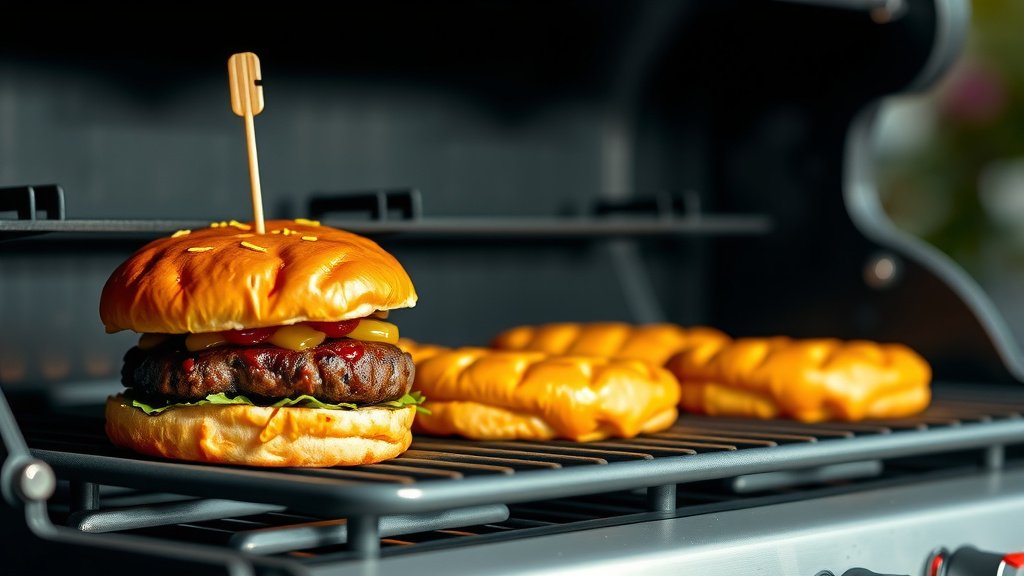
For most standard 1/2-inch thick beef burgers on a gas grill set to medium-high heat (375-400°F), cook for about 3-4 minutes per side for medium doneness.
Always use a meat thermometer to confirm an internal temperature of 160°F for food safety when cooking burgers on a gas grill.
Here’s the quick scoop on grilling perfect burgers:
- Aim for medium-high heat (375-400°F) on your gas grill.
- Standard 1/2-inch patties need about 3-4 minutes per side for medium doneness.
- Always check internal temperature with a thermometer; 160°F is safe for beef.
- Thicker burgers take longer; thinner ones cook faster.
- Rest your burgers briefly off the heat for juicier results.
How Long For Burgers On Gas Grill?
Cooking burgers on a gas grill typically takes 8-12 minutes total for standard 1/2-inch patties to reach a delicious medium doneness at 375-400°F.
This timing can shift based on a few key factors you control. Ready to master your grill? Let’s dive in.
Why Does Timing Matter for Burger Perfection?
Ever bitten into a burger that was dry or undercooked? It’s a real bummer, right?
Getting the timing right means a juicy, flavorful burger every time. It’s not just about taste, it’s about safety too.
Internal Temperature is Your True North
The safest way to know your burger is done is by checking its internal temperature.
For ground beef, the USDA recommends a minimum internal temperature of 160°F. This ensures any harmful bacteria are eliminated.
A meat thermometer is your best friend here. It takes the guesswork out of grilling.
Factors Influencing Your Grill Time
Burger grilling isn’t a one-size-fits-all situation. Many elements affect how long your patties need.
Understanding these helps you adapt to different grilling scenarios.
Burger Thickness and Type of Meat
A thick, half-pound patty will obviously take longer than a thin, quarter-pounder.
Leaner meats, like ground turkey, might cook slightly faster and dry out if overcooked. Beef with an 80/20 fat ratio is often recommended for juiciness.
Grill Temperature and Environment
Your grill’s heat setting plays a huge role. Medium-high (375-400°F) is generally ideal for burgers.
External factors like wind or cold weather can also impact your grill’s temperature, requiring longer cook times.
Your Desired Doneness Level
Some people love a medium-rare burger, while others prefer well-done. This personal preference directly impacts cooking time.
Knowing the internal temperature for each doneness level helps you hit that sweet spot (Mayo Clinic).
Preheating Your Gas Grill: A Non-Negotiable Step
Imagine cooking on a cold pan; it just doesn’t work well. Your grill is no different.
Preheating ensures even cooking and a beautiful sear, preventing your burgers from sticking.
Aim for at least 10-15 minutes of preheating to reach that medium-high target temperature.
The Sweet Spot: General Doneness Guidelines
Here’s a helpful table to guide you on how long for burgers on gas grill, focusing on standard 1/2-inch beef patties:
| Doneness Level | Internal Temperature | Approximate Total Time (minutes) | Appearance/Texture |
|---|---|---|---|
| Rare | 125-130°F | 6-8 | Cool red center |
| Medium-Rare | 130-135°F | 8-9 | Warm red center |
| Medium | 135-140°F | 9-10 | Warm pink center |
| Medium-Well | 140-150°F | 10-11 | Slightly pink center |
| Well-Done | 155-160°F+ | 11-12+ | No pink, firm |
Checking for Doneness: Trust Your Thermometer
Always insert your meat thermometer into the side of the burger, towards the center.
Make sure it doesn’t touch the grill grates. This provides the most accurate reading of the patty’s internal temperature.
Thicker Burgers vs. Thin Patties: Adjusting Your Approach
For thicker burgers (3/4-inch or more), you might need to use a combination of direct and indirect heat.
Sear them over direct high heat for 2-3 minutes per side, then move them to indirect heat to finish cooking through without burning the outside. This method ensures a nice crust and a properly cooked interior (USDA).
Thin patties, on the other hand, cook very quickly, often in just 2-3 minutes per side. Keep a close eye on them!
Tips for Even Cooking and Avoiding Grill Drama
Nobody wants a burger that’s burnt on one side and raw on the other. Here are some tricks.
Flip Once for a Beautiful Crust
Resist the urge to flip your burgers constantly. Flipping only once or twice allows a nice crust to form and helps retain juices.
Many experts agree that flipping too often can interfere with even cooking and browning.
The Importance of Resting Your Burger
Just like a steak, burgers benefit from resting after coming off the grill. This allows the juices to redistribute throughout the patty.
Tent your burgers loosely with foil for 2-5 minutes. You’ll notice a much juicier bite.
Common Burger Grilling Mistakes to Avoid
Steering clear of these pitfalls ensures a better burger experience for everyone.
- Pressing the Patties: Never flatten your burgers with a spatula! You’re just squeezing out all the delicious juices.
- Not Preheating: Cold grates mean sticking and uneven cooking.
- Guessing Doneness: A meat thermometer is inexpensive and prevents undercooked or overcooked burgers.
Adding Cheese: The Perfect Moment
If you love cheeseburgers, add the cheese during the last minute or two of cooking.
Close the grill lid to help it melt perfectly. A perfectly melted slice just completes the experience.
Grilling Frozen Burgers: A Quick Thought
While you can grill burgers from frozen, it’s generally not recommended for the best flavor and texture.
Frozen patties will take about twice as long to cook and often lack the juiciness of fresh burgers. Always thaw if you can!
Your Burger Grilling Checklist
Here’s a quick list to ensure your next grilling session is a success:
- Preheat gas grill to medium-high (375-400°F).
- Form patties of even thickness (1/2-inch is standard).
- Season your burgers generously.
- Grill for 3-4 minutes per side for medium doneness.
- Use a meat thermometer to confirm 160°F internal temperature.
- Add cheese in the last minute or two.
- Rest burgers for 2-5 minutes after grilling.
- Serve immediately on toasted buns with your favorite toppings.
Conclusion
Grilling a perfect burger on your gas grill doesn’t have to be complicated. By understanding the key factors like grill temperature, patty thickness, and most importantly, internal temperature, you’re well on your way.
Remember to preheat, flip once, and always trust your meat thermometer. These simple steps ensure every burger you serve is juicy, safe, and incredibly delicious. Happy grilling!
Can I grill burgers directly from the freezer?
Yes, you can grill burgers directly from the freezer, but it will significantly increase your cooking time. Expect them to take about 1.5 to 2 times longer to cook compared to thawed patties. For best results, it’s always recommended to thaw your burgers beforehand for more even cooking and better texture.
What’s the best way to prevent burgers from sticking to the grill?
To prevent burgers from sticking, ensure your grill grates are clean and well-oiled before preheating. Once preheated to medium-high, the hot grates will help create a natural release. Avoid moving the burgers too soon; let them sear for a few minutes to develop a crust before flipping.
How do I know if my gas grill is hot enough?
Your gas grill is hot enough when it reaches the target temperature, typically 375-400°F for burgers. Most gas grills have a built-in thermometer on the lid. If not, an instant-read grill thermometer can give you an accurate reading. Preheating for 10-15 minutes on medium-high usually does the trick.
Should I press down on my burgers while they cook?
No, you should never press down on your burgers while they cook. Pressing with a spatula squeezes out the precious juices and fat, leading to a dry and less flavorful burger. Allow the burgers to cook undisturbed to retain their moisture and achieve a great crust.
Is it okay to season burgers right before grilling?
Yes, seasoning burgers right before grilling is perfectly fine and often preferred. Salt, pepper, and your favorite spices can be added just before placing them on the hot grates. Some research suggests that salting ground meat too far in advance can draw out moisture, but a quick seasoning right before cooking works well for burgers (NIH).
