
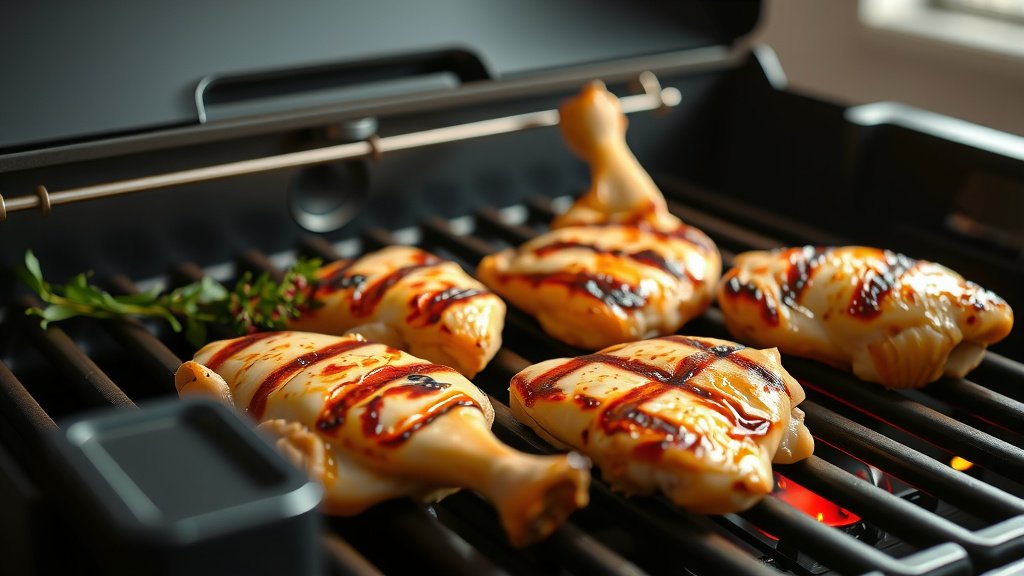
To grill chicken on a gas grill, preheat your grill to medium-high (400-450°F), then set up a two-zone cooking area. Sear the chicken over direct heat for a few minutes per side, then move it to indirect heat to cook through.
Aim for an internal temperature of 165°F (74°C) in the thickest part of the meat to ensure it is safely cooked and juicy.
Here’s a quick overview of how to grill chicken perfectly:
- Choose your chicken cut and prepare it with a marinade or brine.
- Set up your gas grill for two-zone cooking (direct and indirect heat).
- Preheat the grill to the correct temperature, around 400-450°F.
- Sear the chicken over direct heat to get a nice crust and grill marks.
- Finish cooking over indirect heat until it reaches 165°F internal temperature.
- Rest the chicken for 5-10 minutes before serving to keep it juicy.
How To Grill Chicken On A Gas Grill?
Grilling chicken on a gas grill involves balancing high heat for a crispy exterior and lower heat for thorough cooking. You will create a two-zone setup to achieve a perfectly cooked, juicy chicken every time.
Why Grill Chicken on a Gas Grill?
Gas grills offer fantastic control over heat, making them a top choice for chicken. You can adjust temperatures precisely, which is key for even cooking. This control helps prevent burnt outsides and raw insides.
They also heat up quickly, saving you time before dinner. Cleaning up is often simpler, too. Many home cooks enjoy the convenience of a gas grill for weeknight meals (USDA).
Essential Gear for Gas Grilling Chicken
Having the right tools makes grilling chicken much easier. You do not need fancy equipment, just a few basics. These tools help ensure safety and great results.
- Grill brush: For cleaning grates before and after cooking.
- Tongs: Long-handled tongs are best for turning chicken safely.
- Meat thermometer: Crucial for checking internal temperature.
- Oil for grates: Prevents sticking, like a high smoke point oil.
- A clean plate: To place cooked chicken, separate from raw.
Choosing the Best Chicken Cuts
You can grill almost any chicken cut, but some are easier than others. Boneless, skinless chicken breasts are popular for their lean protein. Thighs offer more flavor and stay juicier.
Bone-in pieces, like drumsticks or whole chickens, take longer to cook. They often benefit from a two-zone grilling approach. Consider what your family likes best.
Skin-On vs. Skinless
Skin-on chicken provides a crispy, flavorful exterior. The skin also helps keep the meat moist during cooking. Skinless chicken is leaner and cooks a bit faster.
If you prefer skinless, consider a marinade to add flavor and moisture. Both options cook beautifully with the right technique.
Prepping Your Chicken for the Grill
Preparation is key for delicious, safe grilled chicken. Proper prep improves flavor and ensures even cooking. Do not skip this important step.
Marinate for Flavor
Marinating adds moisture and deep flavor to your chicken. It can also tenderize the meat slightly. Aim for at least 30 minutes, or up to 4 hours (Mayo Clinic).
Use a marinade with an acidic component like vinegar or lemon juice. This helps break down fibers and lets flavor soak in. We found that a good marinade makes a big difference.
Pat Dry for Crispy Skin
Always pat your chicken dry with paper towels before grilling. This step is especially important for skin-on pieces. Moisture on the surface stops browning.
A dry surface allows for better searing and crispier skin. It helps achieve those beautiful grill marks. Wet chicken tends to steam, not sear.
Setting Up Your Gas Grill for Success
A gas grill gives you power to control heat zones. This control is vital for grilling chicken. You want a hot side and a cooler side.
Preheat is Key
Always preheat your gas grill completely. Turn all burners to high and close the lid for 10-15 minutes. This gets the grates hot and clean.
You are looking for a grill temperature around 400-450°F (200-230°C). Hot grates prevent sticking and create good sear marks.
Two-Zone Grilling Explained
Two-zone grilling means having a direct heat zone and an indirect heat zone. For a three-burner grill, turn one burner off and leave two on medium-high. The side with the burners on is direct heat.
The burner that is off creates the indirect heat zone. Sear chicken over direct heat, then move it to the indirect side to finish. This method prevents burning while ensuring it cooks through.
Grilling Time and Temperature Guide
Grilling times vary based on chicken cut and thickness. Always use a meat thermometer for accuracy. These are general guidelines:
| Chicken Cut | Grill Temp (Indirect) | Approx. Grill Time | Internal Temp |
|---|---|---|---|
| Boneless, Skinless Breasts | 350-375°F | 6-10 minutes per side | 165°F |
| Boneless, Skinless Thighs | 350-375°F | 5-8 minutes per side | 170-175°F |
| Bone-In Thighs/Drumsticks | 350-375°F | 25-35 minutes total | 170-175°F |
| Bone-In Breasts | 350-375°F | 30-40 minutes total | 165°F |
Mastering the Flip: When and How
Do not constantly flip your chicken. Let it cook undisturbed for a few minutes on each side. This allows a crust to form and grill marks to develop.
Flip only once or twice when searing over direct heat. When cooking over indirect heat, you can turn it more often for even doneness. Gentle handling with tongs is best.
Preventing Flare-Ups
Flare-ups happen when fat drips onto hot coals or burners. They can burn your chicken. To avoid them, trim excess fat from chicken before grilling.
Keep a spray bottle of water nearby. A quick spritz can calm small flare-ups. Move chicken to the indirect heat zone if flare-ups get too intense. We found that a little vigilance saves dinner.
Checking for Doneness
Checking for doneness is the most important step for food safety and taste. Never guess if your chicken is ready. Use a reliable tool.
The Thermometer is Your Friend
An instant-read meat thermometer is your grilling superhero. Insert it into the thickest part of the chicken, avoiding bones. Chicken is safely cooked when it reaches an internal temperature of 165°F (74°C) (USDA).
For bone-in cuts like thighs, some chefs prefer 170-175°F for better texture. Always ensure the thermometer reads correctly. It is peace of mind on a stick.
Resting Your Chicken
Once your chicken hits the target temperature, remove it from the grill. Place it on a clean cutting board or plate. Tent it loosely with foil.
Let it rest for 5-10 minutes. This allows the juices to redistribute throughout the meat. You will end up with much juicier chicken (research shows). Patience is a virtue here.
Conclusion
Grilling chicken on a gas grill is a skill anyone can master with practice. By preparing your chicken, setting up your grill for two-zone cooking, and using a meat thermometer, you can achieve perfect results. Remember to preheat, prevent flare-ups, and always rest your chicken for maximum juiciness. Enjoy the wonderful flavors of perfectly grilled chicken from your gas grill!
How do I prevent chicken from sticking to the grill?
To stop chicken from sticking, make sure your grill grates are clean and hot before you start. Lightly oil the grates with a high smoke point oil right before placing the chicken on them. Do not try to move the chicken too soon; let it sear for a few minutes until it naturally releases.
Should I keep the grill lid open or closed when grilling chicken?
For most chicken grilling, keep the lid closed. This helps trap heat, allowing the chicken to cook more evenly and quickly, similar to an oven. Open the lid only when you need to flip the chicken or check its temperature. Constant opening reduces the grill’s temperature.
What is the best way to clean grill grates after cooking chicken?
The best time to clean grill grates is right after cooking, while they are still warm. Use a stiff wire grill brush to scrape off any cooked-on bits. For stubborn residue, you can preheat the grill again for a few minutes to char the debris, making it easier to brush away.
Can I grill frozen chicken directly on a gas grill?
No, you should not grill frozen chicken directly. Frozen chicken will cook unevenly, potentially leading to unsafe temperatures inside. Always thaw chicken completely in the refrigerator before grilling. This ensures it cooks thoroughly and safely.
How can I add smoky flavor to chicken on a gas grill?
You can add smoky flavor to chicken on a gas grill by using a smoker box filled with wood chips. Place the smoker box over one of the lit burners on your direct heat side. Once the chips start smoking, move it to the indirect side to infuse your chicken with a pleasant smoky taste as it cooks.
