
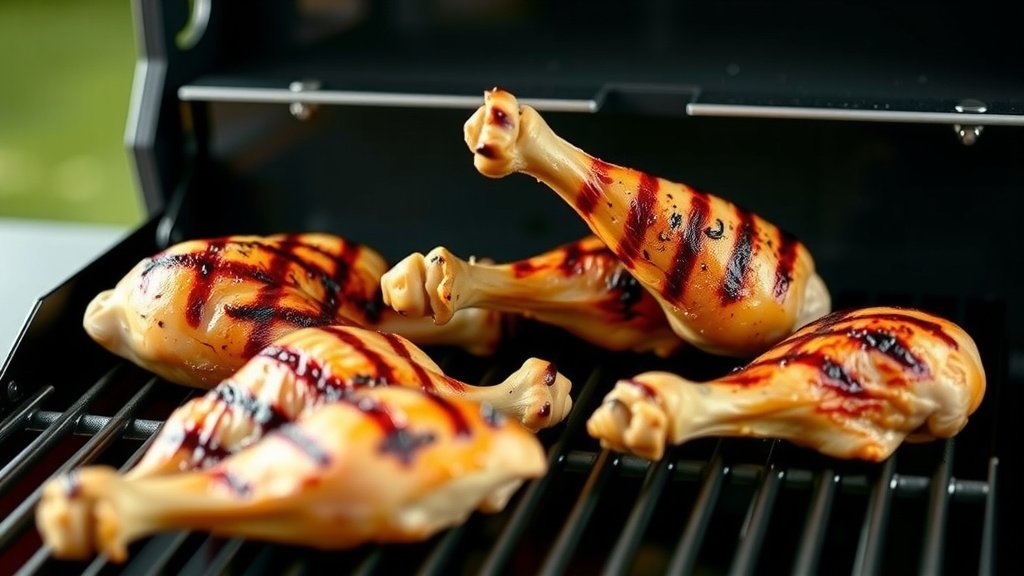
To grill chicken legs and thighs on a gas grill, preheat your grill to medium-high (around 400°F), sear the chicken over direct heat for 3-4 minutes per side until browned, then move it to indirect heat.
Continue cooking with the lid closed for 25-35 minutes, turning occasionally, until the internal temperature reaches 175°F at the thickest part (USDA recommends).
- Get started quickly with essential tools like tongs and a meat thermometer.
- Prepare your chicken by patting it dry and seasoning it generously.
- Set up your gas grill for both direct and indirect heat zones.
- Sear your chicken first for crispy skin, then finish cooking over indirect heat.
- Always check the internal temperature to ensure perfectly cooked, juicy chicken.
How To Grill Chicken Legs And Thighs On Gas Grill?
Grilling chicken legs and thighs on a gas grill means creating crispy skin and juicy meat with precise temperature control. You will master this process by setting up direct and indirect heat zones.
Why Choose Chicken Legs and Thighs?
Chicken legs and thighs are dark meat cuts, known for their rich flavor. They contain more fat than breast meat, which helps them stay moist and tender. This makes them very forgiving on the grill.
Many home cooks prefer these cuts because they are budget-friendly. They also handle higher temperatures without drying out too quickly, offering a wider window for cooking success.
Gathering Your Grilling Toolkit
Having the right tools makes grilling much smoother. Think of it like a surgeon having the right instruments. You want to be prepared before the heat goes on.
- Instant-read meat thermometer: This is non-negotiable for food safety and perfect doneness.
- Long-handled tongs: Essential for turning chicken without burning your hands.
- Grill brush or scraper: For cleaning grates before and after cooking.
- Large platter or baking sheet: To hold raw and cooked chicken.
- Oil for grates: High smoke point oil like canola or grapeseed.
- Paper towels: For patting chicken dry and quick clean-ups.
Prepping Your Chicken for the Grill
Proper preparation lays the foundation for delicious grilled chicken. It helps with even cooking and maximum flavor absorption. Do not skip these simple steps.
Patting Dry
Always pat your chicken dry with paper towels. This removes excess moisture from the skin. A dry surface is key for achieving that desirable crispy skin on the grill. Wet skin will steam, not crisp.
Seasoning Your Cuts
Seasoning is where the flavor truly begins. Many experts suggest using a simple rub of salt, pepper, garlic powder, and paprika. You can also use your favorite pre-made chicken rub.
Apply the seasoning generously, making sure to coat all surfaces. Some people even lift the skin slightly to season the meat underneath (USDA).
Consider a Marinade
Marinades add flavor and can help tenderize the meat. We found that a simple marinade with olive oil, lemon juice, herbs, and spices works well. Let the chicken sit in the marinade for at least 30 minutes or up to several hours in the refrigerator.
Setting Up Your Gas Grill for Success
A gas grill gives you fantastic control over temperature. You will use this control to create different cooking zones. This is like having multiple ovens at different temperatures.
The Two-Zone Setup
For chicken legs and thighs, a two-zone grilling setup is ideal. You will have a direct heat zone and an indirect heat zone. The direct zone sears, and the indirect zone finishes the cooking gently.
To create this, light one or two burners to medium-high heat. Leave the other burners off. This creates your direct and indirect zones. You can adjust the heat level based on your grill model.
Preheating is a Must
Always preheat your grill before placing any food on it. Turn on the burners for your direct heat zone and close the lid. Allow the grill to heat up for 10-15 minutes, reaching around 400-450°F.
A hot grill prevents sticking and helps create those nice grill marks. Think of it as waking up your grill before it performs its magic.
Grilling Temperature and Time Guide
Knowing the right temperature and time is a game-changer. These are general guidelines, but your meat thermometer will always give the final answer. Cooking dark meat to a slightly higher internal temperature ensures tenderness.
| Chicken Cut | Grill Temp (Direct Heat) | Grill Temp (Indirect Heat) | Cooking Time (Indirect) | Internal Temp (Finished) |
|---|---|---|---|---|
| Chicken Legs | 400-450°F | 325-350°F | 25-35 minutes | 175°F |
| Chicken Thighs | 400-450°F | 325-350°F | 25-35 minutes | 175°F |
The Grilling Process: Step-by-Step
This is where your patience and technique pay off. Follow these steps for beautifully grilled chicken. You are orchestrating heat and timing for the best results.
Searing for Crispy Skin
Place your chicken legs and thighs over the direct heat zone. Close the lid for 3-4 minutes per side. You are looking for a nice brown crust and distinct grill marks. This quick sear locks in juices and creates crispy skin.
Moving to Indirect Heat
After searing, move the chicken to the indirect heat zone (the side with the burners off). Arrange the pieces so they are not crowded. This is where the chicken will cook through gently without burning the outside.
Flipping and Turning
Close the grill lid and let the chicken cook. Flip the pieces every 8-10 minutes to ensure even cooking. This also helps prevent one side from overcooking. Keep that lid closed as much as possible to maintain temperature.
Checking for Doneness
Use your instant-read thermometer. Insert it into the thickest part of the meat, avoiding the bone. Chicken legs and thighs are perfectly cooked when they reach 175°F internal temperature (USDA guidelines). We found that this higher temperature helps break down the connective tissue, making dark meat very tender.
Rest Your Chicken
Once your chicken reaches the target temperature, remove it from the grill. Place it on a clean platter and tent it loosely with foil. Let it rest for 5-10 minutes. This resting period allows the juices to redistribute throughout the meat, making it incredibly moist.
Common Grilling Mistakes to Avoid
Even seasoned grillers can make mistakes. Being aware of these common pitfalls helps you cook like a pro. Think of these as guardrails for your grilling journey.
- Not preheating: Leads to sticking and uneven cooking.
- Cooking only on direct heat: Results in burnt exteriors and raw interiors.
- Opening the lid too often: Lowers grill temperature, extending cooking time.
- Not using a thermometer: Guesses lead to undercooked or dry chicken.
- Crowding the grill: Reduces airflow and lowers temperature, hindering browning.
- Not cleaning grates: Causes food to stick and creates off-flavors.
Flavor Boosters and Finishing Touches
Want to take your chicken from good to amazing? A few simple additions can make a big impact. These are the chef’s secrets for elevating flavor.
Toward the end of cooking, during the last 5-10 minutes, you can brush on your favorite BBQ sauce. This allows the sauce to caramelize without burning. Fresh herbs like chopped parsley or cilantro sprinkled over the finished chicken add brightness.
Conclusion
Grilling chicken legs and thighs on a gas grill is a straightforward process once you understand the technique. By mastering the two-zone setup, using a meat thermometer, and allowing for proper resting, you will achieve moist, flavorful chicken every time. It’s all about control, patience, and a little bit of care for your ingredients. Now go ahead, fire up that grill, and enjoy some fantastic chicken!
How long does it take to grill chicken legs and thighs on a gas grill?
It typically takes about 25-35 minutes on indirect heat after an initial sear on direct heat. The total time depends on the size of the pieces and the grill temperature, so always use a meat thermometer.
What is the ideal internal temperature for grilled chicken legs and thighs?
The ideal internal temperature for cooked chicken legs and thighs is 175°F. This ensures the meat is tender and safe to eat, as dark meat benefits from a slightly higher temperature than breast meat (USDA).
Should I use direct or indirect heat for grilling chicken?
You should use both direct and indirect heat. Start with direct heat for 3-4 minutes per side to sear the chicken and crisp the skin. Then, move it to indirect heat to finish cooking through gently without burning.
Why do my chicken legs and thighs always turn out dry on the grill?
Chicken often turns out dry because it is overcooked or cooked too fast over direct high heat. Using a two-zone setup, moving to indirect heat, and cooking to the correct internal temperature (175°F) will help keep them juicy. Resting the chicken also helps retain moisture.
Is it better to marinate or dry rub chicken legs and thighs before grilling?
Both marinades and dry rubs work well for chicken legs and thighs. Marinades add moisture and flavor, while dry rubs create a flavorful crust. The choice depends on your desired flavor profile and how much time you have for preparation.
