
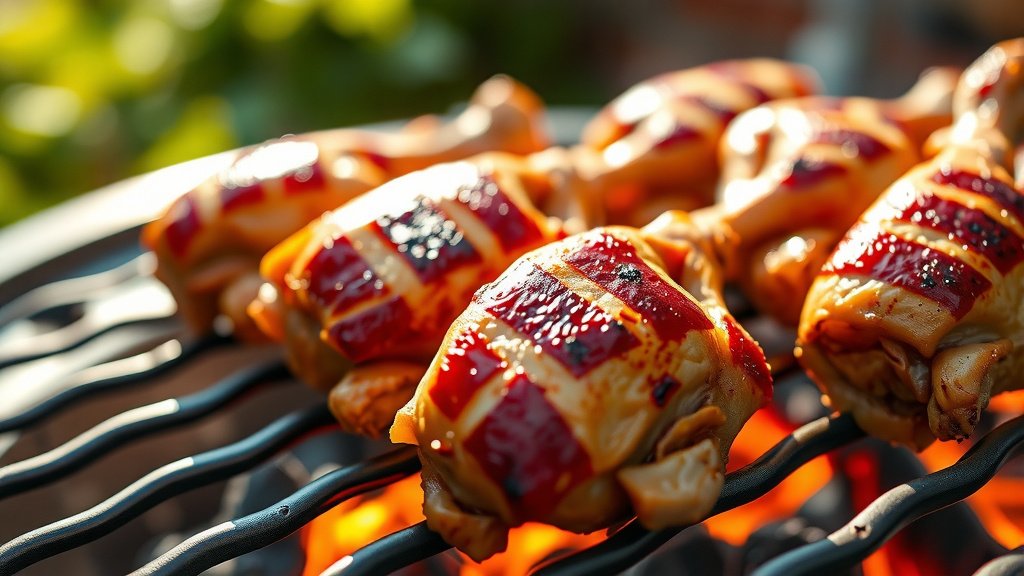
To grill chicken legs on a charcoal grill, expect it to take about 35 to 45 minutes, using a two-zone heat setup.
You’ll start with direct heat for a few minutes per side to get a nice crust, then move the chicken legs to indirect heat until they reach an internal temperature of 175°F (80°C).
- Grill chicken legs for 35-45 minutes total on a charcoal grill.
- Always cook to an internal temperature of 175°F (80°C) for food safety.
- Use a two-zone heat setup: direct heat for searing, indirect for cooking through.
- Flip chicken legs every 5-7 minutes to ensure even cooking and prevent burning.
- Let them rest for 5-10 minutes after grilling for juicy results.
How Long To Grill Chicken Legs On Charcoal Grill?
Grilling chicken legs on a charcoal grill generally takes between 35 and 45 minutes. This timing ensures they cook through, staying juicy while developing a crispy skin.
Getting Your Grill Ready: The Essential First Steps
Before you even think about placing those chicken legs on the grill, proper preparation is vital. Think of it as setting the stage for a delicious meal.
Charcoal Type Matters
What charcoal do you use? Lump charcoal burns hotter and faster, giving you quick, intense heat. Briquettes offer a more consistent, longer-lasting burn, which is often easier for beginners to manage (USDA grilling tips).
Choose the charcoal type that feels right for your grilling style. Both options can give you great results with chicken legs.
Setting Up Two Heat Zones
This is a game-changer for chicken legs. You want both a hot zone and a cooler zone on your grill. Pile charcoal on one side for direct, high heat, and leave the other side empty for indirect, lower heat.
This setup allows you to sear the chicken over the hot coals, then move it to the cooler side to finish cooking without burning.
Prep Your Chicken Legs for Success
Your preparation impacts both cook time and flavor. A little effort here goes a long way towards perfect grilled chicken legs.
Patting Dry and Seasoning
Always pat your chicken legs dry with paper towels before seasoning. Removing surface moisture helps create that desirable crispy skin we all love.
Apply your favorite rub or spices generously. We found that a good coating of salt, pepper, garlic powder, and paprika works wonders for a classic flavor.
Temperature Is Key
Aim for a grill temperature around 375-400°F (190-205°C) for the direct heat zone. This provides enough intensity to sear quickly without overcooking the inside too fast.
A good grill thermometer will be your best friend here. Don’t just guess; knowing your grill’s temperature makes a big difference.
The Grilling Process: Step-by-Step
Now for the fun part! This sequence helps ensure your chicken legs are cooked perfectly, with tender meat and crispy skin.
Start with Direct Heat
Place your seasoned chicken legs directly over the hot coals. Cook them for about 3-4 minutes per side. You’re looking for a beautiful golden-brown crust, not charring.
Keep a close eye on them during this stage; charcoal grills can have hot spots.
Move to Indirect Heat
Once you have a nice sear, move the chicken legs to the cooler, indirect heat side of the grill. Close the lid and let them continue cooking.
This is where the magic happens, allowing them to cook through gently without drying out.
When to Flip Your Chicken Legs
- For even cooking, flip your chicken legs every 5-7 minutes while they are on indirect heat.
- Regular turning helps prevent one side from overcooking or sticking.
- It also promotes a consistent internal temperature throughout the meat.
- Don’t be afraid to adjust their positions on the grill for the best results.
Knowing When They’re Done: Internal Temperature Guide
This is the most critical step for both safety and taste. Never guess if your chicken is ready.
The Trusty Meat Thermometer
Many experts say the only reliable way to check for doneness is using an instant-read meat thermometer (FoodSafety.gov). Insert it into the thickest part of the leg, avoiding the bone.
Chicken legs are safe to eat when they reach an internal temperature of 175°F (80°C). This temperature ensures all harmful bacteria are destroyed.
Visual Cues Can Help
While a thermometer is king, some visual cues can hint at doneness. The juices should run clear, and the meat near the bone should no longer be pink.
Remember, these are secondary checks; always confirm with your thermometer.
Grilling Chicken Legs: Time at a Glance
Here’s a quick overview of what you can expect when grilling chicken legs on your charcoal grill.
| Step | Heat Zone | Approx. Time | Purpose |
|---|---|---|---|
| Preheat Grill | Both | 15-20 minutes | Get charcoal hot, create two zones |
| Initial Sear | Direct heat | 3-4 minutes per side | Develop crispy skin, char marks |
| Indirect Cooking | Indirect heat | 25-35 minutes | Cook through to 175°F (80°C) |
| Resting | Off grill | 5-10 minutes | Juices redistribute |
Common Mistakes to Avoid
Even seasoned grill masters can make errors. Knowing what to watch out for helps you avoid common pitfalls.
Overcrowding Your Grill
Resist the urge to pack too many chicken legs onto the grill at once. Overcrowding drops the grill temperature and makes it harder to flip the pieces.
Cook in batches if needed, ensuring each leg has enough space for even cooking and good airflow.
Skipping the Rest
Once your chicken legs hit the target temperature, pull them off the grill and let them rest for 5-10 minutes. This rest period is crucial.
Resting allows the juices to redistribute throughout the meat, making your chicken incredibly tender and moist. If you cut into it too soon, those precious juices will run out.
Here’s a quick checklist to ensure your chicken legs are grilled to perfection:
- Did you create a two-zone fire?
- Are the chicken legs patted dry and seasoned well?
- Is your grill temperature between 375-400°F?
- Are you using an instant-read meat thermometer?
- Have you planned to let the chicken rest after grilling?
Conclusion
Grilling chicken legs on a charcoal grill is a rewarding experience that yields delicious results. By understanding the importance of a two-zone fire, proper preparation, and always relying on a meat thermometer, you can consistently achieve perfectly cooked, juicy chicken.
Remember that the total grill time of 35-45 minutes is a guide; the thermometer is your true indicator. Enjoy the process and the fantastic flavors of your grilled chicken legs!
How do I prevent chicken legs from burning on a charcoal grill?
To prevent burning, always use a two-zone setup on your charcoal grill. Start with a quick sear over direct heat, then move the chicken legs to the indirect heat zone to finish cooking. Flip them regularly, about every 5-7 minutes, to ensure even browning without charring.
Can I grill frozen chicken legs directly on a charcoal grill?
No, you should not grill frozen chicken legs directly. Thawing them completely first is important for food safety and even cooking. Grilling from frozen can lead to unevenly cooked chicken, where the outside burns before the inside reaches a safe temperature (USDA guidelines).
What internal temperature should chicken legs reach?
Chicken legs should reach an internal temperature of 175°F (80°C) when measured in the thickest part of the meat, away from the bone. This higher temperature compared to chicken breast helps break down connective tissue, resulting in more tender dark meat.
Do I need to close the grill lid when cooking chicken legs?
Yes, closing the grill lid is important, especially during the indirect cooking phase. It helps maintain a consistent internal grill temperature, allowing the chicken to cook through more evenly, similar to how an oven works. This also helps infuse a smoky flavor into the chicken.
How do I get crispy skin on grilled chicken legs?
For crispy skin, first, pat your chicken legs very dry before seasoning. Start with a short sear over direct, high heat to render some of the fat and crisp the skin. Then, continue cooking over indirect heat with the lid closed. Avoid excess moisture during the cook, and ensure a good, dry rub is applied.
