
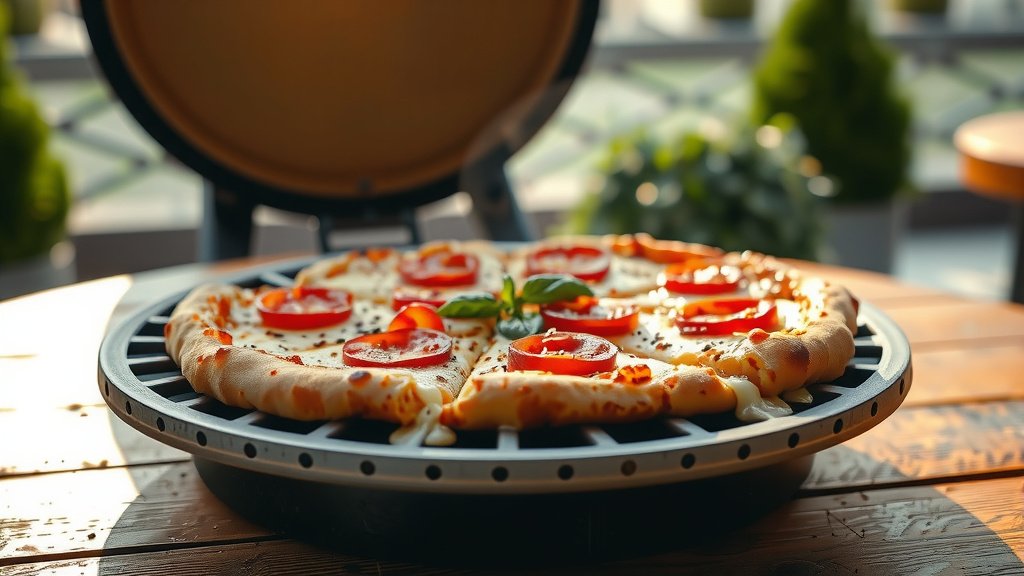
To cook a pizza on a wood pellet grill, preheat your grill to its highest setting, usually around 450-500°F (230-260°C), with a pizza stone or steel inside for at least 30-45 minutes.
Launch your pizza onto the super hot surface and cook for 5-10 minutes, rotating it halfway, until the crust is golden and the cheese is bubbly and melted.
For those short on time, here’s the quick scoop on making pizza on your pellet grill:
- Preheat your grill to its maximum temperature with a pizza stone or steel.
- Use a quality pizza dough, store-bought or homemade, and light toppings.
- Launch your pizza carefully onto the hot stone using a pizza peel.
- Cook for a short time, typically 5-10 minutes, rotating often for even crispness.
- Watch for a bubbly cheese and a beautifully golden-brown crust.
How To Cook A Pizza On A Wood Pellet Grill?
Cooking a pizza on a wood pellet grill offers a wonderful blend of smoky flavor and crispy crust. It’s a straightforward process when you know the right steps.
You can achieve fantastic results by focusing on high heat and proper preheating of your cooking surface.
Why Your Pellet Grill is Perfect for Pizza
Ever thought your pellet grill was just for low-and-slow BBQ? Think again!
These grills can reach surprisingly high temperatures, perfect for pizza. We find that the consistent heat and smoky touch give your pizza a unique, delicious flavor.
It’s like having a wood-fired oven right in your backyard, offering that authentic pizzeria taste you crave.
Gather Your Pizza-Making Tools
Before you start, make sure you have the right equipment. A pizza peel is non-negotiable for safe transfer.
You’ll also want a good quality pizza stone or steel to get that perfectly crispy crust.
Pizza Stone vs. Pizza Steel
Choosing between a pizza stone and a pizza steel can feel tricky. Both work well, but they have subtle differences.
Many experts agree that a pizza steel heats up faster and retains heat more efficiently. This often leads to a crispier bottom crust, especially with dense, chewy doughs.
A pizza stone, while taking longer to heat, still provides excellent results and is often more budget-friendly. Here’s a quick comparison:
| Feature | Pizza Stone | Pizza Steel |
|---|---|---|
| Heat-Up Time | Slower | Faster |
| Heat Retention | Good | Excellent |
| Crust Crispness | Very Good | Superior |
| Durability | Can crack if shocked | Extremely durable |
| Price Point | Generally lower | Often higher |
Selecting the Right Dough and Toppings
The foundation of any great pizza is its dough. Don’t underestimate this choice!
Your topping selection also plays a crucial role in preventing a soggy or burnt mess.
Dough Considerations
You can certainly buy ready-made dough from your local grocery store or bakery. This saves time and is a great starting point.
If you’re feeling adventurous, making your own dough allows for more customization. Research often suggests a slightly drier dough for pellet grills to prevent sticking (King Arthur Baking).
Topping Tips for Pellet Grills
When it comes to toppings, less is often more. Heavy, wet toppings can lead to a soggy pizza middle.
Pre-cook any meats or veggies that need more time than the pizza. Drain excess moisture from ingredients like fresh mozzarella before topping.
Mastering the Pellet Grill Setup for Pizza
Getting your grill ready is half the battle. This isn’t like smoking ribs; we’re going for extreme heat!
Proper setup ensures your pizza cooks evenly and quickly, just like in a brick oven.
Reaching the Ideal Pizza Temperature
For pizza, you want your pellet grill screaming hot. Aim for its maximum temperature setting.
This high heat is what gives you that desired crispy crust and bubbly cheese in just a few minutes.
Getting Your Grill Super Hot
Turn your pellet grill to its highest setting. Close the lid and let it run for at least 30-45 minutes.
Many grill masters suggest this extended preheat allows the grill to fully stabilize at max temperature. This also creates a very hot cooking chamber.
Preheating the Pizza Stone
Crucially, place your pizza stone or steel on the grill grates before you start preheating. It needs to get just as hot as the grill itself.
A cold stone will absorb heat from your pizza, resulting in a disappointing, pale crust. Give it time to soak up all that intense heat.
Step-by-Step Pizza Cooking Guide
Now for the fun part! With your grill roaring hot, it’s time to assemble and cook your pizza.
Following these steps will help you achieve a perfectly cooked pie every time.
Building and Launching Your Pizza
Having a well-floured pizza peel is key here. It prevents your pizza from sticking.
You want to move swiftly but carefully to get your pizza onto the hot stone.
Preparing Your Pizza on the Peel
Dust your pizza peel generously with flour or cornmeal. Stretch your dough directly on the peel.
Add your sauce and toppings quickly, but don’t overload it. Too many toppings make the pizza hard to slide.
The Gentle Launch
Once your pizza is ready, give the peel a little shake to make sure the dough slides freely. If it sticks, lift and add more flour.
Position the peel at the back of the hot stone, angle it down, and with a swift, confident motion, pull the peel back. Your pizza should slide perfectly onto the stone.
The Art of Cooking and Rotating
Pellet grill pizzas cook fast, so stay close! You’ll need to keep an eye on it.
Rotation is essential for an even cook, as grill temperatures can vary slightly.
Signs of a Perfectly Cooked Pizza
After about 2-3 minutes, use your peel to rotate the pizza 180 degrees. This helps even out the cooking.
Cook for another 3-5 minutes, rotating as needed, until the crust is golden brown and crispy. Look for bubbly, melted cheese and slightly charred edges.
Solving Common Pellet Grill Pizza Woes
Even seasoned grillers run into issues. Don’t worry if your first few pizzas aren’t perfect!
Here are some common problems and how to quickly fix them.
Dealing with Sticky Dough and Soggy Crusts
A sticky dough can make launching a nightmare. A soggy crust is equally disappointing.
Many experts find that proper flouring and minimal toppings are your best defense.
- Flour your pizza peel heavily before stretching dough.
- Use cornmeal or semolina on the peel for extra glide.
- Don’t overload your pizza with too many wet toppings.
- Ensure your pizza stone is super hot from preheating.
- Cook the pizza directly on the hot stone, not parchment paper.
Conclusion
Cooking pizza on your wood pellet grill is a fantastic way to enjoy delicious, smoky pies at home. With a little preparation and attention to heat, you’ll be cranking out pizzeria-quality pizzas in no time.
Remember to preheat thoroughly, keep toppings light, and watch your pizza closely. You’ve got this!
How hot should my pellet grill be for pizza?
Your pellet grill should be set to its absolute highest temperature, typically 450-500°F (230-260°C). This high heat is essential for a quick cook and crispy crust.
Do I need a pizza stone for my pellet grill?
Yes, a pizza stone or a pizza steel is highly recommended. It absorbs and retains heat, ensuring your pizza’s bottom crust cooks thoroughly and becomes wonderfully crispy, mimicking a traditional pizza oven.
How long does it take to cook a pizza on a pellet grill?
Cooking time is usually very fast, around 5-10 minutes. The exact time depends on your grill’s temperature, the thickness of your dough, and your desired level of crust crispness. Keep a close eye on it!
Why is my pizza crust burning on the pellet grill?
If your crust is burning, your grill might be too hot or your pizza might be too close to a heat source. Try reducing the temperature slightly or ensuring your pizza stone is properly placed to distribute heat evenly. Rotating the pizza frequently also helps.
Can I use parchment paper when cooking pizza on a pellet grill?
While parchment paper can help with transferring, it’s generally not recommended for direct high-heat cooking on a pellet grill with a stone. The parchment can burn at high temperatures, and it creates a barrier that prevents the stone’s direct heat from crisping the crust properly.
