
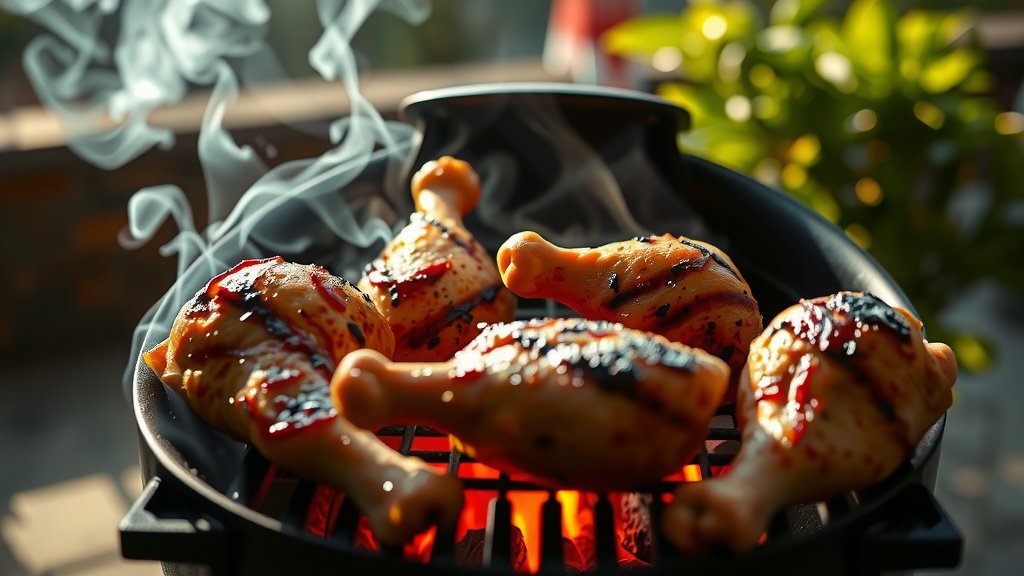
Cooking chicken on a charcoal grill generally takes about 20 to 30 minutes for smaller cuts like breasts or thighs, and 1 to 1.5 hours for a whole chicken, aiming for an internal temperature of 165°F (74°C).
The exact time you cook chicken on a charcoal grill depends on the chicken cut, grill temperature, and whether you are using direct or indirect heat zones.
Here’s a quick look at what you will find in this guide:
- Discover the **ideal cooking times** for various chicken cuts.
- Learn about **setting up your charcoal grill** for perfect heat.
- Understand the **difference between direct and indirect heat** for grilling.
- Get tips on **avoiding common grilling mistakes** for juicy chicken.
- Find out the **magic internal temperature** for safely cooked chicken.
How Long Cook Chicken On Charcoal Grill?
The time to cook chicken on a charcoal grill varies, but a good starting point is 20-30 minutes for most pieces, always checking for 165°F internal temperature.
Achieving perfectly cooked chicken involves more than just a timer; it’s about **understanding your grill** and the meat itself.
Why Charcoal Grilling is Different
Charcoal grilling offers a unique smoky flavor that gas grills can’t quite match. This distinct taste is why many grill masters prefer it. You get that **authentic barbecue experience** right in your backyard.
The heat from charcoal is also very intense, which means **great searing potential** for crispy skin. It’s a rewarding way to cook, offering rich flavors that are hard to beat.
Setting Up Your Charcoal Grill
Proper grill setup is key for consistent results. You’ll want to create two heat zones: a hot direct heat side and a cooler indirect heat side. This allows you to **sear and then gently cook** your chicken.
Arrange your hot coals on one side of the grill for direct heat. Leave the other side empty for indirect heat. This smart arrangement gives you **complete control** over the cooking process.
Essential Tools for Grilling Success
You don’t need a lot of fancy gear, but a few tools are non-negotiable for grilling chicken. A good meat thermometer is at the top of that list. This tool **removes all guesswork** about doneness.
Tongs, a basting brush, and heat-resistant gloves also make the job much easier and safer. These simple items help you **handle the chicken with confidence** and precision.
Internal Temperature is Your Best Friend
Forget guessing games; an internal thermometer is your true guide. The United States Department of Agriculture (USDA) recommends all poultry reach **165°F (74°C)**. This temperature ensures your chicken is safe to eat.
Insert the thermometer into the thickest part of the chicken, away from the bone, to get an accurate reading. This simple step guarantees **food safety and peace of mind** for everyone at your table.
Cooking Times for Different Chicken Cuts
Different parts of the chicken cook at different rates due to their size and bone content. Knowing these variations helps you plan your grilling perfectly. Here’s a general guide we found from **various grilling experts**.
Always remember these are estimates. Your grill’s specific heat and outside conditions can change things. Always use that **trusty meat thermometer** for the final confirmation.
| Chicken Cut | Heat Type | Approx. Time (Charcoal Grill) | Internal Temp. |
|---|---|---|---|
| Boneless, Skinless Breasts | Direct then Indirect | 10-15 minutes per side | 165°F (74°C) |
| Bone-In Thighs/Legs | Direct then Indirect | 30-45 minutes total | 165°F (74°C) |
| Whole Chicken (Spatchcocked) | Indirect primarily | 60-90 minutes total | 165°F (74°C) |
| Chicken Wings | Direct then Indirect | 20-30 minutes total | 165°F (74°C) |
| Bone-In Breast (Split) | Direct then Indirect | 35-45 minutes total | 165°F (74°C) |
Boneless, Skinless Chicken Breasts
These cook quickly due to their uniform shape and lack of bone. Start them over direct heat for a few minutes per side. This creates **beautiful grill marks** and a tasty crust.
Then, move them to indirect heat to finish cooking without drying out. They are done when they reach **165°F (74°C)** inside. This two-zone approach prevents tough chicken.
Bone-In Chicken Thighs and Legs
Bone-in pieces take a bit longer because the bone conducts heat more slowly. They also have more fat, which helps keep them moist. Many experts suggest cooking them mostly over indirect heat to avoid burning.
You can start them with a quick sear over direct heat for crispy skin, then shift to indirect. Expect them to take around **30-45 minutes**. They are super forgiving and delicious.
Whole Chicken (Spatchcocked)
Spatchcocking a chicken means removing the backbone and flattening it. This method helps the chicken cook more evenly and faster. It’s perfect for **feeding a crowd** with less waiting.
Cook a spatchcocked chicken primarily over indirect heat to prevent the skin from burning. It will need about **60-90 minutes**. Always check multiple spots to ensure it reaches 165°F (74°C).
Chicken Wings
Wings are fantastic on the charcoal grill! They benefit from both direct and indirect heat. Start them over direct heat to render some fat and get them crispy.
Then, move them to indirect heat to finish cooking through without charring too much. They typically need **20-30 minutes** total, turning often. You’ll get that perfect balance of crispy and juicy.
Direct vs. Indirect Heat: What’s the Plan?
Understanding direct versus indirect heat is one of the most important grilling lessons. It’s like having two different ovens on one grill. This knowledge **ups your grilling game considerably**.
Knowing when to use each zone means you can tackle almost any cut of meat. It lets you achieve **perfect textures and flavors** for your chicken.
When to Use Direct Heat
Direct heat is where the coals are directly underneath your food. It’s great for searing, creating beautiful char, and cooking smaller, thinner cuts quickly. Think of it as your high-temperature zone.
Use direct heat for chicken pieces like wings or thin breasts to get that **crispy skin or quick sear**. Just be sure to watch them closely, as direct heat can quickly lead to burning if you aren’t careful.
When to Use Indirect Heat
Indirect heat means your food is not directly over the coals. This zone is for slower, gentler cooking, which is perfect for larger cuts or finishing off pieces that started on direct heat. It prevents burning.
Many guidelines suggest using indirect heat for bone-in chicken or whole birds. It allows the chicken to cook through without drying out the exterior. This method gives you **succulent, tender results**.
Common Mistakes to Avoid
Even seasoned grillers can make mistakes. Avoiding these common pitfalls will make your chicken taste even better. You want to focus on consistency and **attention to detail**.
Here’s a simple checklist to keep you on track for grilling delicious chicken every time:
- Not preheating the grill enough: Give your charcoal time to get hot and stable.
- Skipping the meat thermometer: Always check for 165°F for safety and doneness.
- Overcrowding the grill: Leave space between pieces for even cooking and air flow.
- Flipping too often: Let the chicken sear properly before turning it.
- Not cleaning the grates: Dirty grates lead to sticking and off-flavors.
- Forgetting to rest the chicken: This allows juices to redistribute for maximum tenderness.
Flavor Boosters: Marinades and Brines
Want to take your grilled chicken from good to amazing? Marinades and brines are your secret weapons. They add flavor and moisture, making your chicken incredibly tender. They’re a **game-changer for taste**.
A good marinade can infuse herbs, spices, and acidity into the meat. Brines, on the other hand, use salt and sugar to help the chicken retain moisture. Both methods ensure a **juicier, more flavorful experience**.
Resting Your Chicken: Don’t Skip It!
After all that careful grilling, it’s tempting to cut right into your chicken. But wait! Resting your chicken for 5-10 minutes after grilling is critical. This step allows the juices to redistribute throughout the meat.
Cutting into chicken too soon lets all those precious juices run out, leaving you with dry meat. A short rest results in a much **juicier and more tender bite**. It’s a small pause for a big reward.
Conclusion
Grilling chicken on a charcoal grill offers fantastic flavor and a rewarding cooking experience. By understanding your heat zones, using a meat thermometer, and knowing the approximate times for different cuts, you can achieve perfect results every time. Remember, the journey to delicious, juicy chicken is about smart preparation and **paying attention to the details**. Enjoy your grilling!
How do I know if my charcoal grill is hot enough for chicken?
You can gauge charcoal grill temperature using a hand test: carefully hold your hand about 5 inches above the grate. If you can hold it there for 2-4 seconds, it’s typically hot enough for direct cooking (high heat). For medium heat, you should be able to hold it for 5-7 seconds.
Can I grill frozen chicken on a charcoal grill?
It’s generally not recommended to grill chicken from frozen on a charcoal grill. Frozen chicken cooks unevenly, meaning the outside might char while the inside remains raw. Always thaw chicken completely before grilling for food safety and best results (USDA).
What’s the best charcoal for grilling chicken?
Many grill enthusiasts prefer natural lump charcoal for its pure wood flavor and high heat. Briquettes are also good, offering a more consistent burn. The “best” choice often comes down to personal preference for flavor and burn time.
Should I keep the grill lid open or closed when cooking chicken?
For slower, more even cooking, especially with larger or bone-in chicken pieces, keep the lid closed. This helps maintain a consistent temperature, similar to an oven. For quick searing of thin cuts, you might leave it open for brief periods to manage charring.
How do I prevent chicken from sticking to the charcoal grill grates?
To prevent sticking, ensure your grill grates are clean and hot. Once hot, lightly oil the grates by wiping them with a paper towel dipped in high-heat cooking oil (like canola or grapeseed oil) using tongs. This creates a non-stick surface for your chicken.
