
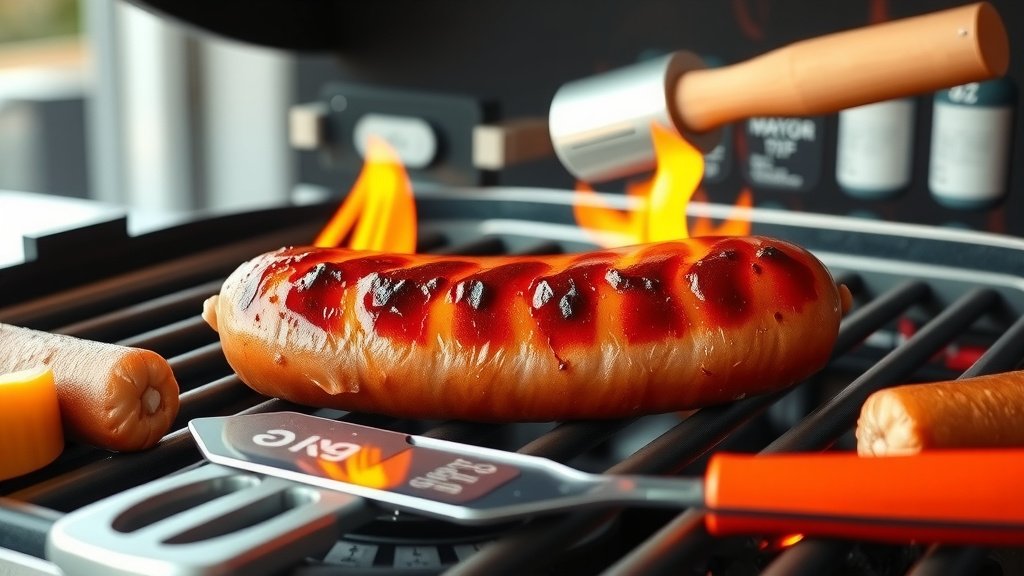
To grill a brat on a gas grill, you should set up a two-zone heating system, using medium-low indirect heat and consistently turning them until they reach an internal temperature of 160°F (71°C) for a delicious, safe cook.
Maintaining a closed lid helps create an oven-like environment, allowing your brats to cook thoroughly and develop a beautiful golden-brown exterior without scorching.
Here’s a quick summary of what you’ll learn:
- Grill brats on a gas grill using a **two-zone heating method**.
- Always cook over **indirect heat** to avoid burning and ensure even cooking.
- Aim for an internal temperature of **160°F (71°C)** for safety and flavor.
- Pre-boiling in beer or water can **add moisture and taste**.
- Use reliable tongs and a meat thermometer for **best grilling results**.
How To Grill A Brat On A Gas Grill?
Grilling brats on a gas grill is all about managing heat and patience to prevent splitting and dryness. You’ll set up your grill for two-zone cooking and focus on indirect heat to slowly bring them to temperature.
Why Choose a Gas Grill for Brats?
A gas grill offers **precise temperature control**, making it a fantastic choice for brats. You can easily adjust the heat, which is key for their slow, even cooking. This prevents the outside from burning before the inside cooks through.
Many experts say that gas grills provide a consistent heat source, which leads to a more predictable cooking experience. This predictability helps you achieve that **perfectly cooked brat** every time.
The Right Brat for Grilling
Picking the right bratwurst is your first step to grilling success. Look for good quality, fresh brats from your local butcher or a reputable grocery store. What makes a brat great? It often comes down to the **meat-to-fat ratio** and seasonings.
You want brats that feel firm and look plump, without any tears in their casings. These characteristics suggest they will **hold their shape better** on the grill.
Fresh vs. Pre-Cooked Brats
Fresh brats, or raw brats, are generally preferred for grilling because they stay juicier. Pre-cooked brats can dry out quickly and may lack the **rich flavor development** you get from raw ones. Consider starting with fresh brats for the best outcome.
If you do use pre-cooked brats, just remember they need less time on the grill. They are already cooked, so you are mainly **reheating and browning them** effectively.
Essential Tools You’ll Need
To grill brats like a pro, gather a few basic tools. These items make the process smoother and safer. Do you have everything ready for your grilling session?
- A **reliable gas grill** with a working thermometer.
- Long-handled tongs for turning.
- A meat thermometer to check internal temperature.
- Aluminum foil or a disposable pan for indirect cooking (optional).
- A basting brush if you plan to use a beer bath or glaze.
Prepping Your Brats for Success
Proper preparation can make all the difference. Some people like to pre-cook their brats before they even hit the grill. This step, often called a “beer bath,” helps keep them moist and **infuses extra flavor**.
We found that pre-cooking can help ensure your brats are fully cooked through without risking a burnt exterior. It’s a common practice among **seasoned grill masters**.
The Great Brat Boil Debate
The question of whether to boil brats before grilling is a popular one. Some grillers swear by it, while others prefer to go straight to the grill. Here’s a quick look at the options:
| Method | Description | Pros | Cons |
|---|---|---|---|
| Pre-Boil (Beer/Water) | Simmer brats in beer, onions, or water for 10-15 minutes. | Ensures even cooking, keeps brats juicy, adds flavor. | Can diminish grilled flavor, extra step, slightly softer casing. |
| Grill Directly | Place raw brats straight onto the grill. | Better charred flavor, firmer casing, simpler process. | Higher risk of bursting, can dry out if not managed well. |
Many experts say that boiling them in a mixture of beer and onions can give them a **rich, malty flavor**. This liquid pre-cook can also make the brats more forgiving on the grill.
Setting Up Your Gas Grill
Setting up your grill correctly is perhaps the most important part of grilling perfect brats. You need to create a **two-zone cooking area**. This means having both a hot side and a cooler side.
Start by cleaning your grill grates. Then, ignite some burners to high heat and leave others off. This creates your distinct zones for direct and indirect cooking, which is **vital for brats**.
Two-Zone Grilling is Key
For two-zone grilling, turn one or two burners on high (depending on your grill size) and leave the other burners off. Close the lid and let the grill preheat for about 10-15 minutes until it reaches 325-350°F (160-175°C). The heated side is your direct heat zone, and the unheated side is your **indirect heat zone**.
You’ll primarily use the indirect heat zone for cooking your brats. The direct heat is reserved for a quick sear at the very end, if desired, to **add color and texture**.
Grilling the Brats: Step-by-Step
Now that your grill is ready, let’s get those brats cooking! Place the brats on the indirect heat side of your grill. Close the lid and let them cook slowly. What’s the rush, right?
Turn the brats every 5-7 minutes to ensure even cooking and browning on all sides. This gentle approach prevents the casings from bursting and keeps the **juices locked inside**.
We found that cooking brats this way, over indirect heat, generally takes about 20-30 minutes. The exact time depends on your grill’s temperature and the **thickness of your brats**.
Monitoring Temperature and Doneness
Knowing when your brats are done is simple with a meat thermometer. Always check the internal temperature to ensure safety. You’re aiming for **160°F (71°C)** in the thickest part of the brat.
Here’s a quick checklist for perfect doneness:
- Insert a **meat thermometer** into the center of a brat.
- Ensure the thermometer reads a minimum of **160°F (71°C)**.
- Check multiple brats if you are cooking a large batch.
- Look for a **golden-brown exterior** on all sides.
- The brats should feel firm but still springy to the touch.
Once they hit 160°F, you can move them over to the direct heat for a minute or two per side. This step is optional but adds a **lovely char and crispness**.
Avoiding Common Brat Grilling Mistakes
Grilling brats is straightforward, but a few common errors can ruin your meal. One big mistake is poking holes in the casings. Never do this, as it allows all those **tasty juices to escape**.
Another frequent error is cooking them over direct high heat for too long. This causes the outside to burn and the inside to remain raw or dry out. Remember, **indirect heat is your friend**.
Serving Your Perfect Brats
Once your brats are perfectly grilled, remove them from the grill and let them rest for a few minutes. This allows the juices to redistribute, making them even more tender and flavorful. What will you serve them with?
Serve your brats on a fresh bun, perhaps with some sauerkraut, grilled onions, or a dollop of your favorite mustard. A classic pairing can **elevate the experience** significantly.
Conclusion
Grilling brats on a gas grill is a rewarding experience when done right. By focusing on two-zone cooking, using indirect heat, and monitoring internal temperatures, you can consistently achieve juicy, flavorful brats. Remember, patience and proper heat management are your secret ingredients for success. Enjoy your perfectly grilled brats!
Can I grill frozen brats directly on a gas grill?
We found that it is generally not recommended to grill frozen brats directly. They will cook unevenly, with the outside burning before the inside thaws and cooks properly. It’s best to thaw them completely in the refrigerator first for optimal results.
How do I prevent brats from splitting on the grill?
To prevent brats from splitting, avoid piercing their casings and cook them over indirect, medium-low heat. High direct heat causes the internal juices to expand too rapidly, leading to bursts. Gentle turning also helps maintain casing integrity.
What is the ideal grill temperature for brats?
The ideal grill temperature for brats, using an indirect heat zone, is around 325-350°F (160-175°C). This allows them to cook slowly and evenly without burning the exterior, while reaching the safe internal temperature.
Should I use a marinade for brats?
Brats are typically well-seasoned, so a marinade isn’t strictly necessary. However, if you want to add extra flavor, a quick beer bath or a light brush with a simple glaze toward the end of cooking can be a nice touch. Avoid thick, sugary marinades that can burn easily.
How long should brats rest after grilling?
Allowing brats to rest for 5-10 minutes after grilling is a good practice. This short resting period helps the internal juices redistribute throughout the brat, resulting in a more succulent and flavorful bite. It’s similar to resting other cooked meats.
