
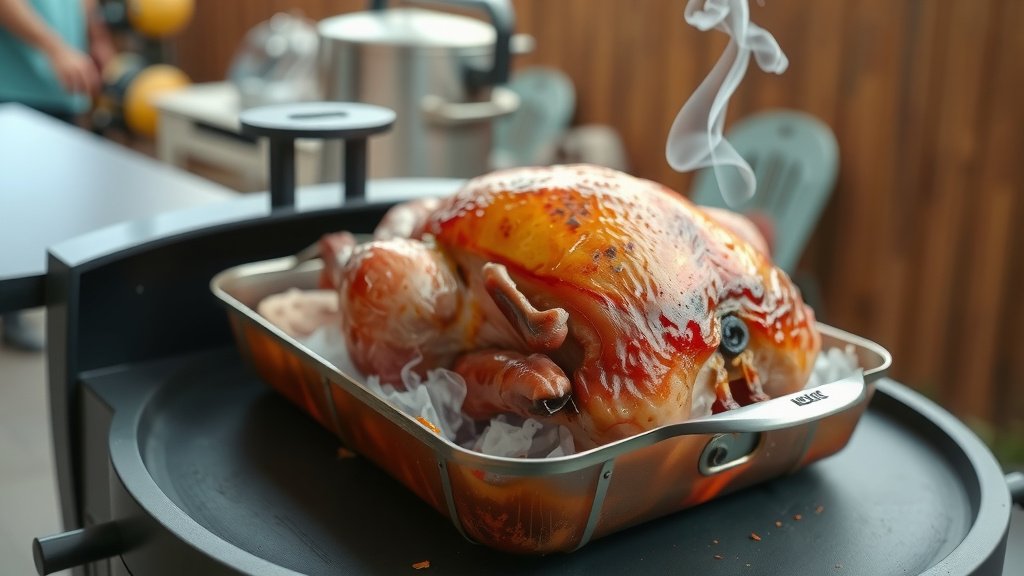
To smoke a turkey on a Pit Boss pellet grill, aim for a low and slow temperature, typically around 225-275°F (107-135°C), until the internal temperature reaches 165°F (74°C) in the thickest part of the thigh.
Proper preparation with a brine or rub, selecting the right pellets, and using a reliable meat thermometer are key for a wonderfully juicy and smoky turkey on your Pit Boss pellet grill.
Here’s the quick scoop on smoking a turkey on your Pit Boss pellet grill:
- Prep your turkey with a brine or dry rub for best flavor and moisture.
- Set your Pit Boss to a low, consistent temperature, usually 225-275°F.
- Use a meat thermometer to monitor the internal temperature accurately.
- Expect about 30-40 minutes per pound, but always cook to temperature, not just time.
- Rest the turkey after cooking for juicy, tender meat.
How To Smoke A Turkey On Pit Boss Pellet Grill?
Smoking a turkey on a Pit Boss pellet grill involves careful preparation, consistent temperature control, and monitoring the internal meat temperature.
You will achieve a moist, smoky bird by following a few simple steps, ensuring a delicious feast for your family and friends.
Why a Pit Boss for Your Turkey?
Pellet grills like the Pit Boss offer excellent temperature control, making them ideal for smoking a turkey. You set the temperature, and the grill largely maintains it, which means less fuss for you.
They also infuse food with a wonderful, consistent smoky flavor from the wood pellets. Many cooks find this method offers a superior taste profile compared to oven roasting.
Picking the Perfect Turkey
Choosing the right turkey is your first step toward a successful smoke. A bird between 12-18 pounds is often more manageable for most home smokers.
Larger turkeys can take much longer and might not fit as easily on your grill. Consider how many people you are feeding when making your choice.
Prepping Your Bird for Flavor
Proper turkey preparation is vital for a succulent, flavorful result. This stage is where you build the foundation of taste and moisture.
Don’t skip these crucial steps if you want to impress your guests. We found that a well-prepped turkey is a happy turkey.
To Brine or Not to Brine?
Brining involves soaking your turkey in a salty liquid before cooking. This process helps the meat retain moisture, resulting in a juicier, more tender turkey (USDA).
Many experts say a brine can also add flavor throughout the bird, preventing dryness often found in breast meat. If you have time, we highly suggest it.
Crafting Your Rub
Whether you brine or not, a good dry rub is a must. A rub adds a flavorful crust and enhances the natural taste of the turkey. Think about flavors you love.
Typical ingredients include salt, pepper, garlic powder, paprika, and herbs. Feel free to get creative and mix your own special blend.
Setting Up Your Pit Boss
Your Pit Boss pellet grill is a powerful tool, and setting it up correctly makes all the difference. This ensures even cooking and that signature smoky taste.
A little preparation here goes a long way in achieving perfection. Don’t rush this stage; it’s quite important.
Pellet Power: Choosing Wisely
The type of wood pellets you use will greatly influence the final flavor of your turkey. For poultry, milder woods are often preferred.
Apple, cherry, or pecan pellets are popular choices, providing a sweet, subtle smoke. Some people also enjoy a blend of oak or maple.
Dialing In the Temperature
For smoking a turkey, a consistent low temperature is key. We found that 225-275°F (107-135°C) is the ideal range on your Pit Boss. This allows the smoke to penetrate the meat.
A slightly higher temperature, around 325°F (163°C), can be used towards the end for crispier skin. However, start low and slow.
The Smoking Journey Begins
With your turkey prepped and your Pit Boss ready, it’s time to get cooking. This is where your patience will be rewarded with incredible aromas filling your yard.
Remember, smoking is a journey, not a race. Relax and enjoy the process, because the results are worth it.
Placing and Monitoring
Place your turkey directly on the grill grates, breast side up. If you’re using a drip pan, position it beneath the turkey to catch juices and keep your grill cleaner. Some people place it on a wire rack over the pan.
A good wireless meat thermometer is your best friend here. Insert it into the deepest part of the turkey breast and thigh, avoiding bones, to track the internal temperature.
The Internal Temperature Is Key
Always cook to internal temperature, not just time. A meat thermometer gives you the most accurate read. The target is 165°F (74°C).
Research often connects cooking to temperature with food safety and optimal tenderness (FoodSafety.gov). This is why it’s a non-negotiable step.
Estimated Cooking Times
Smoking times can vary greatly based on turkey size, actual grill temperature, and even outdoor conditions. Think of these as guidelines.
It’s important to remember that every turkey is a little different, just like every grill. Always rely on that internal temperature reading for true doneness.
| Turkey Size (Pounds) | Approximate Smoke Time (Hours at 250°F) | Notes |
|---|---|---|
| 10-12 lbs | 4-6 hours | Smaller birds often cook faster. |
| 12-15 lbs | 6-8 hours | Monitor closely as you approach the target. |
| 15-18 lbs | 8-10 hours | Good size for larger gatherings. |
| 18-20+ lbs | 10-12+ hours | Expect longer, plan accordingly. |
The Essential Resting Period
Once your turkey hits 165°F, it’s not quite ready to carve. Resting is a critical step that many people skip, but you shouldn’t. It makes a huge difference.
This allows the juices to redistribute throughout the meat, ensuring every slice is as succulent as possible. Otherwise, all those wonderful juices will just run onto your cutting board.
Here’s a quick checklist for resting your turkey:
- Remove the turkey from the Pit Boss.
- Place it on a clean cutting board or large platter.
- Tent loosely with foil, don’t wrap it tightly.
- Let it rest for at least 20-30 minutes.
- For larger birds, a 45-minute rest is often ideal.
Carving Like a Pro
After resting, your smoked turkey is ready for carving. A sharp knife and a stable cutting board are your best tools. Work carefully and deliberately.
Separate the legs and wings first, then slice the breast meat. Serve immediately to enjoy the full smoky flavor and tender texture.
Conclusion
Smoking a turkey on your Pit Boss pellet grill is a rewarding experience, yielding a bird that’s incredibly moist, flavorful, and deeply smoky. It’s a method that truly elevates your holiday or family meal.
From choosing the right bird and preparing it well, to maintaining consistent temperatures and allowing for a proper rest, each step contributes to the final, delicious outcome. With these tips, you’re ready to create a memorable, mouth-watering smoked turkey that will have everyone asking for your secret.
What kind of pellets are best for smoking turkey?
For smoking turkey, milder wood pellets like apple, cherry, pecan, or a blend containing oak are often recommended. These woods impart a sweet, subtle smoky flavor that complements poultry without overpowering it.
Should I brine my turkey before smoking on a Pit Boss?
Brining your turkey before smoking is highly recommended. It helps the turkey retain moisture throughout the long cooking process, resulting in a significantly juicier and more tender bird. Many cooks find this step improves overall flavor.
What temperature should I set my Pit Boss to for smoking turkey?
You should set your Pit Boss pellet grill to a temperature between 225°F and 275°F (107-135°C) for smoking turkey. This low-and-slow approach allows the turkey to absorb maximum smoke flavor and cook evenly without drying out.
How do I know when my smoked turkey is done?
Your smoked turkey is done when the internal temperature reaches 165°F (74°C) in the thickest part of the thigh, avoiding the bone. Always use a reliable meat thermometer to verify doneness, as cooking times can vary significantly.
Do I need to spritz my turkey while it’s smoking?
Spritzing your turkey with apple cider vinegar, broth, or apple juice every 1-2 hours during the smoking process is optional. Some people do this to keep the skin moist and promote better smoke adhesion, but it’s not strictly necessary for a juicy result if you’ve brined your turkey.
