
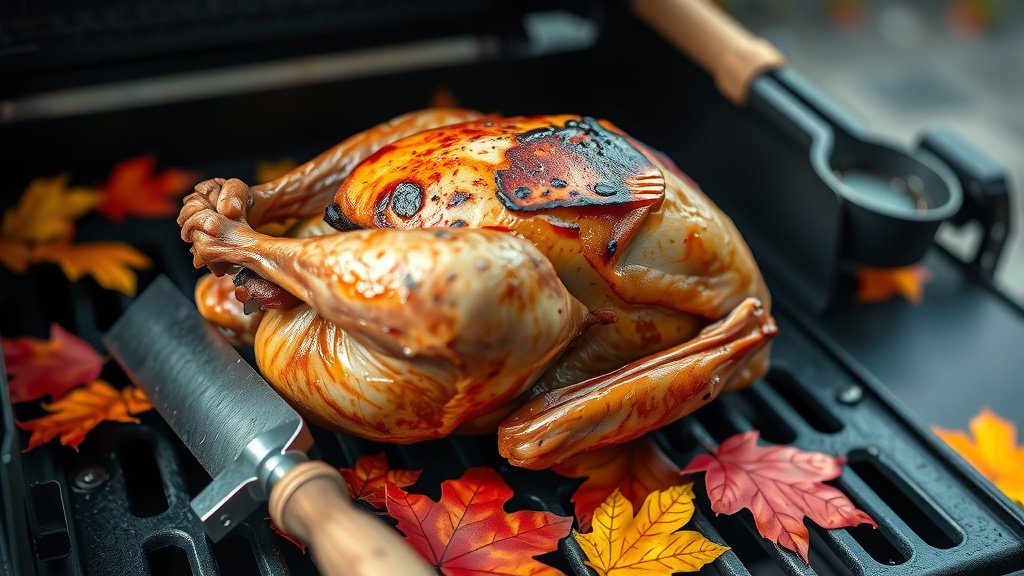
To smoke a turkey on a smoker grill, maintain a consistent temperature between 225-275°F using your preferred wood for flavor. You will cook the bird until its internal temperature reaches 165°F in the thickest part of the thigh and breast.
This process typically involves brining the turkey for moisture and flavor, applying a seasoned rub, and patiently monitoring both the smoker and the turkey’s temperature for juicy, tender results.
- Get a juicy, flavorful turkey by brining it first – this is key.
- Always aim for a smoker temperature of 225-275°F for a slow, even cook.
- Use a good rub for extra flavor, applying it generously under and over the skin.
- Cook until the turkey reaches 165°F in the thickest parts of the meat.
- Rest your turkey after smoking to let those juices redistribute for maximum tenderness.
How To Smoke A Turkey On A Smoker Grill?
Smoking a turkey on your grill can transform a good meal into an unforgettable feast. It gives you incredible flavor and unmatched juiciness. Imagine that smoky aroma filling your backyard – it truly is something special.
This method takes a little time and patience, but the rewards are absolutely worth every minute. We’ll guide you through each step, making sure your smoked turkey turns out perfectly.
Why Smoke Your Turkey?
You might wonder why bother smoking when roasting is simpler. The answer is flavor and texture. Smoking infuses the turkey with a deep, complex taste that roasting simply cannot match.
The low and slow cooking process also breaks down connective tissues. This results in incredibly moist and tender meat that practically falls off the bone. It’s a game-changer for holiday meals or any special occasion.
Choosing the Right Turkey
Starting with the right bird makes all the difference. You want a turkey that fits your smoker and your guest list. A 10-15 pound turkey is often ideal for most home smokers and feeds a good crowd.
Smaller turkeys cook faster, of course. Larger ones can take a lot of space and longer times, sometimes drying out if not managed carefully. Think about how many people you’re serving when picking your turkey.
Fresh vs. Frozen Turkey
Many experts say a fresh turkey offers better flavor and texture than a frozen one. It hasn’t undergone the freezing and thawing cycle, which can affect moisture.
However, a frozen turkey is perfectly fine if you plan ahead. Just make sure to allow ample time for it to thaw completely in the refrigerator. We found that about 24 hours per 4-5 pounds is a good rule of thumb (USDA guidelines).
Essential Equipment for Smoking Turkey
Before you even think about putting meat to flame, let’s talk tools. You don’t need a professional setup, but a few key items are crucial. Having the right gear makes the process smoother and more enjoyable for you.
A good smoker grill is your centerpiece, of course. Beyond that, a reliable thermometer is your best friend for food safety and perfect results. Don’t forget your choice of wood for that signature smoky taste.
Smoker Grill Types
There are several types of smokers you can use. Each has its own strengths. Here’s a quick look at what we found:
| Smoker Type | Pros | Cons |
|---|---|---|
| Electric Smoker | Easy to use, consistent temperature, little monitoring needed. | Less intense smoke flavor, limited capacity. |
| Propane (Gas) Smoker | Good temperature control, relatively easy to use, decent smoke. | Requires propane refills, can be less smoky than charcoal. |
| Charcoal Smoker | Excellent smoke flavor, versatile, often more affordable. | Requires more attention to temperature, can be messy. |
| Pellet Smoker | “Set it and forget it,” consistent temperature, good smoke flavor. | Higher initial cost, relies on electricity, limited wood pellet variety. |
No matter which type you have, the principles of low and slow cooking remain the same for a great turkey.
The Brining Debate: Wet vs. Dry
Brining is a critical step for a moist turkey. It helps the meat retain moisture and adds flavor deep within the bird. You’ll find two main camps: wet brining and dry brining.
Wet brining involves submerging the turkey in a salt water solution. Dry brining means rubbing it with salt and seasonings. Both are effective, but many experts prefer wet brining for turkey due to its size and tendency to dry out during long cooks.
Our Go-To Wet Brine Recipe
A simple yet effective wet brine can make all the difference. For a 12-15 pound turkey, we recommend this basic recipe:
- 1 gallon water
- 1 cup kosher salt
- 1/2 cup brown sugar
- 1 orange, quartered
- Several sprigs fresh rosemary and thyme
- 1 tablespoon black peppercorns
- 2 bay leaves
Gently heat a portion of the water to dissolve the salt and sugar. Then, cool completely before adding the remaining cold water and other ingredients. Submerge your turkey for 12-24 hours in the refrigerator.
Preparing Your Turkey for the Smoker
Once brined, it’s time for the next steps. Remove the turkey from the brine and **pat it completely dry** with paper towels. This step is super important. A dry surface helps the skin crisp up and allows the smoke to penetrate better.
You can also tuck the wing tips under the turkey’s body. This prevents them from burning during the long smoke. Some people also tie the legs together for a neater presentation, though it’s not strictly necessary.
Rubbing It Right
Now for the flavor-boosting rub! A good turkey rub usually includes salt, pepper, garlic powder, onion powder, paprika, and a touch of something sweet like brown sugar. Get creative with your favorite spices.
Apply the rub generously all over the turkey. Don’t forget to **get some under the skin** on the breast and thighs for maximum flavor. You can even melt a little butter and mix it with the rub to make a paste for extra richness.
Setting Up Your Smoker Grill
Getting your smoker ready is about more than just lighting it up. You need to achieve and maintain a consistent temperature. This is where patience comes into play. Think of it as preparing your cooking zone.
Preheat your smoker to the target temperature. Once it’s stable, add your wood chunks or chips. This ensures you get clean, consistent smoke throughout the cook. Avoid too much smoke early on, which can make the turkey taste bitter.
Ideal Smoking Temperature
For turkey, research often connects a **lower temperature with juicy results** (University of Georgia Extension). We found that 225-275°F is the sweet spot. It’s low enough to allow the smoke flavor to develop beautifully without drying out the meat.
Maintaining this temperature requires a reliable thermometer on your smoker. Adjust your vents or fuel as needed to keep it steady. Consistency is your friend here.
The Smoking Process: Low and Slow
Now, the waiting game begins. Place your prepared turkey directly on the grates, breast-side up. Make sure there’s enough space around it for air and smoke to circulate evenly. Close the lid and let the magic happen.
Avoid peeking too often. Every time you open the smoker, you lose heat and smoke, extending the cooking time. Trust your smoker and your thermometers. Just like a slow simmer, a patient cook yields the best results.
Monitoring Internal Temperature
This is arguably the most crucial step for food safety and perfect doneness. You absolutely need a **reliable meat thermometer**. Insert the probe into the thickest part of the thigh, avoiding the bone.
The turkey is done when it reaches 165°F in the thigh. We also recommend checking the thickest part of the breast to ensure it’s also at 165°F (FDA food safety guidelines). Don’t rely solely on visual cues; temperature is key.
Here’s a quick checklist for your turkey smoking success:
- Thaw turkey completely if frozen.
- Prepare and apply your chosen brine.
- Pat the turkey bone-dry before rubbing.
- Apply your favorite seasoning rub generously.
- Preheat your smoker to 225-275°F.
- Monitor internal temperature closely until 165°F.
Resting Your Smoked Turkey
Once the turkey hits 165°F, resist the urge to carve it immediately. This resting period is non-negotiable for a truly juicy bird. Remove it from the smoker and tent it loosely with foil.
Let it rest for at least 20-30 minutes, or even up to an hour for larger birds. This allows the juices to redistribute throughout the meat. If you carve too soon, those precious juices will run out onto your cutting board instead of staying in your turkey.
Conclusion
Smoking a turkey on your smoker grill is an incredibly rewarding culinary adventure. It transforms a traditional bird into something extraordinary, bursting with flavor and unparalleled juiciness. From selecting your turkey to the crucial resting period, each step plays a vital role in achieving that perfect result.
By following these steps, you’re not just cooking a turkey; you’re crafting a memorable centerpiece that will impress everyone at your table. Embrace the process, trust your tools, and get ready to enjoy the best turkey you’ve ever tasted.
FAQ: Can I smoke a turkey without brining it first?
While you can smoke a turkey without brining, we highly recommend it. Brining significantly helps the turkey retain moisture and adds flavor, which is crucial for the long, low-temperature cooking process in a smoker. Without it, you risk a drier bird.
FAQ: How long does it take to smoke a 12-pound turkey?
The cooking time varies based on your smoker’s consistency and the turkey’s exact weight, but typically, a 12-pound turkey takes about 4-6 hours at 225-275°F. Always cook to temperature (165°F) rather than time for safety and doneness.
FAQ: What kind of wood is best for smoking turkey?
Many experts say mild fruitwoods like apple or cherry are excellent choices for turkey, providing a sweet and subtle smoke flavor. Oak and pecan also work well, offering a slightly stronger but still complementary taste. Avoid overly strong woods like mesquite, which can overpower the turkey.
FAQ: Should I baste my turkey while it’s smoking?
Basting is often unnecessary and can actually hinder the smoking process. Every time you open the smoker, heat escapes, and the cooking temperature drops. The moisture from brining, combined with the low and slow cook, keeps the turkey moist without constant basting.
FAQ: How do I get crispy skin on my smoked turkey?
Achieving truly crispy skin on a smoked turkey can be a challenge due to the low cooking temperature. To help, ensure the skin is patted very dry before smoking. You can also finish the turkey at a higher temperature (around 350-375°F) in a conventional oven or very hot grill for the last 30-45 minutes after it reaches 165°F internally.
