For most steaks on a gas grill, aim for a direct high heat of 450-500°F to get that beautiful sear and juicy interior. This temperature range helps create a delicious crust while cooking the inside quickly.
The ideal temperature for grilling steaks on a gas grill also depends on the steak’s thickness and your desired doneness, but high heat is generally your friend.
Here’s a quick summary of grilling perfect steaks:
- Start with a hot gas grill, usually 450-500°F, for a great sear.
- Use a two-zone grilling method: one side hot, one side medium.
- Always check doneness with a reliable meat thermometer.
- Know your target internal temperatures for rare, medium-rare, medium, etc.
- Let your steaks rest for 5-10 minutes after grilling to keep them juicy.
What Temp To Grill Steaks On Gas Grill?
When you grill steaks on a gas grill, aim for a consistent high heat between 450°F and 500°F for most cuts. This range ensures a fantastic sear while cooking the interior to your preferred doneness.
Why Grill Temperature Is Your Secret Weapon
Think of grill temperature as the paintbrush for your steak. It’s what creates that delicious, caramelized crust you crave. Too low, and you boil your steak. Too high, and you burn it before the inside cooks.
High Heat: The Maillard Reaction Magic
High temperatures kick off the Maillard reaction, a term for browning. This reaction gives your steak deep, savory flavors and an appealing texture. Without enough heat, you miss out on this culinary wonder.
Setting Up Your Gas Grill for Steak Success
A gas grill gives you amazing control, which is perfect for steaks. We found that a two-zone setup is often best. This means one very hot section and one slightly cooler section.
The Two-Zone Grilling Method Explained
- Turn one or two burners to high. This creates your direct high-heat zone.
- Leave an adjacent burner or two off, or set to low. This is your indirect, cooler zone.
- This setup allows you to sear the steak on high heat, then move it to the cooler zone to finish cooking without burning (Many experts recommend this method for thicker cuts).
Preheating: Don’t Rush the Heat
Never put a steak on a cold grill! We found that preheating your gas grill for at least 10-15 minutes is a must. This gets the grates screaming hot and evenly distributes the heat.
Check for Hot Grates
You want to hear a sizzle the moment your steak hits the grates. If it doesn’t sizzle, your grill isn’t hot enough. A clean, hot grate also helps prevent sticking.
Thickness Matters: Adjusting Your Grill Temp Strategy
The thickness of your steak plays a big role in how you approach grilling. A thin steak (under 1 inch) needs less time and can handle consistent high heat.
Thin Steaks (Under 1 Inch)
For thinner cuts like skirt or flank steak, keep the grill at 450-500°F and cook them quickly, flipping often. They cook fast, so watch them closely.
Thick Steaks (Over 1 Inch)
For thicker cuts like ribeye, New York strip, or porterhouse, the two-zone method shines. Sear on high heat (500°F) for 2-3 minutes per side, then move to the cooler zone (around 350-400°F) to finish. This prevents burning the outside before the inside cooks.
The Trusty Meat Thermometer: Your Best Friend
You can’t guess steak doneness. Many grilling enthusiasts agree that a reliable instant-read meat thermometer is non-negotiable. It takes the guesswork out and ensures perfect results every time.
Why Internal Temperature Is Key
The grill temperature is for the outside, but the internal temperature tells you about the inside. Poking and prodding your steak just lets out delicious juices (USDA advises using a thermometer for food safety).
Your Steak Doneness Temperature Guide
Here’s a handy guide to internal temperatures for different levels of steak doneness. Remember, pull your steak off the grill 5°F below your target, as it will continue to cook while resting (this is called carryover cooking).
| Doneness Level | Target Internal Temperature (Pull from Grill) | Resting Temperature (Final) |
|---|---|---|
| Rare | 120-125°F (49-52°C) | 125-130°F (52-54°C) |
| Medium-Rare | 125-130°F (52-54°C) | 130-135°F (54-57°C) |
| Medium | 130-135°F (54-57°C) | 135-140°F (57-60°C) |
| Medium-Well | 140-145°F (60-63°C) | 145-150°F (63-66°C) |
| Well-Done | 150-155°F (66-68°C) | 155-160°F (68-71°C) |
The Critical Role of Resting Your Steak
Picture this: a juicy steak, perfectly cooked. The secret? Letting it rest. After grilling, move your steak to a cutting board and loosely tent it with foil for 5-10 minutes. This lets the juices redistribute throughout the meat (Food Network Kitchen confirms this is vital).
Don’t Skip the Rest!
Cutting into a steak too soon is like popping a balloon. All those delicious juices, that would make each bite moist and flavorful, rush out onto your board. Give it a moment; your patience will be rewarded.
Troubleshooting Common Gas Grill Steak Challenges
Even seasoned grillers face issues. What if you get flare-ups? Or uneven cooking? We’ve all been there!
Dealing with Flare-Ups
Flare-ups happen when fat drips onto hot coals or burners. If a flare-up occurs, move your steak to the cooler zone immediately. Close the lid for a moment to starve the flames of oxygen. Keep your grill clean to reduce future flare-ups.
Uneven Cooking on the Gas Grill
Gas grills can have hot spots. To combat this, rotate your steaks. If one part of the steak cooks faster, move it to a slightly cooler part of the grate. Knowing your grill’s hot spots comes with practice.
Your Quick Checklist for Grilling Perfect Steak
Before you fire up the grill, run through this mental checklist. It will help ensure a fantastic steak experience.
- Preheat your gas grill to 450-500°F for at least 10 minutes.
- Set up a two-zone heat system if grilling thicker steaks.
- Season your steak generously right before grilling.
- Use an instant-read meat thermometer for accurate doneness.
- Always rest your cooked steak for 5-10 minutes before slicing.
- Enjoy every juicy, flavorful bite!
Conclusion
Mastering what temp to grill steaks on gas grill means understanding a few simple principles. High heat for searing, a two-zone setup for control, and a trusty meat thermometer are your keys to success. By paying attention to these details, you can consistently grill restaurant-quality steaks right in your backyard. Your next steak night is about to be legendary!
FAQ: How long should I cook a 1-inch thick steak at 450°F?
For a 1-inch thick steak at 450°F, you’ll generally cook it for 4-6 minutes per side for medium-rare to medium doneness. Always verify with an instant-read thermometer, aiming for an internal temperature of 125-130°F (pulling it off the grill).
FAQ: Can I grill a frozen steak on a gas grill?
While possible, it’s generally not recommended for the best results. Grilling frozen steak makes it much harder to achieve an even cook and a good sear. It will take significantly longer to cook and may result in a tougher texture. Thawing in the fridge is always preferred.
FAQ: Should I oil the steak or the grill grates?
It’s best to oil the steak lightly, not the grates. Brushing a thin layer of high-smoke-point oil (like canola or grapeseed) directly onto your seasoned steak helps prevent sticking and promotes a better crust. Oiling the grates can lead to smoking and flare-ups.
FAQ: How do I get those perfect grill marks on my steak?
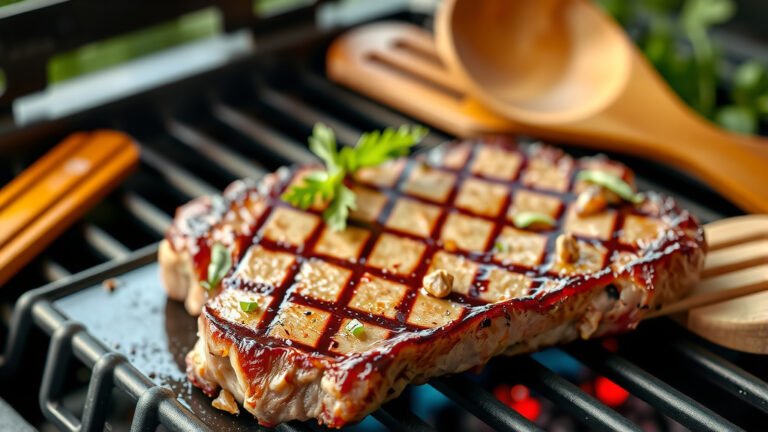
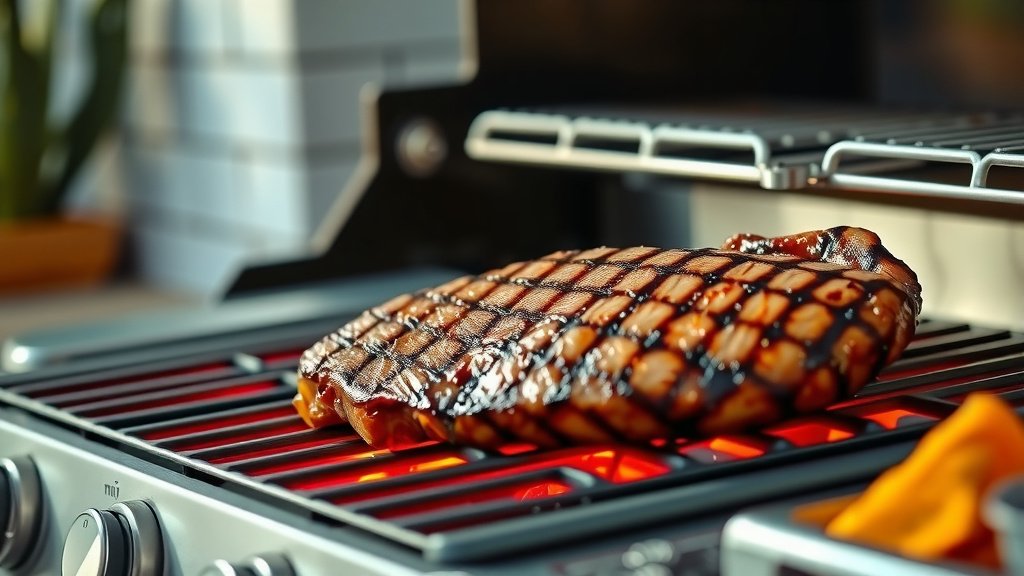
To get perfect grill marks, ensure your grates are screaming hot and clean. Place your steak down, leave it untouched for 2-3 minutes, then rotate it 45 degrees without flipping. This creates a crosshatch pattern. Then, flip and repeat on the other side. Do not move the steak around too much!
FAQ: What’s the best way to clean my gas grill after grilling steaks?
The best time to clean your grill is right after you finish cooking, while the grates are still hot. Use a stiff wire brush to scrape off any food residue. This prevents buildup, which can cause sticking and off-flavors during your next cook. A quick brush takes seconds and makes a big difference.