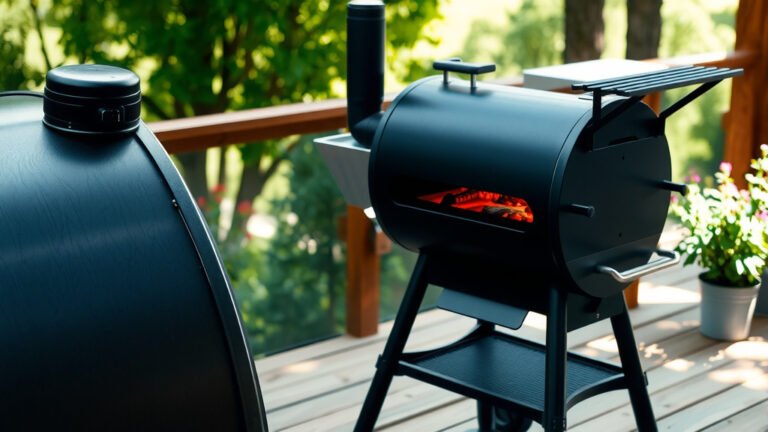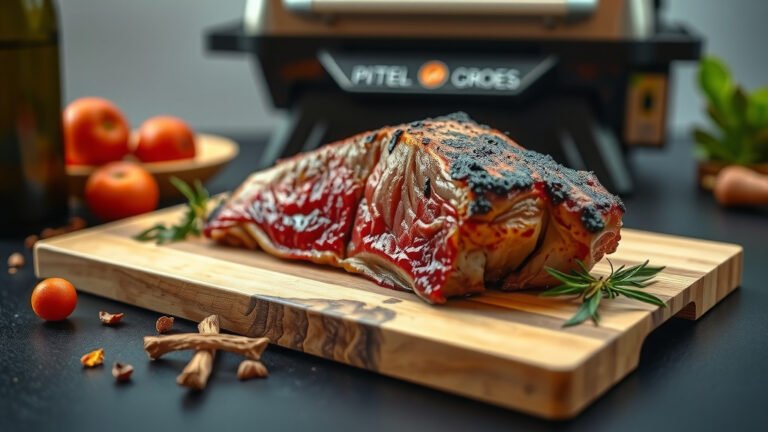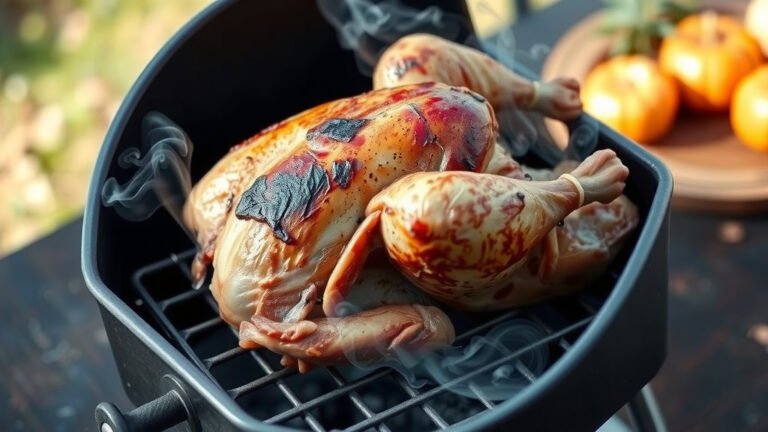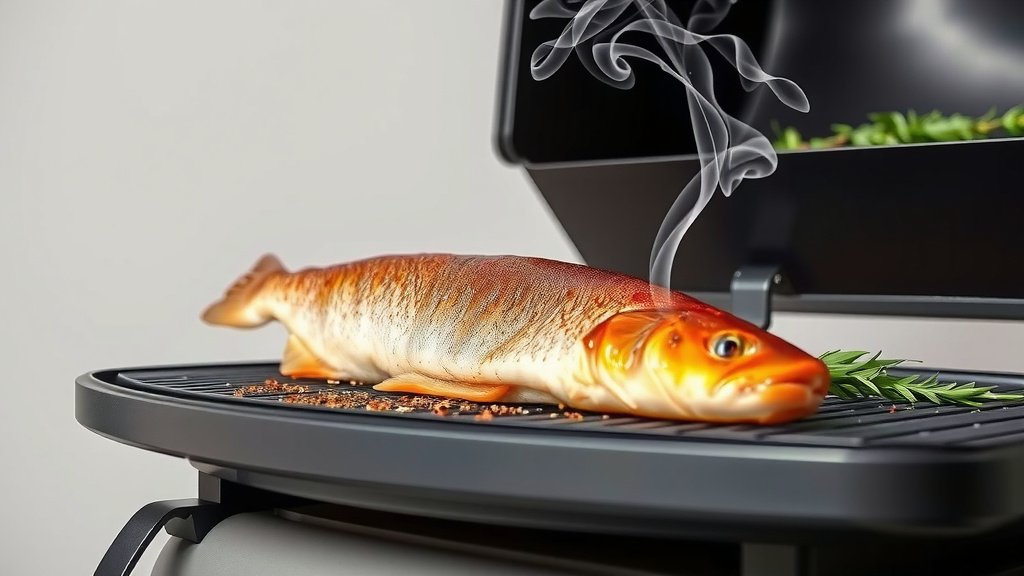
To smoke trout on a pellet grill, first brine the trout for several hours, then pat it dry and allow a pellicle to form for an hour or two. Set your pellet grill to a low temperature, typically around 180-200°F (82-93°C), and smoke until the internal temperature of the thickest part of the fish reaches 145°F (63°C).
This process results in a delicious, flaky, and moist smoked trout, perfect for a meal or as an appetizer.
TL;DR: Smoking trout on your pellet grill is simpler than you think!
- Brine your trout for flavor and moisture.
- Dry the fish thoroughly to create a “pellicle.”
- Set your pellet grill to a low, consistent temperature (180-200°F).
- Smoke until the fish reaches an internal temperature of 145°F.
- Enjoy a perfectly smoked, flavorful trout.
How To Smoke Trout On A Pellet Grill?
Smoking trout on a pellet grill creates a rich, smoky flavor and a tender, flaky texture that’s truly special. You’re in for a real treat!
Many experts say the key is precise temperature control, which pellet grills excel at, along with proper fish preparation (Food Network).
Why Choose a Pellet Grill for Trout?
Pellet grills are fantastic for smoking fish. They offer a very consistent heat source, unlike traditional smokers that can fluctuate.
This consistent heat helps cook the delicate trout evenly without drying it out. Plus, you get that wonderful wood smoke flavor automatically.
Selecting Your Trout for Smoking
Choosing the right trout makes all the difference. Look for fresh, firm fish with clear eyes and no strong fishy smell.
Smaller trout, often called “pan-size,” work wonderfully for smoking whole. Larger fillets are also an excellent choice if you prefer.
Fresh or Frozen?
Fresh trout is always preferred, but good quality frozen trout can also be used. If frozen, thaw it slowly in your refrigerator overnight.
Ensure it’s fully thawed before you begin the brining process to ensure even seasoning and cooking.
The All-Important Brine: Flavor and Moisture
Brining trout is a step you should never skip. It seasons the fish deeply and helps keep it moist during the smoking process.
A good brine also firms up the flesh slightly, which is beneficial for the delicate texture of trout.
Basic Brine Recipe
Here’s a simple brine to get you started. This recipe is enough for 2-3 average-sized trout or several fillets.
- 4 cups cold water
- 1/4 cup kosher salt
- 2 tablespoons brown sugar
- 1 tablespoon black peppercorns
- Optional: sprigs of dill, a bay leaf, or a lemon slice
Brining Your Trout: A Quick Guide
Dissolve the salt and sugar in the cold water. Add any optional aromatics you like. Submerge the trout completely in the brine.
Refrigerate the trout in the brine for 4 to 8 hours. Don’t over-brine, as it can make the fish too salty (America’s Test Kitchen).
Developing the Pellicle: A Smoker’s Secret
After brining, rinse the trout thoroughly under cold water. Pat it completely dry with paper towels.
Then, place the trout on a wire rack, uncovered, in the refrigerator or in a cool, airy spot for 1 to 4 hours. This forms a “pellicle.”
Why is a Pellicle Important?
A pellicle is a sticky, slightly shiny surface that forms on the fish. It helps smoke adhere better, giving a richer flavor and color.
It also acts as a protective barrier, preventing the fish from drying out too quickly during the smoking process.
Prepping Your Pellet Grill for Smoking
Fill your pellet grill hopper with your chosen wood pellets. Alder or fruitwood pellets, like apple or cherry, are excellent for trout.
They provide a mild, sweet smoke that complements the delicate flavor of the fish without overpowering it.
Setting the Temperature
For smoking trout, a low and slow approach is best. We found that a temperature range of 180-200°F (82-93°C) works perfectly.
Preheat your grill to your desired temperature, allowing it to stabilize for at least 15-20 minutes before adding the fish.
Smoking the Trout: Step-by-Step
Once your grill is preheated and smoking, arrange the trout directly on the grates. Ensure there’s space between each piece for smoke circulation.
Insert a reliable meat thermometer into the thickest part of the largest trout. Avoid touching bone.
Monitor the internal temperature closely. Many guidelines point to 145°F (63°C) as the safe internal temperature for fish (USDA).
Smoking time can vary based on fish thickness and grill consistency, usually taking 1 to 3 hours. Don’t rush it!
When Is It Done?
The trout is done when it reaches 145°F. The flesh should be opaque and flake easily with a fork.
Don’t overcook it, or you’ll lose that wonderful moist texture you worked so hard to achieve.
Troubleshooting Common Smoking Issues
Sometimes things don’t go exactly to plan. Don’t worry, we’ve got you covered with a few tips.
| Problem | Possible Cause | Solution |
|---|---|---|
| Dry Trout | Overcooked, insufficient brine, no pellicle | Use thermometer, brine longer, ensure pellicle forms |
| No Smoke Flavor | Too high temp, wet pellets, poor pellet quality | Lower temp (180-200°F), store pellets dry, use quality pellets |
| Fish Sticking to Grates | Grates not clean/oiled, not enough pellicle | Clean and oil grates before starting, ensure a good pellicle |
Serving Your Smoked Trout
Once your trout is perfectly smoked, carefully remove it from the grill. Let it rest for a few minutes before serving.
Smoked trout is incredibly versatile! You can flake it over salads, spread it on crackers, or enjoy it as a main course.
Pairing Ideas
What goes well with smoked trout? Think fresh, light flavors. A squeeze of lemon, some fresh dill, or a dollop of crème fraîche are fantastic.
Consider a crisp white wine or a light lager to complement the rich, smoky notes of the fish.
Checklist for Smoking Trout Success
Before you light up your pellet grill, run through this quick checklist:
- Fresh trout selected?
- Brine prepared and trout brined for 4-8 hours?
- Trout rinsed and patted completely dry?
- Pellicle formed (1-4 hours in fridge)?
- Pellet hopper full with good quality wood pellets?
- Pellet grill preheated to 180-200°F?
- Meat thermometer ready?
Conclusion
Smoking trout on a pellet grill is a rewarding experience, yielding incredibly flavorful and moist fish. By following these steps—from brining and pellicle formation to precise temperature control—you’ll achieve fantastic results every time.
Remember, patience is a virtue in smoking. Enjoy the process and the delicious smoked trout you create!
How long does it take to smoke trout on a pellet grill?
Smoking trout on a pellet grill typically takes between 1 to 3 hours. The exact time depends on the thickness of your trout, your grill’s consistency, and the desired internal temperature of 145°F (63°C).
What is a pellicle and why is it important for smoking fish?
A pellicle is a tacky, film-like layer that forms on the surface of the fish after it’s been brined and air-dried. It’s important because it helps smoke adhere better to the fish, contributing to a richer smoky flavor and a desirable color. It also helps prevent the fish from drying out.
What are the best wood pellets for smoking trout?
For smoking trout, mild and sweet wood pellets are generally preferred. Alder wood pellets are a classic choice for fish. Fruitwoods like apple, cherry, or even pecan also work wonderfully, providing a delicate smoke flavor that complements the trout without overpowering it.
Can I smoke trout fillets instead of whole trout?
Absolutely! You can definitely smoke trout fillets. The preparation steps, including brining and forming a pellicle, remain the same. Smoking times might be slightly shorter for thinner fillets compared to whole trout, so always rely on an internal temperature of 145°F (63°C) for doneness.
Do I need to flip the trout while it’s smoking?
No, you generally do not need to flip trout while it’s smoking on a pellet grill. Pellet grills provide very consistent heat from all directions within the cooking chamber. Flipping the delicate fish can also cause it to stick or break apart. Just let it smoke undisturbed until it reaches the target internal temperature.