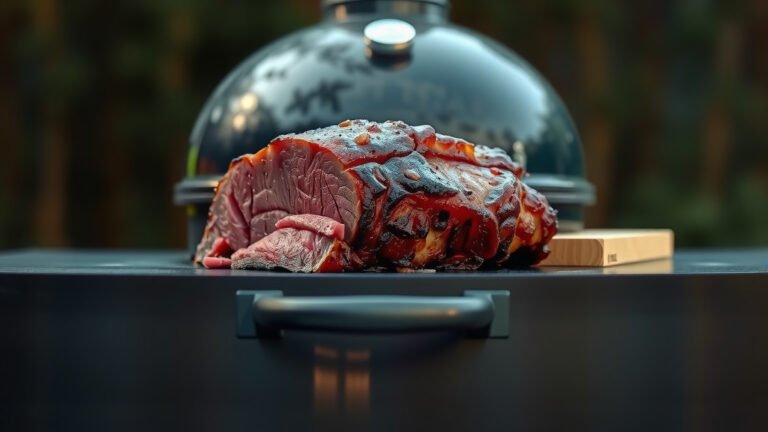
To smoke a rib roast on a pellet grill, you typically set your grill to a low temperature, often around 225-250°F (107-121°C), and slowly cook the roast until it reaches your desired internal temperature, then optionally sear for a crust.
The process involves proper preparation, selecting the right wood pellets, maintaining consistent heat, and monitoring the roast’s internal temperature to achieve a tender, smoky, and delicious rib roast on your pellet grill.
- Achieve a tender, smoky rib roast on your pellet grill with ease.
- Start with proper trimming, tying, and seasoning your roast for maximum flavor.
- Smoke at a low temperature, usually 225-250°F, using quality wood pellets for a deep smoky essence.
- Monitor internal temperature closely for perfect doneness, aiming for about 125°F for rare before resting.
- Finish with an optional high-heat sear for a delicious crust, then rest the meat before slicing to retain juices.
How To Smoke A Rib Roast On A Pellet Grill?
Smoking a rib roast on a pellet grill transforms an already impressive cut of meat into something truly spectacular. You are about to embark on a culinary journey that will fill your home with incredible aromas and your plate with unbelievably tender, smoky goodness. It’s a method that promises a flavor experience far beyond a conventional oven roast.
Getting Ready for Your Rib Roast Journey
Before you fire up that pellet grill, let’s talk about the star of the show: the rib roast itself. Choosing the right cut and having the correct tools makes a big difference. Think of it as preparing for a masterpiece – you need the best canvas and brushes.
What Exactly is a Rib Roast?
A rib roast, often called a standing rib roast, is a large cut of beef from the rib section. It includes several ribs, giving it its name. Many people confuse it with prime rib, but prime rib is actually a type of rib roast, often referring to a higher quality grade. Yours might be boneless or bone-in; both work wonderfully for smoking.
Choosing Your Perfect Rib Roast
When you’re at the butcher, look for a roast with good marbling – those little streaks of fat throughout the meat. This marbling melts during cooking, keeping the roast moist and adding flavor. A bone-in roast often has more flavor and cooks a bit more evenly, though boneless is easier to carve.
The Gear You’ll Need
You probably have most of these, but a quick check never hurts. Having the right tools makes the process smoother and more enjoyable. Think of it as your kitchen’s utility belt!
- Your trusty pellet grill
- Wood pellets (apple, cherry, pecan, or oak are popular choices)
- A sharp boning knife or chef’s knife
- Butcher’s twine
- A reliable instant-read thermometer or a probe thermometer
- A large cutting board
- Aluminum foil
- A large pan or tray for resting
Prepping Your Roast Like a Pro
Preparation is key to a successful smoke. This isn’t just about throwing meat on the grill; it’s about setting it up for maximum flavor and even cooking. A little effort here goes a long way, ensuring a tender and juicy result.
Trimming and Tying the Rib Roast
You might find a thick fat cap on your roast. We found that trimming this down to about a quarter-inch helps the smoke penetrate better while still providing protection and flavor. If your roast is boneless, or if you’ve removed the bones, tying it with butcher’s twine every 1.5 to 2 inches helps it hold its shape and cook evenly. This simple step can prevent dry edges and ensure a uniform cook.
The Art of Seasoning Your Rib Roast
This is where you infuse a ton of flavor! Many experts recommend a dry brine, which means salting the roast generously and letting it sit in the fridge, uncovered, for 12-24 hours. This draws moisture out, then reabsorbs it, leading to a juicier roast. After dry brining, apply your favorite beef rub. A simple rub often includes salt, coarse black pepper, garlic powder, and onion powder. Some people add a little paprika for color. Don’t be shy; rub it all over, ensuring even coverage.
Setting Up Your Pellet Grill for Success
Fill your hopper with your chosen wood pellets. Fruit woods like apple or cherry offer a milder, slightly sweet smoke, while pecan or oak provide a richer, more robust flavor. For beef, a blend or a stronger wood often works well. Preheat your pellet grill to 225-250°F (107-121°C). Allow it to come up to temperature and stabilize. A stable temperature is vital for consistent smoking.
The Low and Slow Smoking Process
This is where the magic happens. “Low and slow” is the mantra for smoking, allowing the meat to tenderize and absorb that beautiful smoky flavor without drying out. Patience is truly a virtue here. You are essentially letting the grill do most of the work, but your vigilance with temperature is crucial for a perfect outcome.
Optimal Temperatures and Wood Pellets
Keep your pellet grill at that steady 225-250°F. Placing your rib roast directly on the grill grates allows for maximum smoke exposure. We found that this temperature range offers the best balance for tenderizing the meat and developing a rich bark. Choose pellets that complement beef without overpowering it. Many research sources suggest pecan, oak, or a competition blend for their versatility and flavor profiles with red meat.
Monitoring Internal Temperature
This is the most critical step. Insert a probe thermometer into the thickest part of the roast, avoiding bone. You’re looking for an internal temperature that signifies your desired doneness. Remember, the meat will continue to cook a bit after you remove it from the grill (carryover cooking), so pull it a few degrees before your target. Food safety experts often suggest pulling beef roasts before they hit their final desired temperature for resting. This ensures you don’t overcook it during the rest period, keeping it tender and moist.
When is it Done? Temperature Guide
Here’s a quick guide to internal temperatures before resting. These are the target temperatures to pull the roast off the grill. Resting will add a few more degrees.
| Doneness | Pull Temperature (from Grill) |
|---|---|
| Rare | 120-125°F (49-52°C) |
| Medium-Rare | 125-130°F (52-54°C) |
| Medium | 130-135°F (54-57°C) |
| Medium-Well | 135-140°F (57-60°C) |
The Finishing Touches: Searing and Resting
You’re almost there! These final steps elevate your smoked rib roast from good to unforgettable. The sear adds a beautiful crust, and resting is non-negotiable for a juicy slice. Think of it as the grand finale that truly completes your culinary show.
Creating that Amazing Crust
Once your rib roast reaches your desired pull temperature, you have an option: a reverse sear. This creates a fantastic, flavorful crust. Remove the roast from the grill and cover it loosely with foil. Increase your grill’s temperature to 450-500°F (232-260°C). Once hot, place the roast back on for 10-15 minutes, flipping it occasionally, until a beautiful, dark crust forms. This step is purely for texture and color, adding another layer of deliciousness to your roast.
Resting Your Masterpiece
This is arguably the most important step for a juicy roast. After searing (or if you skipped the sear), transfer your rib roast to a cutting board or large pan. Cover it loosely with foil and let it rest for at least 20-30 minutes, or even up to an hour for larger roasts. This resting period allows the juices to redistribute throughout the meat, resulting in a much more tender and flavorful slice. Cutting too early means all those wonderful juices will run out onto your board, leaving you with a dryer roast.
Slicing for Perfection
After resting, it’s time to carve! If you have a bone-in roast, slice along the bones to remove the entire section of meat. Then, slice the meat against the grain into your desired thickness. Slicing against the grain shortens the muscle fibers, making each bite more tender. Present your magnificent creation with pride; you’ve earned it after all that patient waiting and precise cooking. It’s the final step to enjoying your hard-earned meal.
Tips for a Flawless Smoked Rib Roast
Even seasoned grill masters learn new tricks. Here are a few extra pointers to ensure your rib roast is always a showstopper. These little details can often make a big difference in the final product. We’ve compiled these from various cooking forums and expert advice to help you avoid common pitfalls and achieve consistent excellence.
Common Mistakes to Avoid
Don’t rush the process; smoking takes time. Avoid lifting the lid too often, as this causes temperature fluctuations. Trust your thermometer, not just the clock, for doneness. Overcooking is the most common mistake, so pull the roast a few degrees early and factor in carryover cooking. Many research and cooking guides highlight these as critical points for a successful smoke. Also, make sure your grill is clean, as old grease can impart unpleasant flavors.
Here’s a quick checklist to keep you on track:
- Trim excess fat to about 1/4 inch.
- Tie the roast securely for even cooking.
- Apply rub generously, ensuring full coverage.
- Preheat pellet grill to a stable 225-250°F.
- Insert temperature probe into the thickest part.
- Remove roast a few degrees before target internal temperature.
- Rest the roast for at least 20-30 minutes before slicing.
Conclusion
Smoking a rib roast on your pellet grill is a rewarding experience that yields incredible results. By following these steps—from choosing the right roast and preparing it carefully, to patiently smoking it at the correct temperature and giving it a proper rest—you’ll create a meal that’s both tender and bursting with smoky flavor. It might seem like a lot of steps, but each one contributes to the overall success and deliciousness of your roast. Now go forth, fire up that grill, and enjoy the rich, savory flavors of your perfectly smoked rib roast. Your guests, and your taste buds, will surely thank you for the effort and the incredible meal you’ve prepared. Enjoy every mouth-watering bite!
What kind of wood pellets are best for smoking a rib roast?
For a rib roast, popular wood pellet choices include oak, hickory, pecan, or a blend like a “competition blend.” Apple and cherry can also work if you prefer a milder, slightly sweeter smoke flavor that complements beef without overpowering it. The key is to choose a wood that imparts a good, rich smoke flavor that pairs well with red meat.
How long does it take to smoke a 5-pound rib roast on a pellet grill?
The time it takes to smoke a rib roast varies significantly based on its size, initial temperature, and your grill’s consistency. For a 5-pound rib roast, expect it to take approximately 3 to 5 hours at 225-250°F (107-121°C) to reach a medium-rare internal temperature. Always cook to temperature, not just time, using a reliable probe thermometer.
Do I need to sear a smoked rib roast?
Searing a smoked rib roast is optional but highly recommended. It creates a beautiful, flavorful crust, often called “bark,” which adds a fantastic texture contrast to the tender, smoky interior. If you choose to sear, do it at high heat (450-500°F) for a short period after the roast reaches its desired internal temperature, just before resting.
Can I smoke a boneless rib roast on a pellet grill?
Absolutely! A boneless rib roast smokes beautifully on a pellet grill. You might find it cooks a bit faster than a bone-in roast. It’s often easier to carve, but ensure you tie it securely with butcher’s twine before smoking. Tying helps it maintain an even shape and cook more uniformly throughout, preventing dry spots.
What is the most important step for a juicy smoked rib roast?
The most important step for a juicy smoked rib roast is allowing it to rest adequately after it comes off the grill. Resting for at least 20-30 minutes (covered loosely with foil) allows the muscle fibers to relax and the internal juices to redistribute throughout the meat. Cutting the roast too early will result in a significant loss of moisture and a less tender final product.