
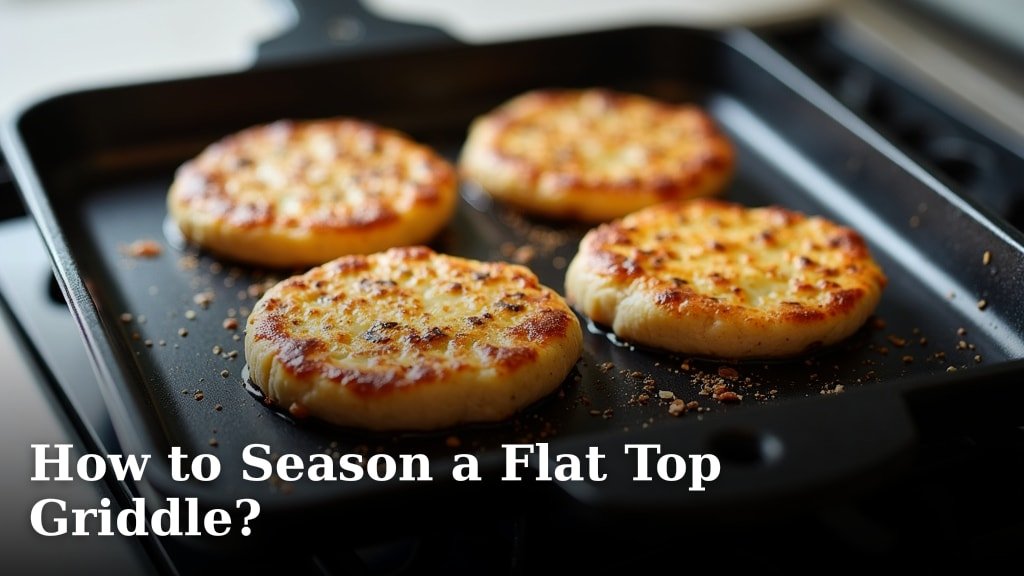
To season a flat top griddle, you need to apply thin layers of cooking oil and heat it repeatedly. This process creates a non-stick surface and protects your griddle from rust. You’ll be cooking delicious meals in no time!
Seasoning is not just a one-time thing; it’s an ongoing relationship with your griddle. A well-seasoned griddle improves with every use, just like a good cast iron pan. It also adds a fantastic flavor to your food, making every meal better.
- Initial cleaning is key.
- Apply thin coats of oil.
- Heat the griddle properly.
- Repeat the oil and heat steps.
- Maintain seasoning regularly.
Ready to turn your new griddle into a cooking powerhouse? Let’s walk through the steps to get that perfect seasoning. For those just starting out, our guide to the best flat top griddle for beginners can help you choose the right model.
Getting Your Flat Top Griddle Ready for Seasoning
Before you begin the seasoning process, a little preparation goes a long way. This ensures your griddle is clean and ready to bond with the oil.
Initial Cleaning: Washing Away the Factory Finish
New griddles often come with a protective coating from the factory. You need to remove this before you start cooking or seasoning. Think of it like washing a new dish before its first use.
What You’ll Need for the First Wash
- Warm, soapy water
- A soft sponge or cloth (not abrasive!)
- A griddle scraper or plastic spatula (if needed)
- Clean towels for drying
The First Cleaning Steps
Start by pouring a small amount of warm, soapy water onto the griddle surface. Use your soft sponge to gently scrub the entire surface. If there are stubborn spots, a plastic scraper can help, but avoid metal scrapers at this stage. You don’t want to scratch your brand new surface.
Rinse the griddle thoroughly with clean water. It’s important to get all the soap off. Then, dry the griddle completely with clean towels. Any leftover moisture can lead to rust, and we definitely want to avoid that!
Choosing the Right Oil for Seasoning Your Griddle
The type of oil you use for seasoning matters. You need an oil with a high smoke point. This means it can get very hot before it starts to burn and smoke excessively. High smoke point oils create a durable, polymerized layer.
Recommended Oils for Griddle Seasoning
Many experienced griddle users recommend oils like flaxseed oil, avocado oil, or grapeseed oil. These oils have smoke points well over 400°F (204°C).
Canola oil or vegetable oil are also good, more affordable options. While their smoke points are a bit lower, they still work effectively. We found that canola oil is a popular choice among home griddle owners due to its balance of performance and cost.
| Oil Type | Smoke Point (approx.) | Notes |
|---|---|---|
| Flaxseed Oil | 225°F (107°C) | Very good for seasoning, but expensive and can be sticky if not applied thinly. |
| Avocado Oil | 520°F (271°C) | Excellent high smoke point, durable seasoning. |
| Grapeseed Oil | 420°F (216°C) | Good high smoke point, creates a sturdy layer. |
| Canola Oil | 400°F (204°C) | Affordable, readily available, and effective for seasoning. |
| Vegetable Oil | 400°F (204°C) | Similar to canola, a solid all-around choice. |
Oils to Avoid for Initial Seasoning
Avoid olive oil or butter for initial seasoning. They have lower smoke points and can burn, leaving a sticky residue. While great for cooking, they aren’t ideal for building that first protective layer.
The Step-by-Step Seasoning Process
Now that your griddle is clean and you have your oil, let’s get down to the actual seasoning. This involves applying thin layers of oil and heating them repeatedly to create a strong, non-stick surface.
Step 1: Preheat Your Griddle
Turn on your griddle to a medium-high heat setting. You want the surface to be hot, but not smoking intensely yet. Aim for a temperature around 350-400°F (175-200°C). Some griddles have temperature gauges; if yours doesn’t, wait until you see a slight shimmer on the surface.
Allow the griddle to heat up for about 10-15 minutes. This ensures the entire surface is evenly hot, which is important for proper oil polymerization.
Step 2: Apply a Very Thin Layer of Oil
This is perhaps the most crucial step. Less is more here. Pour about 1-2 tablespoons of your chosen seasoning oil onto the hot griddle. Use a paper towel (held with tongs for safety!) to spread the oil thinly and evenly across the entire cooking surface. Make sure you wipe off as much excess oil as you possibly can.
You should aim for a surface that looks barely oiled, almost dry. Any puddles or thick spots of oil will turn sticky and gummy, which you want to avoid.
A good test: if you think you’ve wiped off enough oil, wipe it again! Many sources, including culinary school guides, emphasize the importance of these ultra-thin layers for a good seasoning.
Step 3: Burn Off the Oil (Polymerization)
Keep the griddle on medium-high heat. The oil will start to smoke. This is a good sign! It means the oil is breaking down and bonding with the metal, creating that protective, non-stick layer. This process is called polymerization.
Let the griddle continue to heat until the oil stops smoking. This usually takes about 15-20 minutes, sometimes longer. The griddle surface will likely change color, becoming darker, often amber or brown. This color change indicates a successful layer of seasoning.
Make sure you have good ventilation when doing this step, as there will be some smoke. Open a window or use a range hood.
Step 4: Repeat the Process (Multiple Layers are Key)
Once the griddle stops smoking and has darkened, it’s time for another layer. Turn off the heat and let the griddle cool down slightly for 5-10 minutes. It doesn’t need to be completely cold, just cool enough to safely handle the oil.
Repeat Steps 2 and 3: apply another very thin layer of oil, wipe off the excess, and heat until it stops smoking. For a new griddle, you should repeat this process at least 3-5 times. Many experts suggest 5-7 layers for the best initial seasoning.
Each layer builds upon the last, creating a stronger, more even, and more non-stick surface. You’ll notice the griddle getting progressively darker and smoother with each cycle.

Maintaining Your Griddle’s Seasoning
Seasoning isn’t a one-and-done deal. It’s an ongoing process that improves with use. Think of it like taking care of a garden; regular attention yields the best results.
After Each Use: Cleaning and Re-Oiling
After you’ve finished cooking, scrape any food debris off the griddle surface while it’s still warm. Use a griddle scraper or a metal spatula. Some people even use ice cubes to lift off stubborn bits by creating steam.
Once clean, wipe the surface with a paper towel. While the griddle is still warm, apply another very thin layer of cooking oil (the same type you used for seasoning). Wipe off any excess, just like you did during the initial seasoning.
Allow the griddle to cool completely before covering it or storing it. This protective layer of oil after each use helps maintain your seasoning and prevents rust.
Troubleshooting Common Seasoning Issues
Sometimes, your seasoning might not look perfect. Don’t worry, it’s usually an easy fix.
- Sticky or Gummy Surface: This almost always means you applied too much oil during a seasoning layer, or it didn’t heat long enough. To fix, scrape off the sticky bits, wash with warm water and a little soap if necessary, dry thoroughly, and re-season, making sure to wipe the oil extra thin.
- Flaking Seasoning: If your seasoning is flaking off, it could be due to too much oil, uneven heating, or even using an oil with too low of a smoke point. You might need to strip that area down and re-season, focusing on those thin layers.
- Rust Spots: If rust appears, scrub it off with a scouring pad or steel wool. Clean thoroughly, dry completely, and then re-season that spot immediately. Rust can be stubborn, so be persistent.
Checklist for a Perfectly Seasoned Griddle
To ensure you’ve covered all your bases, here’s a quick checklist:
- Griddle was thoroughly cleaned before first seasoning.
- High smoke point oil was selected for seasoning.
- Each oil layer was applied very thinly, almost invisible.
- Griddle was heated until all smoke stopped for each layer.
- At least 3-5 (preferably more) layers were applied initially.
- You’re re-oiling the griddle after every use.
- Rust and sticky spots are addressed promptly.
Conclusion
Seasoning your flat top griddle is a simple yet essential step for incredible cooking experiences. You’ve learned how to meticulously clean it, choose the perfect high smoke point oil, and apply those crucial thin layers. Remember, patience and repetition are your best friends here. Each layer builds strength and non-stick power. Maintaining it after every use keeps that beautiful, dark surface ready for action.
You’re now equipped to turn your griddle into a well-loved cooking companion. Go ahead, season it right, and start cooking up some amazing meals!
Frequently Asked Questions
How often do I need to re-season my griddle completely?
You shouldn’t need a full re-seasoning very often if you maintain it properly after each use. A complete re-seasoning is usually only necessary if you’ve aggressively cleaned it (like scrubbing off rust) or if the seasoning starts flaking badly.
Can I use butter to season my griddle?
No, you should avoid butter for seasoning. Butter has a very low smoke point and contains milk solids that will burn and leave a sticky, gummy residue. It’s great for cooking on an already seasoned griddle, but not for building that initial protective layer.
My griddle is sticky after seasoning. What went wrong?
A sticky surface almost always means you applied too much oil during a seasoning layer. The oil didn’t fully polymerize. To fix this, you’ll need to scrub off the sticky areas and then re-season, being extra careful to wipe off almost all the oil before heating.
Is it okay if my griddle looks unevenly colored after seasoning?
Yes, it’s very common for a griddle to have some color variations, especially after the first few seasoning rounds. As you continue to cook and maintain it, the color will even out over time, typically becoming a rich, dark brown or black.
Can I season my griddle indoors?
You can season your griddle indoors, but be prepared for smoke. Make sure you have excellent ventilation, like an open window and a powerful range hood turned on. Many people prefer to do the initial seasoning outdoors if their griddle allows for it, to minimize smoke in the house.
