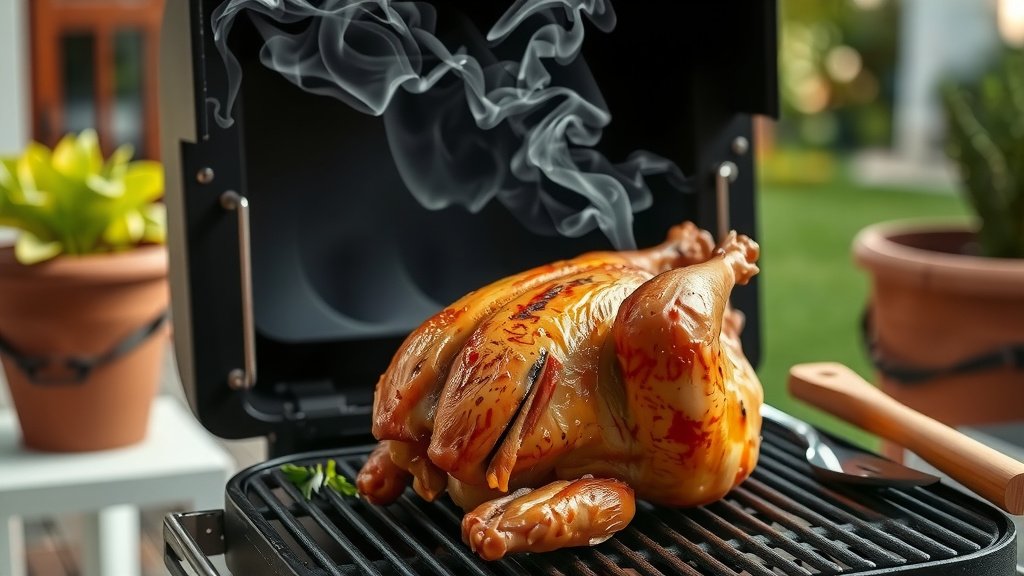
To roast a whole chicken on a gas grill, use the indirect heat method. Place your seasoned chicken breast-side up over unlit burners with the lid closed, maintaining a grill temperature of 375-400°F.
Cook until the internal temperature in the thickest part of the thigh reaches 165°F, which typically takes 1.5 to 2 hours for a 3-4 pound bird.
- Choose a 3-4 lb chicken for optimal roasting and juicy results.
- Set up your gas grill for indirect heat; aim for a steady 375-400°F temperature.
- Season your chicken generously, both inside the cavity and all over the skin.
- Position the chicken over burners that are turned off, then close the grill lid.
- Roast until the internal temperature hits 165°F in the thigh, then let it rest.
How To Roast A Whole Chicken On A Gas Grill?
Roasting a whole chicken on a gas grill provides incredible flavor and juicy meat. You can achieve crispy skin and perfectly cooked chicken with the right approach. It’s a straightforward process once you understand indirect grilling techniques.
Getting Your Grill Ready
Before you even touch the chicken, prepare your grilling station. A clean grill ensures better heat distribution and prevents sticking. Do you have all your tools ready?
Choosing the Right Chicken
We found that a whole chicken weighing between 3 to 4 pounds works best. This size cooks more evenly and efficiently on a gas grill. Larger chickens can be tricky to cook through without burning the outside.
Essential Tools You’ll Need
You’ll want a reliable meat thermometer for sure. This is your best friend for food safety and perfect doneness. A pair of long tongs and an aluminum drip pan are also very helpful.
Prep Work: Seasoning Your Bird
Proper seasoning is key to a flavorful roasted chicken. Don’t be shy; cover every inch. Think of it as painting a masterpiece for your taste buds.
Brining vs. Dry Rubs
Some grill masters swear by brining for an extra juicy bird (Cook’s Illustrated). Others prefer a simple, flavorful dry rub. Both methods yield fantastic results, it just depends on your preference and time.
A good dry rub includes salt, pepper, garlic powder, onion powder, and paprika. Rub it generously under the skin and all over the outside. You can even add fresh herbs like rosemary or thyme inside the cavity.
Trussing for Even Roasting
Trussing means tying the chicken’s legs together and tucking the wings. This creates a compact shape, allowing the chicken to cook more evenly. Many experts agree it helps prevent the wing tips and breast from drying out (America’s Test Kitchen).
Setting Up Your Gas Grill for Success
This is where the magic of indirect heat comes in. It’s like turning your grill into a convection oven. You’re aiming for gentle, all-around cooking.
The Indirect Heat Method Explained
For a 2-burner grill, light one burner to medium-high heat. Place the chicken over the unlit burner. For a 3 or 4-burner grill, light the two outside burners to medium-high. Place the chicken over the unlit middle burner(s).
Preheat your grill to 375-400°F. This steady temperature is what helps roast the chicken, not just cook it directly. Many grill enthusiasts suggest maintaining this range for best results.
The Roasting Process: Time and Temperature
Once your chicken is on the grill, patience is a virtue. Resist the urge to peek too often, as this releases precious heat. Every time you lift the lid, your cooking time extends.
Monitoring Internal Temperature
An instant-read thermometer is indispensable here. You’re looking for a specific temperature to ensure safety and tenderness. Always check the thickest part of the thigh, avoiding bone.
| Meat Type | Target Internal Temperature |
|---|---|
| Whole Chicken (Thigh) | 165°F (74°C) |
| Chicken Breast | 165°F (74°C) |
| Chicken Thigh (Bone-in) | 165°F (74°C) |
A 3-4 pound chicken typically roasts in about 1.5 to 2 hours. Start checking the temperature after about 75 minutes. If the skin is browning too quickly, you can tent it loosely with aluminum foil.
Resting is Not Optional
Once your chicken hits 165°F, take it off the grill. Let it rest, loosely tented with foil, for 10-15 minutes. This step is critical; it allows the juices to redistribute throughout the meat. Skip it, and you’ll have a dry bird.
Troubleshooting Common Issues
Even seasoned grillers face challenges sometimes. Don’t worry, we’ve got some solutions. Roasting a whole chicken should be enjoyable, not stressful.
Preventing Dry Chicken
The biggest culprit for dry chicken is overcooking. Always trust your thermometer, not just the clock. Resting the chicken after cooking also helps immensely. Some cooks place an aluminum pan with water under the grates to add moisture.
Achieving Crispy Skin
For truly crispy skin, ensure your grill maintains a consistent high temperature. Pat the chicken skin very dry with paper towels before applying your rub. Some research indicates that rubbing the skin with a little oil also helps create a crispy crust (Food Network).
- Pre-Grill Checklist:
- Clean grill grates?
- Propane tank full?
- Chicken thawed and patted dry?
- Seasoned and trussed?
- Drip pan ready?
- Meat thermometer handy?
Conclusion
Roasting a whole chicken on your gas grill is a rewarding experience. You get a flavorful, juicy bird with fantastic crispy skin. Remember to use indirect heat, monitor the internal temperature diligently, and always allow it to rest. With these simple steps, you’ll be serving up delicious grilled chicken that will impress everyone.
How do I set up my gas grill for indirect heat?
For indirect heat, you light some burners while leaving others off. If you have two burners, light one to medium-high and place food over the unlit burner. For three or more burners, light the outer burners to medium-high and place food over the unlit middle burner(s). This creates a convection-like oven effect.
What internal temperature should a whole chicken reach?
A whole chicken is safely cooked when the internal temperature reaches 165°F (74°C). You should measure this temperature in the thickest part of the thigh, avoiding the bone. Some chefs prefer a slightly higher temperature in the thigh for tenderness, around 170-175°F.
Should I use a drip pan when roasting chicken on a gas grill?
Yes, using a drip pan is a great idea. It catches the rendered fat and juices, preventing flare-ups that can char your chicken. You can also add some liquid like chicken broth or water to the pan to help keep the environment moist.
How do I prevent the chicken skin from burning on the grill?
To prevent burning, ensure you are using the indirect heat method consistently. If the skin starts to brown too quickly, you can loosely tent the chicken with aluminum foil. This protects the surface while the inside continues to cook.
How long should I rest the chicken after grilling?
You should rest your roasted chicken for at least 10 to 15 minutes after taking it off the grill. Resting allows the meat fibers to relax and reabsorb the juices, making the chicken much juicier and more tender. Just tent it loosely with foil.