
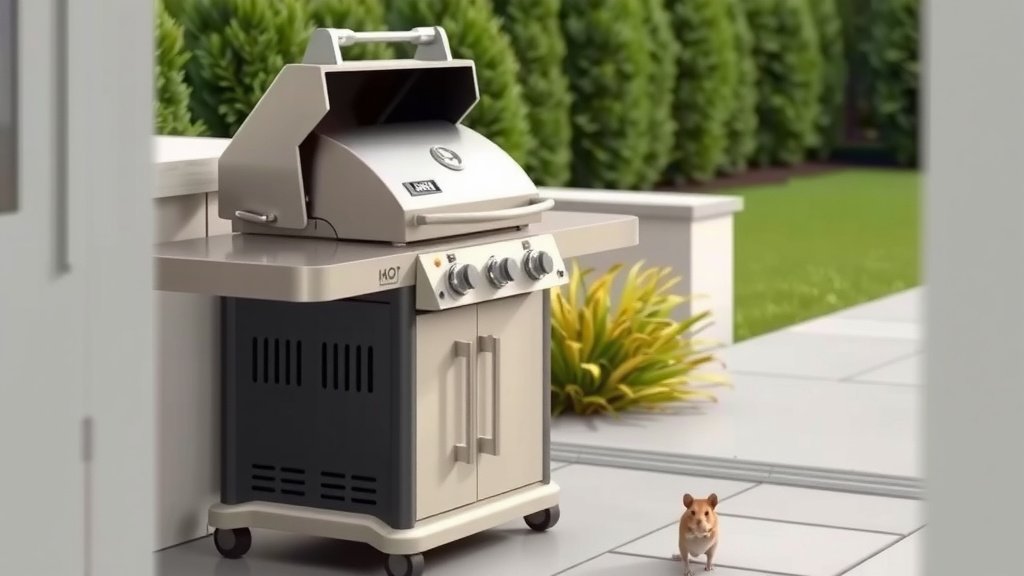
To keep mice out of your gas grill, first ensure it’s thoroughly clean and free of food scraps. Then, seal any openings or gaps where mice might enter, and use effective deterrents around the grill’s location.
Preventing mice from making your gas grill their home means consistent cleaning and smart preventative measures to block their access.
TL;DR: Keep Mice Out Of Gas Grill
- Thoroughly clean your grill after every use to eliminate food scents.
- Seal up any gaps or holes in the grill cabinet or covers.
- Use natural deterrents like peppermint oil or dryer sheets.
- Store your grill in a secure, elevated, or enclosed space if possible.
- Regularly inspect your grill for early signs of mouse activity.
How To Keep Mice Out Of Gas Grill?
Keeping mice out of your gas grill involves a mix of vigilance, cleanliness, and smart preventative actions. You want your grill ready for burgers, not as a cozy mouse motel.
Why Do Mice Pick Your Grill?
Mice are always looking for shelter, warmth, and food. Your gas grill, especially after a cookout, offers all three. Even tiny crumbs can be a feast for them.
They love the enclosed, sheltered space. A dirty grill is like an open invitation, making it a prime spot for nesting (Pest Control Experts).
Spotting the Uninvited Guests
How can you tell if mice have been visiting your grill? Look for small droppings, gnaw marks on wires or hoses, and shredded nesting materials inside.
You might even notice a faint, musky odor. These are clear signs you have some unwanted guests making themselves at home.
Immediate Steps After Discovery
If you find mice, the first thing is to remove them safely. Wear gloves and clean everything meticulously. You need to eliminate all traces of their presence.
Sanitize surfaces thoroughly, as mouse droppings can carry bacteria. Many public health guidelines emphasize proper cleaning (CDC).
The Power of Cleanliness: Your First Defense
A sparkling clean grill is your best weapon. After every use, make sure to scrape off food residue and wipe down surfaces.
Empty the grease tray regularly. This removes the strong food scents that attract rodents in the first place, making your grill far less appealing.
Here’s a quick checklist for a mouse-proof post-grill clean-up:
- Scrape grill grates thoroughly.
- Brush out any crumbs or food bits.
- Empty and clean the grease tray.
- Wipe down exterior and interior surfaces.
- Cover the grill immediately after cooling.
Seal the Entry Points
Mice can squeeze through surprisingly small gaps, sometimes as tiny as a dime. Inspect your grill’s cabinet, side tables, and cover for any openings.
Use steel wool or copper mesh to block these holes. These materials are tough for mice to chew through (Home Maintenance Guidelines).
Checking Your Grill Cover
Is your grill cover a friend or foe? A loose, ill-fitting cover can provide an easy way in. Ensure your cover fits snugly around the base of the grill.
Consider a heavy-duty, form-fitting cover. This adds another layer of protection, making it harder for mice to climb underneath.
Natural Deterrents That Work
Mice dislike strong smells like peppermint. Soaking cotton balls in peppermint oil and placing them inside or around the grill can help.
Dryer sheets are another simple, inexpensive option. The scent can be off-putting for rodents, encouraging them to find another spot.
Let’s look at some popular deterrents:
| Deterrent Type | How It Works | Pros | Cons |
|---|---|---|---|
| Peppermint Oil | Strong scent repels mice. | Natural, safe, pleasant for humans. | Needs frequent reapplication. |
| Dryer Sheets | Scent discourages entry. | Easy to use, cheap, readily available. | Scent fades, not always effective. |
| Steel Wool/Copper Mesh | Physical barrier. | Very effective for sealing holes. | Requires careful placement to avoid rust. |
| Mothballs | Naphthalene odor repels. | Strong, long-lasting scent. | Strong chemical odor, can be toxic to pets. |
The Scoop on Mothballs
While mothballs have a strong scent that mice hate, they also contain chemicals. Many experts caution about their use around food preparation areas.
If you use them, place them in a sealed container near the grill, not inside it. Always prioritize safety, especially with chemicals (Environmental Protection Agency).
Smart Storage Solutions
Where you store your grill plays a big part. Keeping it under a covered patio or in a garage can significantly reduce mouse access.
Some people opt for large, sturdy plastic bins to cover their grill when not in use. This creates an additional barrier that is difficult for pests to breach.
Elevating Your Grill
Mice are great climbers, but making things harder helps. If your grill is on wheels, consider locking them or moving the grill to a slightly elevated platform.
Any measure that makes the journey to your grill more challenging will reduce its appeal as a nesting site.
Regular Vigilance and Inspection
Prevention isn’t a one-time task. Make it a habit to routinely check your grill, even when not in use, for any signs of mouse activity.
A quick peek every few weeks can catch a problem early, before it becomes a full-blown infestation. We found that consistency is often the best defense.
Conclusion
Keeping mice out of your gas grill doesn’t require a special degree in pest control. It comes down to staying tidy, blocking their pathways, and using simple deterrents.
By making these practices a regular part of your grilling routine, you ensure your grill stays clean, safe, and ready for your next outdoor cooking adventure, free from unwanted furry squatters.
Can mice chew through gas lines in a grill?
Yes, mice are known to gnaw through various materials, including the rubber or plastic components of gas lines and electrical wires in grills. This can create a significant fire hazard, making regular inspections vital.
Is it safe to use a grill after finding mouse droppings?
After finding mouse droppings, it is important to thoroughly clean and sanitize your grill before using it again. Mouse droppings can carry harmful bacteria and viruses. Wear gloves and use a disinfectant suitable for food contact surfaces.
Do electronic rodent repellents work for grills?
Electronic rodent repellents that use ultrasonic waves claim to deter mice. While some users report success, their effectiveness can vary. Physical barriers and consistent cleanliness are generally considered more reliable methods.
How often should I clean my grease trap to deter mice?
You should clean your grill’s grease trap after every use. Food odors from accumulated grease and drippings are a primary attractant for mice. Keeping it clean drastically reduces the appeal of your grill to pests.
What should I do if mice have already damaged my grill?
If mice have damaged your grill, especially gas lines or electrical components, do not use it. It’s safest to consult a professional grill repair service to assess the damage. They can ensure the grill is safe to operate or advise on replacement.
