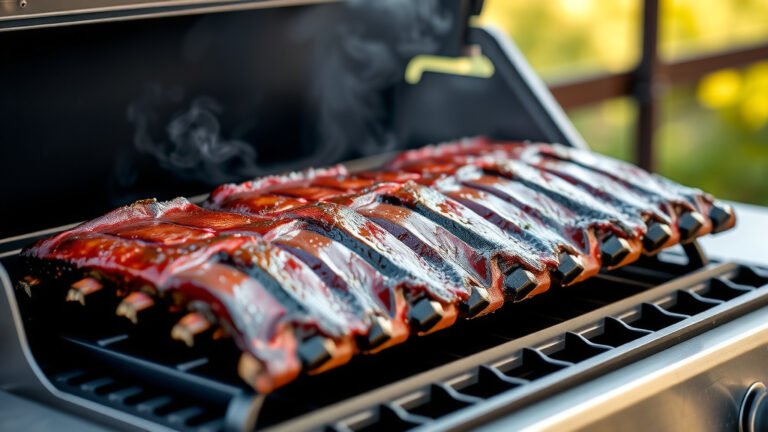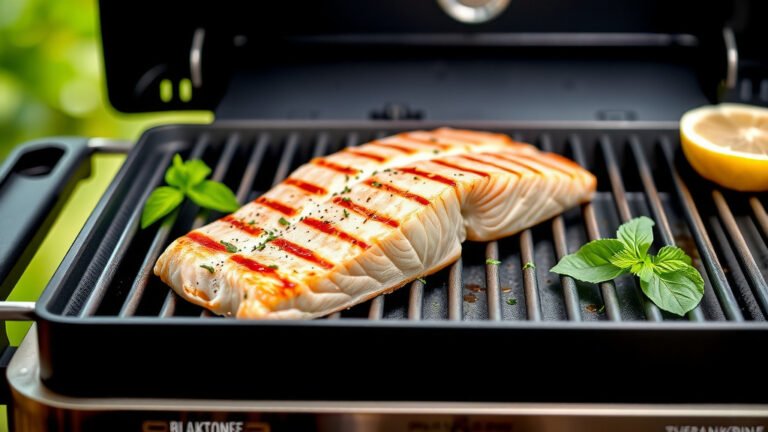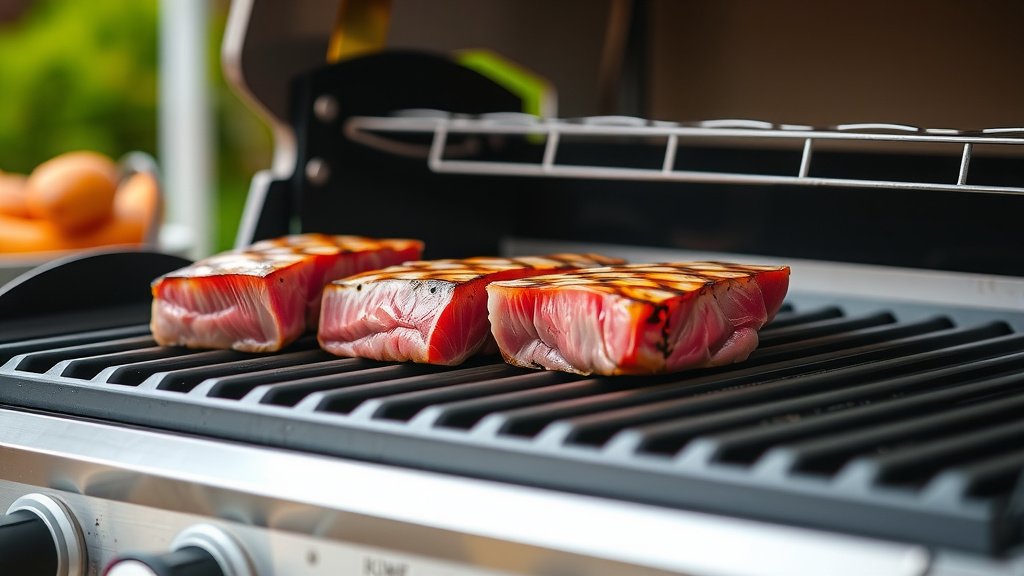
To grill tuna steaks on a gas grill, preheat your grill to high heat (around 450-500°F). Lightly oil the grates and grill the tuna for 2-3 minutes per side for a perfect medium-rare, or longer for more well-done results.
You want to aim for a beautiful sear on the outside while keeping the inside moist and flavorful. Achieving a great char without overcooking is key for delicious grilled tuna steaks.
- Achieve a perfect medium-rare by grilling tuna steaks at high heat for 2-3 minutes per side.
- Always pat your tuna dry and oil it lightly before placing it on the hot grates for optimal searing.
- Use a meat thermometer to check for doneness, aiming for 125°F for medium-rare tuna.
- Rest your grilled tuna steaks for a few minutes after cooking to redistribute juices and enhance flavor.
- Choose fresh, firm tuna steaks about 1-inch thick for the best grilling outcome and even cooking.
How To Grill Tuna Steaks On Gas Grill?
Grilling tuna steaks on a gas grill involves preparing your fish, getting the grill to the right temperature, and cooking quickly for a tender, flavorful outcome. Think of it as a sprint, not a marathon.
Choosing Your Tuna Steaks
Starting with the right tuna makes all the difference. What do you look for at the seafood counter? You want your tuna to be as fresh as possible.
Freshness Is Key
Seek out tuna steaks with a deep, vibrant red or pink color. They should not look dull or brownish. Many experts say a fresh fish often has a slight ocean smell, but never a strong, fishy odor (FDA).
Thickness Matters for Grilling
We found that a tuna steak about 1-inch thick is ideal for gas grilling. Thicker cuts might cook unevenly, and thinner ones can overcook quickly. Aim for consistency across your steaks.
Preparing Tuna for the Grill
A little prep work goes a long way. This ensures your tuna cooks beautifully and doesn’t stick to the grates. These steps are simple but vital.
Patting Dry for the Best Sear
Moisture is the enemy of a good sear. Always pat your tuna steaks completely dry with paper towels. This allows that fantastic crust to form when it hits the hot grill.
Simple Seasoning Ideas
Tuna has a naturally delicious taste. You don’t need to do much to enhance it. Sometimes, less is truly more.
- Simple Salt & Pepper: This classic combination lets the tuna’s natural flavor shine through.
- Olive Oil & Lemon: A brush of olive oil and a squeeze of fresh lemon brightens the taste.
- Garlic & Herbs: A sprinkle of garlic powder and dried oregano or thyme adds a nice aroma.
- Soy-Ginger Glaze: A quick brush of soy sauce mixed with grated ginger gives an Asian flair.
Setting Up Your Gas Grill
Your gas grill is a powerful tool for cooking tuna. Getting it ready correctly means the difference between success and frustration. Don’t skip these steps.
Preheating to the Right Temperature
You need a very hot grill for tuna steaks. We found that preheating to 450-500°F (high heat) is best. This takes about 10-15 minutes. Why so hot? It’s all about that quick sear.
Oiling Your Grill Grates
Ever wonder why your tuna sometimes sticks? Oiling the grates helps prevent this. Use a paper towel dipped in high-smoke-point oil, like canola or grapeseed, and carefully wipe the hot grates. Be cautious and quick!
Grilling Tuna Steaks: Step-by-Step
Now for the fun part! Grilling tuna is a speedy process. Keep your eyes on the fish and your timing precise. You’re almost ready to enjoy your meal.
Initial Sear Time
Place your seasoned, oiled tuna steaks directly over the hottest part of the grill. For a 1-inch thick steak, grill for about 2-3 minutes on the first side. You want to see nice grill marks.
Flipping and Finishing
Carefully flip the tuna steaks. Grill for another 2-3 minutes on the second side. This timing usually gives you a beautiful medium-rare center. Adjust slightly for your preferred doneness.
Checking for Doneness
Knowing when your tuna is done is a skill that comes with practice. A meat thermometer is your best friend here. Visual cues help, too.
The Temperature Guide for Tuna
Many experts say using an instant-read thermometer is the most reliable method (USDA). Insert it into the thickest part of the steak. Here’s what to aim for:
| Doneness Level | Internal Temperature |
|---|---|
| Rare | 115-120°F (46-49°C) |
| Medium-Rare | 120-125°F (49-52°C) |
| Medium | 130-135°F (54-57°C) |
| Well-Done | 140°F+ (60°C+) |
Remember, tuna will continue to cook slightly after removal from the grill.
Resting for Juicier Results
Just like with a beef steak, resting your tuna is important. It helps achieve a moister, more tender bite. Give it a moment to relax.
Transfer your grilled tuna to a plate or cutting board. Cover it loosely with foil. Let it rest for about 5 minutes. This lets the juices redistribute throughout the steak. What a difference it makes!
Common Mistakes to Avoid
Even seasoned grillers can make errors. Knowing what to watch out for keeps your tuna perfect. Avoid these pitfalls for the best results:
- Not preheating the grill enough: This leads to sticking and poor searing.
- Overcooking the tuna: Tuna can dry out very quickly.
- Not oiling the grates: Your delicious tuna will fuse with the grill.
- Using very thin steaks: They are much harder to cook without drying out.
- Flipping too often: Let it sear properly on each side.
Conclusion
Grilling tuna steaks on a gas grill is a rewarding experience when done right. By choosing fresh fish, preparing it well, and controlling your grill’s heat, you can achieve a fantastic meal. Keep it simple, cook it fast, and remember to rest your tuna. You’ll be enjoying perfectly grilled tuna every time. Ready for your next cookout?
How do I prevent tuna steaks from sticking to the grill?
To prevent sticking, always preheat your gas grill to high heat (450-500°F) and then clean your grates thoroughly. Lightly oil the hot grates just before placing the tuna. Also, ensure your tuna steaks are patted completely dry before oiling and seasoning them.
What is the ideal thickness for grilling tuna steaks?
Many experts recommend using tuna steaks that are approximately 1-inch thick. This thickness allows for a good sear on the outside while keeping the inside moist and preventing it from overcooking too quickly, especially for medium-rare results.
Can I grill frozen tuna steaks?
While you can grill frozen tuna, it’s generally best to thaw them completely first. Thawing ensures more even cooking and helps achieve a better sear. If you must grill from frozen, increase your cooking time significantly and monitor the internal temperature carefully.
How do I know when my tuna steak is medium-rare without a thermometer?
Without a thermometer, you can gently press the center of the steak with your finger. For medium-rare, it should feel slightly firm on the outside but still have some give or softness in the center. The color inside will be pink, with a darker, rarer center.
What kind of seasoning works best for grilled tuna?
Simple seasonings often work best, allowing the tuna’s natural flavor to shine. A good quality salt, freshly ground black pepper, and a brush of olive oil are excellent starting points. You can also add lemon zest, garlic powder, or fresh herbs like dill or parsley for extra flavor.