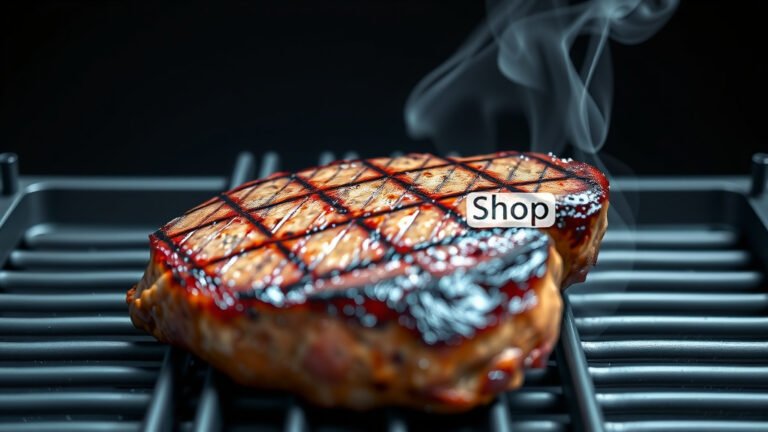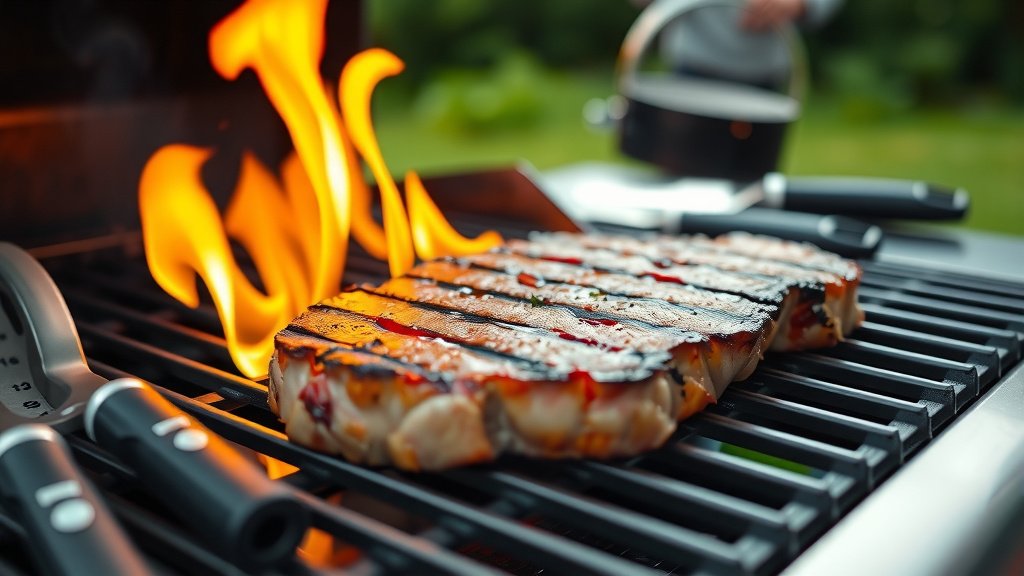
To grill a strip steak on a gas grill, you’ll want to preheat your grill to a high temperature, sear each side for a few minutes, then finish cooking over indirect heat until it reaches your preferred internal doneness.
Achieving a perfectly cooked strip steak with a beautiful crust and tender center comes down to proper heat management and using a reliable meat thermometer.
- Choose a strip steak at least 1.25 to 1.5 inches thick for best results.
- Season your steak generously and allow it to come near room temperature before grilling.
- Preheat your gas grill to a high setting for direct searing, creating two heat zones.
- Sear the steak over high heat for 2-3 minutes per side, then move it to the cooler zone.
- Use a meat thermometer to track the internal temperature and rest your steak for 5-10 minutes before slicing.
How To Grill Strip Steak On Gas Grill?
Grilling a strip steak on a gas grill is quite simple when you manage your heat zones correctly and use a reliable meat thermometer for accuracy. This method helps you get a beautiful sear on the outside while keeping the inside juicy and tender.
Choosing Your Strip Steak
Selecting the right strip steak makes a big difference in your final grilled meal. Look for quality and good marbling for the best flavor and texture.
Thickness Matters for a Great Sear
We found that a strip steak between 1.25 and 1.5 inches thick works best on a gas grill. Thicker steaks allow you to develop a great crust without overcooking the inside.
Thinner steaks can cook too quickly, making it hard to get that perfect medium-rare center.
Look for Good Marbling
Marbling refers to the small flecks of fat within the muscle. More marbling usually means a more flavorful and tender steak.
It adds moisture and richness as it melts during cooking. We often look for USDA Choice or Prime grades for consistent quality.
Preparing Your Steak for the Grill
A little preparation before grilling can really elevate your steak. These steps help ensure even cooking and better flavor.
Bringing it to Room Temperature
Many experts say to let your steak sit out for 30-60 minutes before grilling. This step helps the steak cook more evenly from edge to center.
A cold steak hitting a hot grill might cook too fast on the outside before the inside catches up.
The Salt and Pepper Debate
When it comes to seasoning, keep it simple. Coarse salt and freshly ground black pepper are often all you need.
Some people like to salt their steak an hour or two ahead of time. This allows the salt to draw moisture out, then reabsorb, leading to a deeper flavor (Cook’s Illustrated).
Drying the Surface
Before seasoning, always pat your steak dry with paper towels. A dry surface is key to getting a fantastic sear.
Moisture on the surface creates steam, which prevents that lovely brown crust from forming.
Setting Up Your Gas Grill for Success
A gas grill gives you excellent control over heat, which is perfect for grilling steak. Setting it up correctly is the first step.
Two-Zone Grilling is Best
For strip steak, we recommend setting up two heat zones on your gas grill. This allows you to sear at high heat and then finish cooking gently.
It’s like having a fast lane and a slow lane for your steak.
High Heat Zone
Turn two burners to high. This area will be for searing your steak and building that delicious crust.
Preheat this zone for 10-15 minutes until it’s very hot, usually around 450-500°F.
Indirect Heat Zone
Turn off one burner, or set it to low. This cooler area is where your steak will finish cooking to its target internal temperature.
It prevents the outside from burning while the inside slowly reaches doneness.
The Grilling Process: Step-by-Step
Now, let’s get that beautiful strip steak onto the hot grill. Precision and timing are important here.
Lightly Oil Your Grates
Before placing the steak down, lightly oil your grill grates. This helps prevent sticking and makes cleanup easier.
You can use a paper towel dipped in high-smoke-point oil, held with tongs.
Searing for Flavor
Place your strip steak over the direct, high heat zone. Sear each side for about 2-3 minutes.
You’re looking for a deep brown crust to form, full of rich flavor.
Finishing on Indirect Heat
After searing both sides, move the steak to the indirect heat zone. Close the lid and let it continue to cook.
This gentle cooking allows the heat to penetrate the center without burning the exterior.
Checking for Doneness with a Thermometer
This is where your meat thermometer becomes your best friend. Insert it into the thickest part of the steak, avoiding any bone or fat pockets.
Many guidelines point to checking temperatures frequently as the steak cooks (USDA).
| Doneness | Target Internal Temperature (before resting) |
|---|---|
| Rare | 120-125°F |
| Medium-Rare | 130-135°F |
| Medium | 135-140°F |
| Medium-Well | 140-145°F |
| Well Done | 150°F+ |
Remember, the temperature will rise a few degrees after you remove it from the grill.
The All-Important Rest
Once your steak reaches your desired temperature, remove it from the grill and place it on a cutting board. Tent it loosely with foil.
Let it rest for 5-10 minutes. This resting period allows the juices to redistribute throughout the meat, making every bite incredibly tender and juicy.
Pro Tips for Grilling Strip Steak
Want to make your strip steak even better? Here are a few quick pointers.
- Clean your grill grates thoroughly before and after each use.
- Do not press down on your steak with a spatula; this squeezes out juices.
- Use tongs to turn the steak, not a fork, to keep the juices inside.
- Consider a quick butter baste during the last minute of indirect cooking.
- Always slice against the grain for the most tender bites.
- Salt flakes at the very end can add a great pop of flavor.
Troubleshooting Common Grilling Issues
Even seasoned grillers face challenges. Here’s how to handle a couple of common ones.
Too Much Smoke?
If you see excessive smoke, check for flare-ups from dripping fat. Move your steak away from the flames temporarily.
Sometimes, simply cleaning your grill grates more regularly can prevent this problem.
Uneven Cooking?
Is one side of your steak cooking faster than the other? This could mean your grill has hot spots.
Try rotating the steak periodically or adjusting the heat on individual burners to create a more even cooking surface.
Conclusion
Grilling a perfect strip steak on a gas grill is very achievable with a few straightforward steps. By choosing a quality cut, preparing it well, managing your grill’s heat, and using a meat thermometer, you can create a truly delicious meal.
Remember that resting your steak is just as important as the grilling itself. Enjoy the process and the fantastic flavors that come from a perfectly grilled strip steak!
FAQs About Grilling Strip Steak on a Gas Grill
Should I marinate strip steak before grilling?
Marinating a strip steak is usually not necessary if it’s a good quality cut with nice marbling. Simple seasoning like salt and pepper is often enough to let the steak’s natural flavor shine. If you prefer a marinade, keep it light and avoid acidic ingredients that can toughen the meat.
How do I prevent my strip steak from sticking to the grill?
To prevent sticking, ensure your grill grates are clean and very hot before you put the steak on. You can also lightly oil the grates with a high-smoke-point oil, like grapeseed or canola, just before placing the steak down.
Can I get good grill marks on a gas grill?
Absolutely! To get clear grill marks, make sure your grill is preheated to high heat. Place the steak on the grates and leave it undisturbed for 2-3 minutes to allow a sear to develop. For a crosshatch pattern, rotate the steak 90 degrees after the first 2-3 minutes, then flip and repeat on the other side.
What’s the best way to tell if my gas grill is hot enough?
The simplest way to check your grill’s temperature is with a grill thermometer, usually built into the lid. For searing steak, aim for 450-500°F. If you don’t have a thermometer, you can use the hand test: you should only be able to hold your hand about 2-3 inches above the grate for 2-4 seconds for high heat.
How do I store leftover grilled strip steak?
Store any leftover grilled strip steak in an airtight container in the refrigerator within two hours of cooking. It will typically stay fresh for 3-4 days. When reheating, slice the steak thinly and warm it gently in a pan or oven to avoid drying it out.