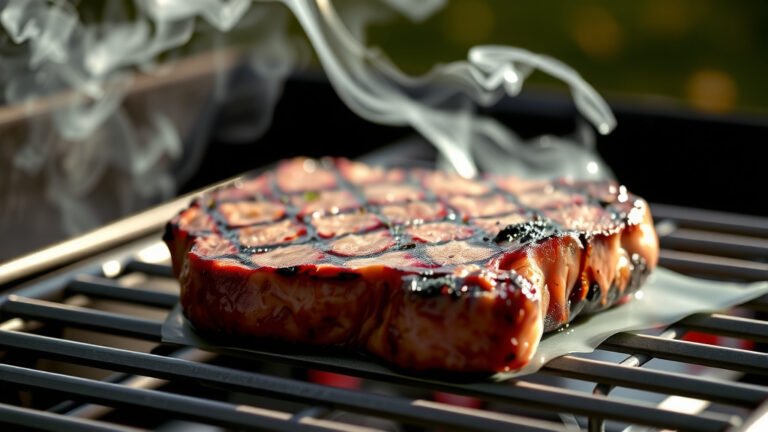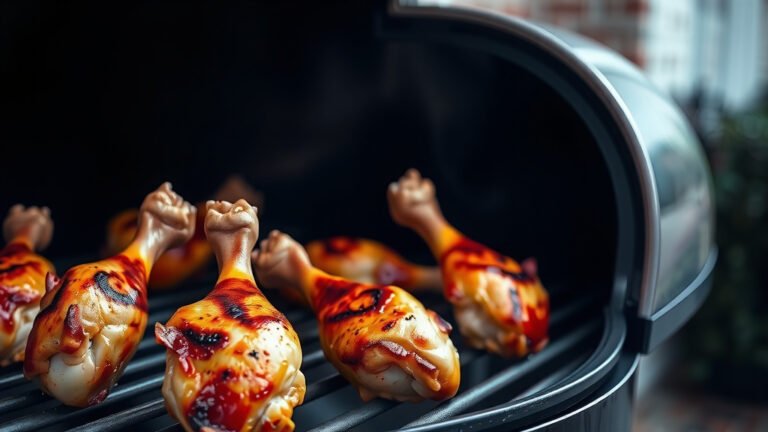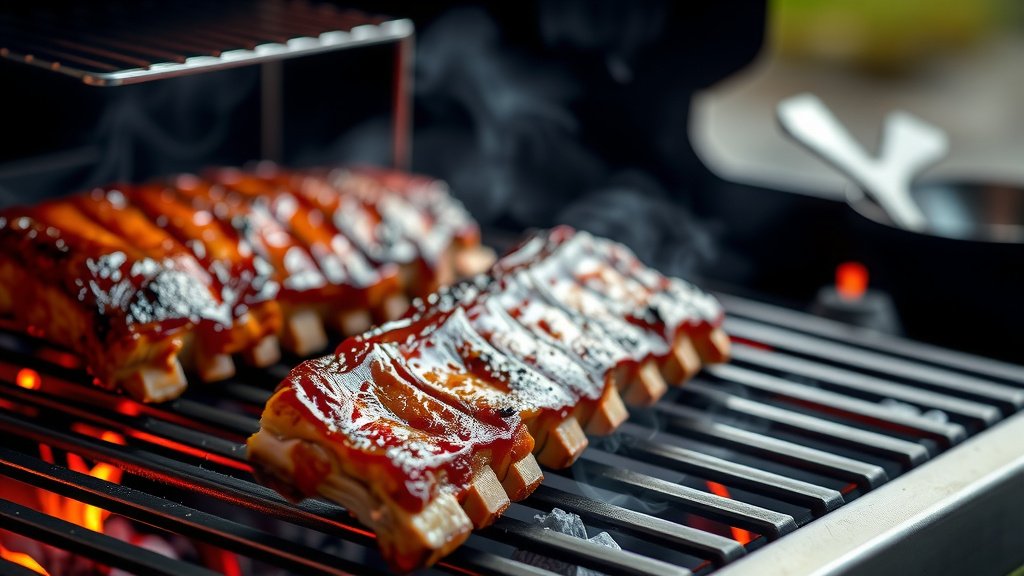
To grill pork ribs on a gas grill, you should set up your grill for indirect heat, maintaining a consistent temperature between 275-300°F.
Cook the pork ribs slowly for 3-4 hours, or until they reach a bend-test tenderness, ensuring a juicy and flavorful result.
Here’s a quick overview for grilling amazing pork ribs on your gas grill:
- Prep your ribs by removing the membrane and applying a delicious dry rub.
- Set up your gas grill for two-zone cooking to use indirect heat.
- Maintain a low and steady temperature, around 275-300°F, for slow cooking.
- Cook your ribs for several hours, often using a “2-2-1” or “3-2-1” method, depending on the ribs.
- Finish by saucing them lightly and getting a bit of char, then rest before slicing.
How To Grill Pork Ribs On Gas Grill?
Grilling pork ribs on a gas grill involves patience and proper heat management. You’ll achieve tender, flavorful ribs by cooking them slowly over indirect heat.
Choosing Your Ribs: Baby Back vs. Spare
The type of ribs you pick makes a big difference. Baby back ribs are leaner and cook faster.
Spare ribs, including St. Louis cut, are meatier and richer, needing a bit more cooking time.
We found that both types of ribs taste fantastic when grilled correctly, so choose what you enjoy most.
Baby Back Ribs Explained
These ribs come from the loin area. They are curved and shorter, often perfect for smaller gatherings.
Many people appreciate their lean meat and quick cooking properties.
Spare Ribs and St. Louis Cut
Spare ribs are larger, coming from the belly area. They have more fat and connective tissue, which means more flavor.
The St. Louis cut is a trimmed spare rib, making it rectangular and easier to cook evenly (USDA).
Preparing Your Pork Ribs for the Grill
Proper preparation is the first step to successful ribs. Don’t skip these simple stages.
Removing the Membrane: A Must-Do
Always remove the thin membrane from the bone side of the ribs. This stops them from being tough and helps your rub penetrate.
You can use a knife to lift an edge, then peel it off with a paper towel for grip.
Applying Your Dry Rub
A good dry rub builds amazing flavor. Apply it generously to all sides of the ribs.
Let the rub sit on the ribs for at least 30 minutes, or even overnight in the fridge, before grilling.
Setting Up Your Gas Grill for Ribs
Indirect heat is your secret weapon for tender ribs. You are essentially turning your grill into an oven.
This method prevents burning and allows the ribs to cook evenly and slowly.
Two-Zone Grilling Method
Turn on one or two burners on one side of your grill to medium-low heat. Leave the other burners off.
You will place your ribs over the unlit side, creating the indirect cooking zone.
Temperature Control is Key
Aim for a grill temperature of 275-300°F. Use your grill’s thermometer or a separate, accurate thermometer.
Adjust your lit burners as needed to keep a steady temperature inside the grill.
The Grilling Process: Low and Slow
Patience is a virtue when cooking ribs. Low and slow is the mantra for maximum tenderness.
Initial Cook Time (Unwrapped)
Place the ribs bone-side down over the indirect heat zone. Close the lid.
Cook for about 2-3 hours for baby backs, or 3-4 hours for spare ribs (USDA), maintaining your target temperature.
The “2-2-1” or “3-2-1” Method
Many experts use a wrapping method. For baby backs, try “2-2-1”: 2 hours unwrapped, 2 hours wrapped, 1 hour unwrapped with sauce.
For spare ribs, you might do “3-2-1”: 3 hours unwrapped, 2 hours wrapped, 1 hour unwrapped with sauce.
Wrapping Your Ribs for Tenderness
After the initial cook, wrap the ribs tightly in foil with a splash of apple juice or cider vinegar.
This steaming step helps break down connective tissue, making the ribs incredibly tender.
Adding BBQ Sauce (Optional)
If you like saucy ribs, apply your favorite BBQ sauce during the final hour of grilling.
Apply it in layers, allowing each layer to caramelize slightly before adding more.
Checking for Doneness
How do you know when your ribs are ready? The “bend test” is a popular method.
Pick up one end of a rack with tongs. If the rack bends significantly and cracks, they are ready.
Many chefs also say to look for the meat pulling back from the bones by about a quarter-inch.
Resting Your Ribs
After grilling, let the ribs rest, loosely covered with foil, for 10-15 minutes.
This allows the juices to redistribute, ensuring a moist and delicious finished product.
Common Pitfalls to Sidestep
Avoid these common issues to get perfect ribs every time.
- Cooking Too Hot: High heat burns the outside before the inside cooks through. Always use indirect heat.
- Not Removing Membrane: A chewy membrane makes for an unpleasant texture.
- Over-Saucing Early: Sugary sauces can burn easily. Add them towards the end of cooking.
- Impatience: Ribs need time. Don’t rush the process, or they will be tough.
Essential Rib Grilling Checklist
Having the right tools makes the process smoother and more enjoyable.
- Good quality pork ribs
- Dry rub ingredients
- Aluminum foil
- Tongs
- Meat thermometer (optional, but helpful)
- Spray bottle (for apple cider vinegar/water mix)
- BBQ sauce (your choice!)
Troubleshooting Tough Ribs
If your ribs are tough, they simply need more time on the grill. Don’t be afraid to extend the cooking duration.
Wrap them back up, add a bit more liquid, and continue cooking over indirect heat until they are tender.
Conclusion
Grilling pork ribs on a gas grill might seem complex, but it’s very achievable with the right approach. Focus on low, slow, indirect heat, and pay attention to those critical tenderness cues. With these steps, you will create ribs that are juicy, flavorful, and fall-off-the-bone tender. Enjoy the process and the delicious results!
Frequently Asked Questions About Grilling Pork Ribs
How long does it take to grill ribs on a gas grill?
It typically takes 3-4 hours for baby back ribs and 4-6 hours for spare ribs when cooking them low and slow on a gas grill at 275-300°F.
Should I boil ribs before grilling them on a gas grill?
Boiling ribs before grilling is generally not recommended by barbecue enthusiasts. It can leach out flavor and often results in a less authentic texture. Instead, focus on slow grilling with indirect heat for tender results.
What temperature should I grill ribs at on a gas grill?
You should aim for an ambient grill temperature of 275-300°F. This lower temperature ensures the ribs cook slowly and become tender without burning.
How do you make ribs tender on a gas grill?
To make ribs tender on a gas grill, use indirect heat at a low temperature (275-300°F), cook them slowly for several hours, and consider wrapping them in foil for a portion of the cooking time to steam them.
Can I use a rub and sauce on my gas-grilled ribs?
Absolutely! A good dry rub should be applied before grilling to build a flavor base. BBQ sauce can be brushed on during the last 30-60 minutes of cooking to caramelize, ensuring it does not burn.