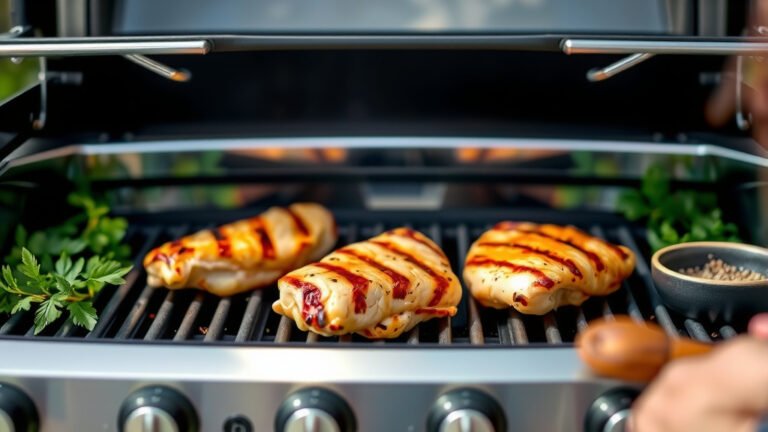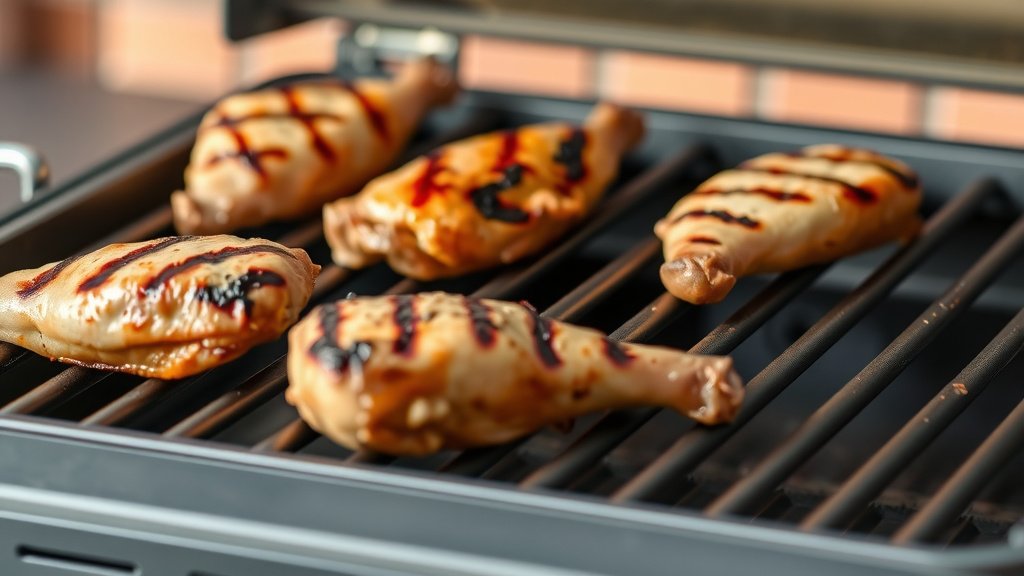
To grill chicken on a propane grill, preheat your grill to medium-high (around 400°F), then sear the chicken over direct heat before moving it to indirect heat to finish cooking until the internal temperature reaches 165°F (USDA).
You’ll achieve juicy, flavorful results by using a two-zone setup, ensuring even cooking and crispy skin without burning, and always checking the internal temperature with a meat thermometer.
Here’s a quick look at what we’ll cover to help you grill chicken like a pro:
- Understand the simple setup of your propane grill for perfect chicken.
- Discover the best ways to prepare your chicken for grilling.
- Learn how to use two-zone grilling for consistent, delicious results.
- Get tips on monitoring temperature to ensure safe and succulent chicken.
How To Grill Chicken On Propane Grill?
Grilling chicken on a propane grill is straightforward and delivers fantastic flavor when done correctly. The key is managing your grill’s temperature and understanding different heat zones.
Why Choose a Propane Grill for Chicken?
Propane grills offer quick heat-up times and precise temperature control. This makes them ideal for cooking chicken consistently, avoiding the guesswork of charcoal.
Many experts say propane grills provide a clean burn, which allows the natural flavors of your chicken and any marinades to shine through.
Essential Tools for Grilling Success
Before you start, gather your gear. You’ll need a good set of tongs, a sturdy spatula, and a reliable meat thermometer.
A grill brush for cleaning and a spray bottle with water (for flare-ups) are also helpful. Having everything ready means a smoother grilling experience.
Choosing Your Chicken Cuts
Different chicken cuts cook at varying rates. Bone-in pieces, like thighs or drumsticks, stay juicier but take longer.
Boneless cuts, such as breasts or tenders, cook faster but can dry out if you’re not careful. We found that a mix of cuts keeps things interesting!
Prepping Your Chicken for the Grill
Proper preparation is half the battle. Always pat your chicken dry with paper towels before seasoning or marinating.
This helps achieve that desirable crispy skin or a nice sear on boneless pieces. You want to remove as much surface moisture as possible.
Marinades and Rubs: Flavor Boosters
Marinades add flavor and moisture, while rubs create a delicious crust. Try a simple lemon-herb marinade or a smoky paprika rub.
Give your chicken at least 30 minutes to absorb those flavors. For deeper taste, an overnight marinade can make a big difference.
Setting Up Your Propane Grill
This is where the magic begins. Always start with a clean grill grate to prevent sticking and ensure even heat distribution.
Light your grill and let it preheat. We’re aiming for a strong, consistent heat before any chicken touches the grates.
Two-Zone Grilling Explained
This technique is your secret weapon for grilled chicken. It involves creating a direct heat zone and an indirect heat zone.
Turn one or two burners to high for direct heat. Leave the remaining burners off or on low for indirect heat. This setup gives you flexibility.
Preheat Perfection
For grilling chicken, you want your grill to reach around 400°F (medium-high heat). Close the lid and let it preheat for 10-15 minutes.
A hot grill sears the chicken quickly, locking in juices and developing flavor. Don’t rush this step; it’s genuinely worth the wait.
Grilling Techniques for Chicken
Once your grill is hot, it’s time to start cooking. The strategy changes slightly depending on your chicken cut.
Generally, you’ll start over direct heat, then move to indirect. This ensures a beautiful sear without burning the exterior before the inside is cooked.
Direct Heat vs. Indirect Heat
Use direct heat for searing and creating those lovely grill marks. This is typically for the first few minutes on each side.
Indirect heat is for slow, even cooking, allowing the chicken to reach a safe internal temperature without drying out. It’s like using an oven, but with a smoky kiss.
How Long to Grill Chicken?
Grilling times vary based on the chicken cut and thickness. Always rely on a meat thermometer, but this table gives you a good starting point:
| Chicken Cut | Direct Heat (minutes per side) | Indirect Heat (total minutes) |
|---|---|---|
| Boneless Breasts | 3-5 | 8-15 |
| Bone-in Thighs | 5-7 | 15-25 |
| Drumsticks | 5-7 | 15-25 |
| Wings | 2-3 | 15-20 |
Flip It Right
Resist the urge to constantly flip your chicken. Let it cook for several minutes on each side to develop a good crust and grill marks.
Flipping too often prevents proper searing. Usually, one or two flips are enough after the initial sear on each side.
Temperature Is Key: Don’t Guess!
The single most important tool is your meat thermometer. Research often connects undercooked poultry with foodborne illness (CDC).
Chicken must reach a minimum internal temperature of 165°F (74°C) for food safety. Insert the thermometer into the thickest part of the chicken, avoiding bones.
Here’s a quick checklist to ensure your chicken is perfectly cooked:
- Pat chicken dry before cooking.
- Preheat your grill to 400°F.
- Use two-zone grilling setup.
- Sear chicken over direct heat.
- Move chicken to indirect heat to finish.
- Always check for 165°F internal temperature.
Avoiding Common Grilling Mistakes
We’ve all been there – dry chicken or burnt skin. One common mistake is not preheating the grill enough.
Another is overcrowding the grill. Give each piece of chicken space for even cooking and proper air circulation.
Resting Your Chicken
Once your chicken hits 165°F, remove it from the grill immediately. Tent it loosely with foil and let it rest for 5-10 minutes.
This resting period allows the juices to redistribute throughout the meat, making it incredibly tender and moist. Skipping this step is a disservice to your delicious chicken.
Cleaning Up After Grilling
After enjoying your meal, don’t forget the grill. Clean the grates while they are still warm with a good grill brush.
This prevents food from hardening and makes future grilling sessions much easier. A little effort now saves a lot of scrubbing later.
Conclusion
Grilling chicken on a propane grill is a rewarding experience when you know the steps. From setting up your two-zone heat to verifying the safe internal temperature, each step contributes to succulent, flavorful results.
You now have the knowledge to grill chicken with confidence, creating delicious meals for family and friends. Enjoy the process and savor every bite of your perfectly grilled chicken!
What is the best temperature to grill chicken on a propane grill?
The best temperature to grill chicken is generally around 400°F for medium-high heat. You’ll use this initial heat for searing before moving the chicken to a cooler, indirect heat zone.
Should I grill chicken on high or low heat?
You should start grilling chicken on medium-high (direct) heat to get a good sear and grill marks, then move it to a lower (indirect) heat zone to cook through slowly and evenly without burning the outside.
How do you prevent chicken from drying out on the grill?
To prevent chicken from drying out, use a two-zone grilling setup, avoid overcooking by monitoring the internal temperature with a meat thermometer, and always let the chicken rest for 5-10 minutes after it comes off the grill.
Can I grill frozen chicken directly on a propane grill?
Many experts strongly advise against grilling frozen chicken directly, as it can cook unevenly and increase the risk of foodborne illness. Always thaw chicken completely in the refrigerator before grilling.
How do I know when grilled chicken is fully cooked without a thermometer?
While a thermometer is truly the best way, you can tell grilled chicken is fully cooked if its juices run clear when pierced with a knife, and the meat is no longer pink inside. However, relying on a thermometer for an internal temperature of 165°F is the safest method (USDA).