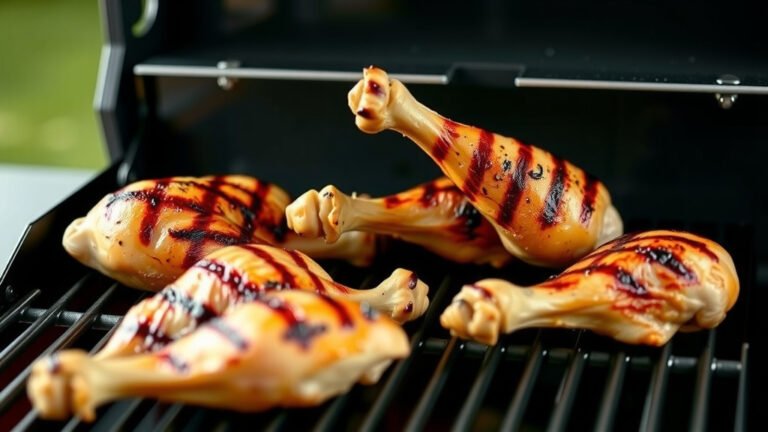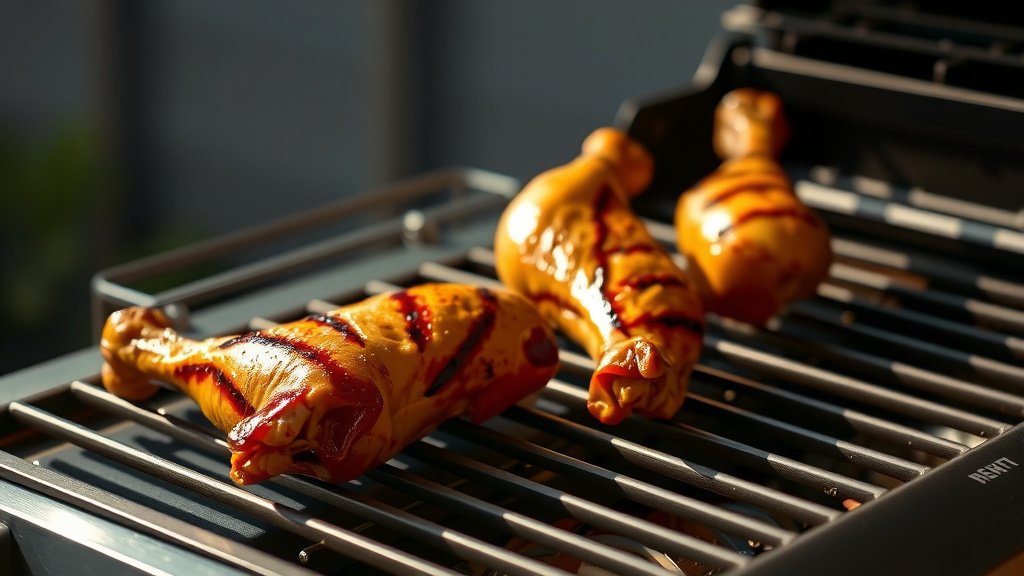
To grill chicken legs on a gas grill, you will first preheat your grill to a medium-high temperature, around 400°F, then reduce it to medium heat, about 350-375°F, for cooking.
You’ll primarily use indirect heat to cook the chicken through, finishing with a quick sear over direct heat to achieve deliciously crispy skin and a beautiful color.
Here’s the quick lowdown on grilling perfect chicken legs:
- Get your gas grill ready with a two-zone heat setup.
- Season your chicken well before it hits the grates.
- Cook most of the time over indirect heat, turning occasionally.
- Use a meat thermometer to confirm doneness (175°F internal temperature).
- Sear for a few minutes over direct heat at the end for that irresistible crisp.
How To Grill Chicken Legs On Gas Grill?
Grilling chicken legs on a gas grill is simpler than you might think, leading to juicy meat and flavorful, crispy skin. The secret lies in managing your grill’s heat zones effectively.
Why Grill Chicken Legs?
Chicken legs are a fantastic choice for grilling. They are budget-friendly and full of flavor, especially with the bone-in skin-on cut. Plus, their fat content helps keep them moist during cooking, making them quite forgiving for grill masters of all levels. Who doesn’t love a good drumstick?
Setting Up Your Gas Grill for Success
Proper grill setup is the foundation of perfectly grilled chicken legs. It prevents burning while ensuring thorough cooking. Think of it like building a strong base for a tasty meal.
The Two-Zone Setup Explained
For chicken legs, a two-zone setup is your best friend. This means having one side of your grill hot (direct heat) and the other side cooler (indirect heat). You’ll light burners on one side, keeping the others off. This allows you to cook slowly without scorching. We found that this method helps achieve a more even cook and prevents flare-ups from dripping fat.
Temperature Control is Key
Aim for a medium-high preheat, around 400°F, across the direct heat zone. Once you place the chicken, reduce the active burners to maintain a medium heat of 350-375°F in the indirect zone. This temperature range is ideal for slow, gentle cooking that keeps the chicken tender.
Marinating Your Chicken Legs: A Flavor Boost
Flavor starts before the chicken even touches the grill. A good seasoning or marinade makes all the difference. Don’t skip this step if you want to elevate your meal.
Simple Seasoning vs. Marinades
You can choose a simple dry rub, which is quick and effective, or a liquid marinade for deeper flavor penetration. Both options work well. Many experts say that even a simple salt and pepper seasoning is better than nothing at all.
Quick Dry Rub Idea
For a basic yet flavorful dry rub, mix paprika, garlic powder, onion powder, salt, and black pepper. A pinch of cayenne can add a nice kick. Apply it generously to your chicken legs about 30 minutes before grilling, or even a few hours ahead if you have time. This allows the flavors to truly sink into the meat.
The Grilling Process: Step-by-Step
Once your grill is ready and your chicken is seasoned, it’s time for the main event. Follow these steps for tender, juicy results.
Prepping Your Grill Grates
Before placing any food, make sure your grill grates are clean. Use a grill brush to remove any residue from previous cooks. Then, lightly oil the grates to prevent sticking. This ensures a smooth grilling experience.
Placing the Chicken Legs
Place your seasoned chicken legs over the indirect heat zone. Close the lid to allow the grill to maintain a consistent temperature. Cooking over indirect heat helps the chicken cook through without burning the exterior. We found that this initial indirect cook is fundamental for doneness.
Flipping and Monitoring
Grill the chicken legs for about 35-45 minutes total, flipping them every 10-15 minutes. This ensures even cooking on all sides. Keep an eye on the internal temperature, especially as you get closer to the end of the cooking time. Are you watching those temps? It’s crucial!
Achieving Crispy Skin
For that coveted crispy skin, move the chicken legs over the direct heat zone for 2-3 minutes per side at the very end. Watch them closely to prevent burning, as this step is quick. The high heat will render the fat and crisp up the skin beautifully, adding a fantastic texture. This quick sear is what gives you that restaurant-quality finish.
Knowing When Your Chicken Legs Are Done
Safety and taste depend on knowing when your chicken is fully cooked. Never guess, always check!
The Importance of Internal Temperature
The only sure way to know if your chicken is safe to eat is by checking its internal temperature with a meat thermometer. Insert the thermometer into the thickest part of the leg, avoiding the bone. Research from the USDA suggests that chicken is fully cooked and safe to consume when it reaches 175°F. This ensures all harmful bacteria are eliminated. We found that cooking to 175°F for legs also results in tender, fall-off-the-bone meat.
| Chicken Part | Safe Internal Temperature |
|---|---|
| Chicken Legs (Thighs & Drumsticks) | 175°F (80°C) |
| Chicken Breast | 165°F (74°C) |
| Whole Chicken | 165°F (74°C) |
Resting Your Grilled Chicken Legs
Once your chicken legs reach the target temperature, remove them from the grill and let them rest for 5-10 minutes. This allows the juices to redistribute throughout the meat, resulting in a more tender and flavorful bite. Covering them loosely with foil can help maintain warmth during this resting period. This resting step is a small effort for big flavor.
Troubleshooting Common Grilling Issues
Even seasoned grillers face minor challenges. Knowing how to handle them keeps your cook on track.
Avoiding Flare-Ups
Flare-ups happen when fat drips onto hot coals or burner flames. To minimize them, trim excess fat from the chicken legs before grilling. If a flare-up occurs, simply move the chicken to the indirect heat zone until the flames subside. Keeping a spray bottle of water nearby is a good backup plan. Many experts suggest this for quick flame control.
Dealing with Uneven Cooking
Sometimes, parts of your grill might be hotter than others. Rotate your chicken legs periodically and reposition them as needed between the hotter and cooler spots. This helps ensure every leg cooks evenly. It’s like juggling a few balls, but for a delicious outcome. This constant vigilance helps you master your grill’s hot spots.
Your Grilling Checklist for Success
Want to make sure you’ve covered all your bases? Here’s a quick checklist:
- Grill is clean and oiled.
- Two-zone heat setup is established.
- Chicken legs are seasoned properly.
- Meat thermometer is ready.
- Timer is set for flipping.
- Spray bottle is handy for flare-ups.
Conclusion
Grilling chicken legs on a gas grill is a rewarding experience, delivering flavorful, juicy meat with crispy skin. By mastering the two-zone setup, controlling your temperatures, and using a reliable meat thermometer, you can consistently achieve perfect results. Remember to season well, flip often, and give those legs a quick sear at the end for an unbeatable finish. Happy grilling!
How long does it take to grill chicken legs on a gas grill?
It typically takes about 35-45 minutes to grill chicken legs on a gas grill using indirect medium heat (350-375°F), plus a few minutes for searing.
Should I grill chicken legs with the lid open or closed?
You should grill chicken legs with the lid closed most of the time. This helps maintain a consistent internal temperature, promoting even cooking and ensuring the chicken cooks through.
What is the best internal temperature for grilled chicken legs?
The best internal temperature for grilled chicken legs is 175°F (80°C) when measured in the thickest part of the meat, away from the bone (USDA). This ensures safety and a tender texture.
How do I prevent chicken legs from sticking to the grill?
To prevent sticking, ensure your grill grates are clean before cooking and lightly oil them with a high smoke point oil like vegetable or canola oil right before placing the chicken.
Can I use frozen chicken legs directly on the grill?
No, you should never grill chicken legs directly from frozen. Always thaw them completely in the refrigerator before seasoning and grilling to ensure even cooking and food safety (Mayo Clinic).