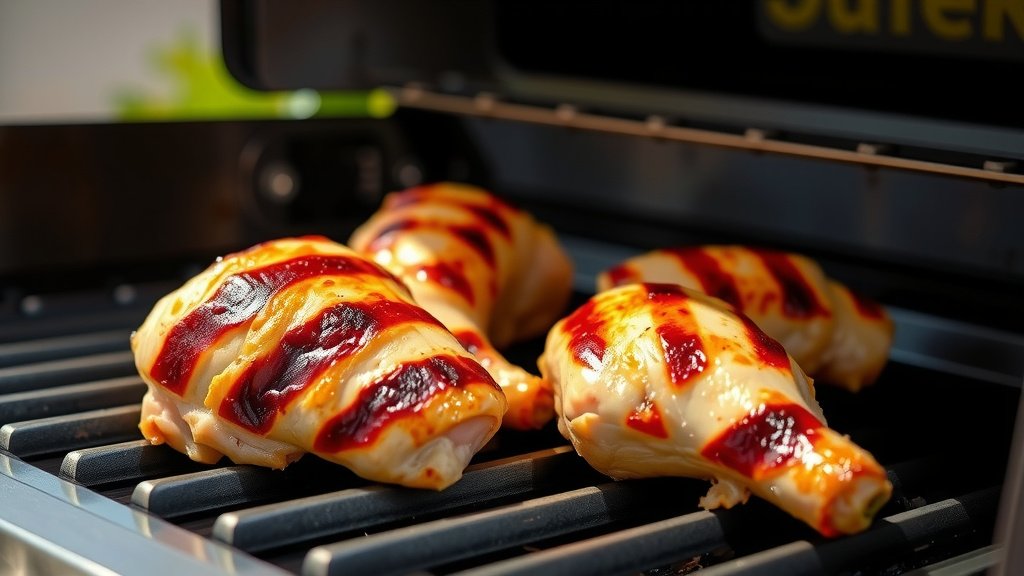
To grill boneless, skinless chicken thighs on a gas grill, preheat your grill to medium-high (400-450°F) for direct searing, then reduce heat for indirect cooking, aiming for an internal temperature of 165°F.
You can achieve perfectly juicy chicken by starting with a quick sear over direct heat before moving the thighs to a cooler, indirect zone to finish cooking evenly and prevent drying out.
- Achieve juicy boneless, skinless chicken thighs by mastering direct and indirect heat zones.
- Always verify internal temperature with a meat thermometer; 165°F is the safe target for poultry.
- Flavor infusion starts with proper prep, whether it’s a simple marinade or a dry rub.
- Resting the chicken after grilling is crucial for keeping those delicious juices locked inside.
- Avoid overcrowding your grill; give each thigh enough space for even cooking and optimal searing.
How To Grill Boneless Skinless Chicken Thighs On Gas Grill?
Grilling boneless, skinless chicken thighs on a gas grill involves using both direct and indirect heat to create a crispy exterior while keeping the inside wonderfully juicy.
The key is to cook them thoroughly to a safe internal temperature of 165°F without letting them dry out.
Why Boneless Skinless Chicken Thighs Are a Great Choice
Chicken thighs are a favorite among grillers, and for good reason! They possess a higher fat content compared to chicken breasts, making them far more forgiving.
This natural richness helps them stay moist and flavorful, even if you accidentally cook them a little longer than planned. They’re a fantastic choice for consistent results.
Gathering Your Grilling Essentials
Before you ignite the flames, take a moment to collect your tools. Having everything ready streamlines your grilling process and makes it much more enjoyable.
A reliable meat thermometer is paramount for food safety and perfect doneness (USDA recommends). Also, remember your long-handled tongs for safe flipping.
Preparing the Chicken Thighs for Flavor
The way you prepare your chicken thighs significantly influences their taste and texture. This initial stage is where you build the foundation for a truly delicious meal.
Taking these small steps ensures your chicken cooks evenly and absorbs maximum flavor, transforming good chicken into great chicken.
Marinating for Maximum Flavor
Marinating boneless skinless chicken thighs can dramatically enhance their taste and tenderness. Even a quick 30-minute soak works, but 2-4 hours is ideal for deeper flavor penetration.
A simple marinade of olive oil, an acidic element like lemon juice, minced garlic, and your favorite herbs makes a big impact. Research consistently shows acid helps break down proteins (National Institute of Health).
Getting to Room Temperature
Allowing your chicken thighs to sit out of the fridge for 15-20 minutes before grilling helps them cook more evenly. This prevents the outside from scorching while the inside remains cool.
This minor step leads to a much more consistent cook and is a practice many seasoned chefs endorse. It’s all about gentle heat progression.
Setting Up Your Gas Grill Smartly
One of the biggest advantages of a gas grill is the precise temperature control it offers. Setting up your grill correctly is key to achieving that ideal sear and uniform cook.
Mastering the technique of creating different heat zones will make you a more confident and effective griller. This strategic approach is often highlighted in advanced grilling guides.
Understanding Two-Zone Grilling
This technique involves creating a hot, direct heat zone and a cooler, indirect heat zone on your grill. You can do this by turning some burners to high and leaving others off or on low.
You’ll use the direct heat for a quick sear and the indirect heat to finish cooking the chicken through without burning. Many experts say this is the secret to perfect poultry.
Perfect Preheating Practices
Always preheat your gas grill thoroughly. Turn on your chosen burners to medium-high (around 400-450°F) and close the lid for 10-15 minutes until it reaches the target temperature.
A properly preheated grill ensures the chicken won’t stick and helps create those desirable, flavorful grill marks. It’s ready when you can’t comfortably hold your hand over the grate for more than a couple of seconds.
The Grilling Process: Step-by-Step
Now for the main event! Here’s a guided approach to grilling your boneless skinless chicken thighs, ensuring each stage contributes to a delicious outcome.
Following these steps will help you achieve consistently tender and juicy chicken. Grilling is an art, but it also benefits from a good process.
Searing for that Golden Crust
Place your chicken thighs over the direct, hot side of the grill. Sear them for about 3-4 minutes per side. This step develops a beautiful, flavorful golden-brown crust.
Resist the urge to move them constantly; let that crust form before flipping. This initial sear is all about building deep flavor.
Finishing with Indirect Heat
Once seared, move the thighs to the indirect heat zone. Close the grill lid and continue cooking for another 10-15 minutes, or until they reach the target internal temperature.
This slower, gentler cooking prevents burning and allows the chicken to cook all the way through, resulting in tender, moist meat. It’s the smart way to get perfectly cooked centers.
The Critical Internal Temperature Check
This is the most crucial step for both safety and taste. Insert your meat thermometer into the thickest part of a thigh, making sure not to hit the bone. The goal is a consistent 165°F (74°C).
Many guidelines point to 165°F as the safe cooking temperature for all poultry (CDC). A thermometer removes all guesswork, giving you confidence in your meal.
When Your Chicken is Perfectly Done
Your chicken is done when your reliable meat thermometer reads 165°F. At this point, the juices should run clear, and the meat should appear opaque throughout.
Avoid slicing into the chicken to check doneness, as this will release valuable juices. Trust your thermometer; it’s the most accurate indicator.
Always Rest Your Grilled Chicken
After removing the thighs from the grill, place them on a clean cutting board and loosely tent them with foil. Allow them to rest for 5-10 minutes before slicing or serving.
This resting period allows the muscle fibers to relax and redistribute the juices throughout the meat. We found that skipping this step often results in significantly drier chicken.
Troubleshooting Common Grill Issues
Even seasoned grillers face challenges sometimes. Don’t let small hiccups spoil your fun; most grilling issues have straightforward solutions.
Knowing how to quickly address these problems builds your grilling confidence and ensures a better outcome. Think of it as part of your grilling education.
| Issue | Possible Cause | Solution |
|---|---|---|
| Chicken sticking | Grill not hot enough or not clean | Preheat thoroughly, clean grates, oil well before adding chicken |
| Flare-ups | Excess fat dripping onto flames | Move chicken to indirect heat zone, close lid to smother flames |
| Uneven cooking | Hot spots, unclean burners | Ensure burners are clear; rotate chicken if one side cooks faster |
| Dry chicken | Overcooked, not rested | Use a thermometer to prevent overcooking; always rest the meat |
Quick Marinade Ideas
Looking for some fast and flavorful marinade options? These simple ideas use common ingredients to add a wonderful boost to your chicken thighs.
They’re perfect for weeknight grilling and can be adapted based on what you have in your pantry. Get ready to enjoy some seriously tasty chicken!
- Herb Garlic: Olive oil, minced garlic, dried oregano, basil, pinch of red pepper flakes, salt, pepper.
- Sweet & Smoky: Ketchup, brown sugar, a splash of apple cider vinegar, smoked paprika, a dash of hot sauce.
- Zesty Lime: Lime juice, olive oil, chopped cilantro, cumin, chili powder, garlic powder.
Your Grilling Success Checklist
Before you fire up the grill, quickly go through this checklist. It’s designed to help you remember every important step for perfect chicken thighs.
This quick scan can prevent common mistakes and ensure your grilling session is smooth and successful. Preparedness is key for fantastic results!
- Chicken patted dry.
- Marinated or seasoned well.
- Grill preheated to 400-450°F.
- Two heat zones established.
- Searing over direct heat.
- Finishing over indirect heat.
- Internal temp checked (165°F).
- Chicken rested for 5-10 minutes.
- Tongs and thermometer at hand.
Conclusion
Grilling boneless, skinless chicken thighs on a gas grill is incredibly rewarding and achievable for anyone. By understanding the balance of direct and indirect heat, and consistently checking internal temperatures, you’ll master this skill quickly.
Remember, your key allies are good preparation, a reliable meat thermometer, and the patience to let your chicken rest. Fire up that grill, and enjoy creating perfectly juicy, flavorful chicken thighs that will become a staple in your outdoor cooking!
What internal temperature should chicken thighs be cooked to?
Chicken thighs should always be cooked to an internal temperature of 165°F (74°C). We found that checking with a reliable meat thermometer inserted into the thickest part is the best way to ensure they are safe to eat (USDA).
Should I marinate boneless skinless chicken thighs before grilling?
Yes, marinating boneless skinless chicken thighs before grilling is highly recommended. It adds moisture, flavor, and can help tenderize the meat, resulting in a much juicier and more delicious outcome.
How long does it take to grill boneless, skinless chicken thighs?
It typically takes about 15-20 minutes to grill boneless, skinless chicken thighs on a gas grill, including searing and indirect cooking time. However, the exact time depends more on reaching the 165°F internal temperature than a set duration.
Can I grill boneless skinless chicken thighs without searing them first?
You can grill boneless, skinless chicken thighs without searing, but you’ll miss out on the rich, browned crust and deeper flavor that searing provides. Starting with a sear helps lock in juices and creates a more appealing texture.
Why is it important to rest chicken after grilling?
Resting chicken after grilling is crucial because it allows the muscle fibers to relax and reabsorb the juices that have migrated to the center during cooking. This results in significantly juicier and more tender chicken, as found in many culinary studies.