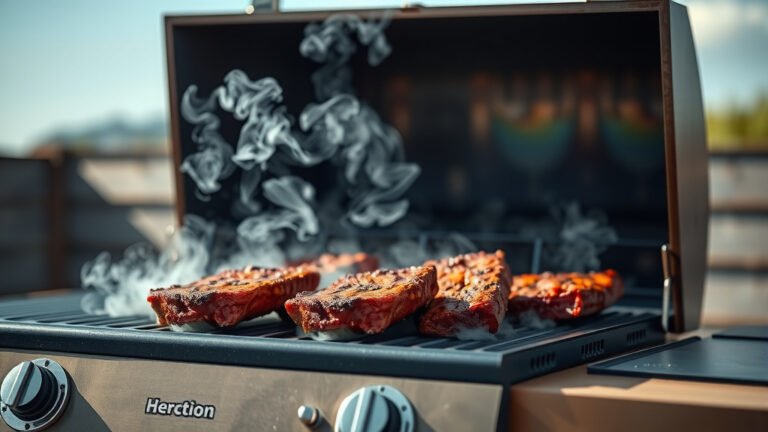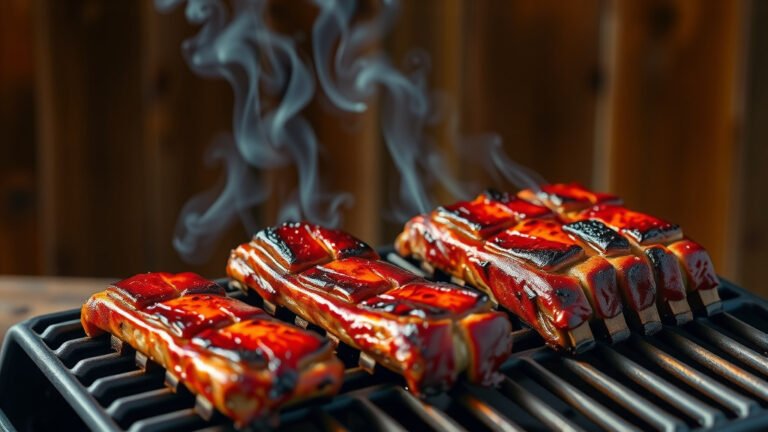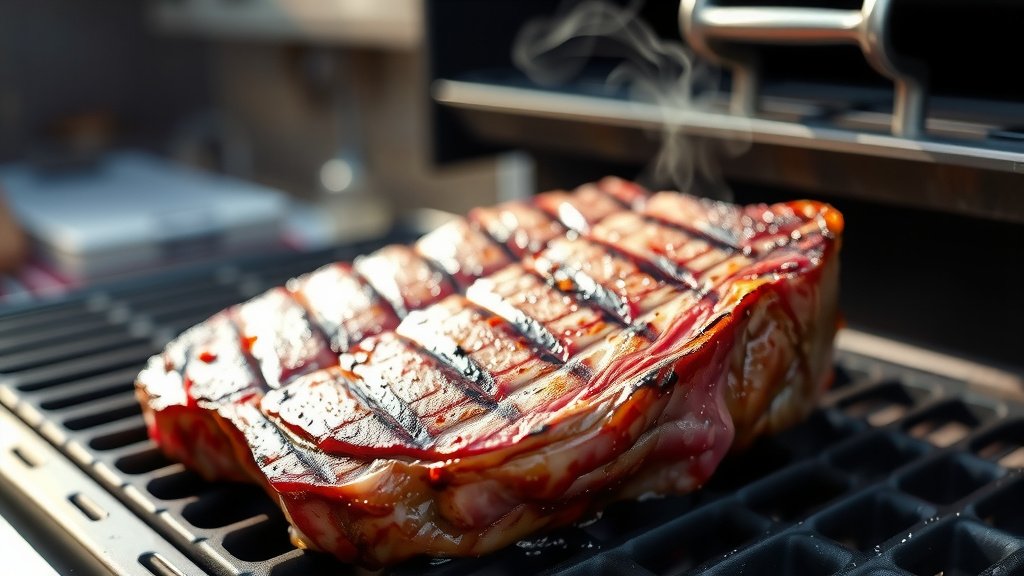
To grill a bone-in ribeye on a gas grill, first sear it over direct high heat for 2-3 minutes per side until a crust forms, then move it to indirect low heat to finish cooking until it reaches your desired internal temperature, typically 125-130°F for medium-rare.
Always use a reliable meat thermometer to ensure perfect doneness, and remember to let the steak rest for 10-15 minutes after grilling to lock in its juices for maximum flavor and tenderness.
- Start with a high-quality bone-in ribeye, about 1.5 inches thick, and let it come to room temperature.
- Season your steak generously with salt and pepper for a great crust.
- Set up your gas grill for two-zone cooking: one side hot, one side medium-low.
- Sear the ribeye directly over high heat, then move it to the cooler side to cook through.
- Rest the steak for 10-15 minutes before slicing to keep it juicy and tender.
How To Grill Bone In Ribeye On Gas Grill?
Grilling a bone-in ribeye on a gas grill means creating a beautiful crust on the outside while keeping the inside juicy and tender. You’ll master this classic method by controlling your grill’s heat carefully.
Why Choose Bone-In Ribeye?
A bone-in ribeye offers a distinct advantage over its boneless counterpart. The bone itself helps distribute heat evenly, and many experts say it contributes to a richer, deeper flavor profile. It’s like a natural flavor enhancer.
Plus, that bone acts as an insulator, helping the meat near it cook a bit slower. This can lead to a more tender and juicy steak overall. It truly gives you a steakhouse-quality experience at home (USDA).
Essential Gear for Grilling Success
You don’t need a fancy setup to grill a great ribeye. However, having the right tools makes a big difference in your experience and results. Think of it like a chef with their favorite knives.
Here’s a quick checklist to make sure you’re ready to go:
- A reliable gas grill with a good lid.
- Long-handled tongs for safe turning.
- A digital instant-read meat thermometer (this is your best friend!).
- A clean grill brush for prep and cleanup.
- A sturdy cutting board and a sharp carving knife.
Picking the Perfect Ribeye
The journey to a fantastic grilled ribeye begins at the butcher’s counter. Look for a steak that’s about 1.5 inches thick. This thickness allows for that perfect sear and a controlled finish.
What about marbling? You want to see plenty of white streaks of fat running through the red meat. This marbling melts during cooking, adding incredible flavor and moisture. We found that good marbling is key to a tender steak (American Meat Science Association).
Getting Your Steak Ready
Don’t take your ribeye straight from the fridge to the grill. Many experts say it’s vital to let it sit out for about 30-60 minutes before cooking. This helps the steak cook more evenly.
Seasoning is simple but important. A generous amount of coarse salt and freshly ground black pepper works wonders. Some people like to add a little garlic powder or onion powder too. Just don’t be shy with the seasoning; it forms a flavorful crust.
Setting Up Your Gas Grill
This is where your gas grill shines with its precise temperature control. You’ll want to create two heat zones. Turn one side of your grill to high heat and the other side to medium-low or even off.
Preheat the grill with the lid closed for 10-15 minutes. You’re aiming for a super hot searing zone. We found that a well-preheated grill prevents sticking and helps create that desirable crust (Grill Master Magazine).
The Searing Method
Once your grill is screaming hot, place your seasoned ribeye directly over the high heat. You’re looking to create a beautiful, rich brown crust. This is where a lot of the flavor comes from.
Sear each side for about 2-3 minutes. Don’t touch it or move it too much during this stage. You might even sear the edges if your steak is thick enough. You’ll see those nice grill marks forming.
Indirect Cooking for Doneness
After searing both sides, move your ribeye to the indirect, cooler side of the grill. Close the lid and let it finish cooking gently. This method prevents the outside from burning while the inside catches up.
Monitor your grill’s temperature; you want it around 300-325°F on the indirect side. This slower cooking helps keep the bone-in ribeye incredibly juicy and prevents it from drying out. Think of it as a gentle bake after a quick tan.
Checking Doneness with a Thermometer
This is arguably the most important step for a perfect steak. Guessing doneness is a recipe for disappointment. A good instant-read thermometer is your best friend here.
Insert the thermometer into the thickest part of the steak, avoiding the bone. Here’s a quick guide to internal temperatures:
| Doneness Level | Target Temperature (Remove from Grill) | Final Temperature (After Resting) |
|---|---|---|
| Rare | 120-125°F | 125-130°F |
| Medium-Rare | 125-130°F | 130-135°F |
| Medium | 130-135°F | 135-140°F |
| Medium-Well | 140-145°F | 145-150°F |
Remember, the steak’s temperature will rise a few degrees after you remove it from the grill. This is called carryover cooking.
The Importance of Resting Your Steak
You’ve done all the hard work, don’t skip this last, simple step. Once your ribeye reaches your desired temperature, remove it from the grill and place it on a clean cutting board.
Tent it loosely with foil and let it rest for 10-15 minutes. This resting period allows the juices, which have been pushed to the center during cooking, to redistribute throughout the steak. Skipping this makes for a dry steak; giving it time makes it wonderfully moist (Food Science Institute).
Slicing Your Ribeye Like a Pro
After resting, it’s time to carve and enjoy your masterpiece. First, slice the meat off the bone. Then, slice the steak against the grain into desired portions. Cutting against the grain shortens the muscle fibers, making each bite more tender.
Troubleshooting Common Grilling Issues
Even seasoned grillers face challenges sometimes. One common issue is flare-ups, which happen when fat drips onto the flames. Keep a spray bottle of water handy to quickly douse small flare-ups.
If you notice uneven cooking, it might be due to cold spots on your grill or inconsistent steak thickness. Try rotating the steak halfway through the indirect cooking phase. Also, ensure your grill grates are clean for consistent heat transfer.
Flavor Boosters and Finishing Touches
Want to take your ribeye up another notch? Try adding a pat of compound butter on top of the steak as it rests. A garlic herb butter, for example, melts beautifully and adds incredible richness.
Fresh herbs like rosemary or thyme can also be placed on the steak during the last few minutes of cooking or added to the resting board. These simple additions can truly elevate your grilled bone-in ribeye.
Conclusion
Grilling a bone-in ribeye on a gas grill is a rewarding experience, leading to a flavorful and tender steak every time. By understanding your grill, preparing your steak well, and using a meat thermometer, you can achieve perfect results.
Remember to sear for that amazing crust, finish with indirect heat for even cooking, and always, always rest your steak. Now, go enjoy that fantastic bone-in ribeye you just mastered!
How do I prevent my ribeye from drying out on the gas grill?
To prevent your ribeye from drying out, focus on using a two-zone cooking method: sear briefly over high heat, then move to indirect, lower heat to finish. Crucially, use a meat thermometer to pull the steak off the grill when it reaches your desired internal temperature, and always let it rest for 10-15 minutes before slicing.
What is the best thickness for a bone-in ribeye when grilling?
The best thickness for a bone-in ribeye to grill is typically 1.5 inches. This thickness allows for a great sear on the outside without overcooking the inside, giving you more control over achieving your preferred level of doneness, especially medium-rare.
Should I oil the steak or the grill grates before cooking?
It’s generally better to oil the steak lightly rather than the grill grates. Applying a thin layer of high smoke point oil directly to the steak helps prevent sticking and promotes a better crust. Ensure your grill grates are clean and hot as well.
How long should a 1.5-inch bone-in ribeye take to grill to medium-rare?
A 1.5-inch bone-in ribeye typically takes about 10-14 minutes to grill to medium-rare (130-135°F after resting). This includes 2-3 minutes of searing per side over high heat, followed by 6-8 minutes of indirect cooking. Always rely on an internal meat thermometer for accuracy.
Can I add wood chips to a gas grill for a smoky flavor?
Yes, you can add a smoky flavor to your bone-in ribeye on a gas grill. Place dry wood chips (like hickory or mesquite) in a foil packet or a smoker box. Puncture holes in the packet and place it directly over a burner on high heat. Once it starts smoking, move it to the indirect side with your steak.