
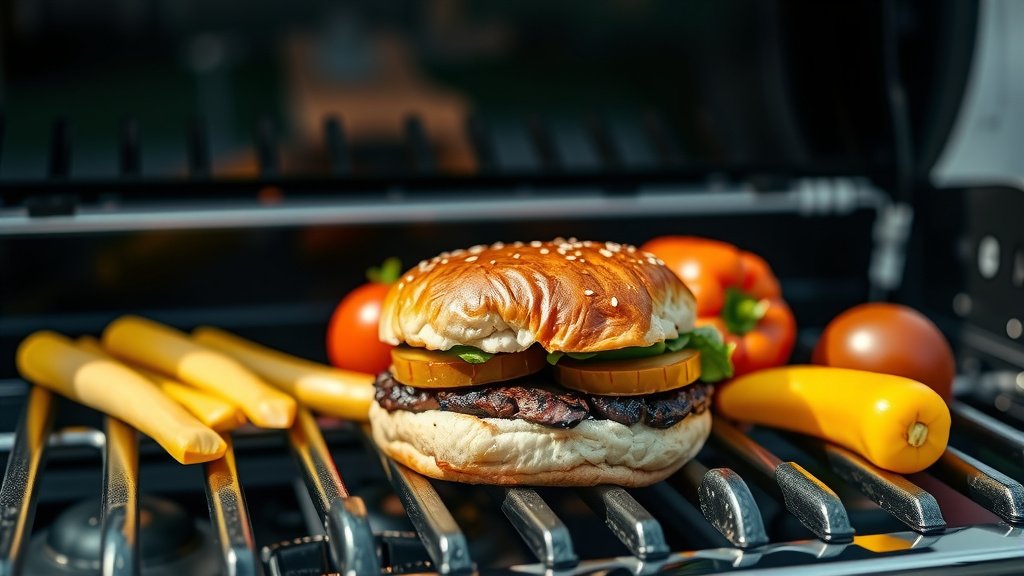
To grill a hamburger on a gas grill, preheat your grill to medium-high heat (about 400-450°F), then place your seasoned patties directly over the heat, flipping once after 3-5 minutes per side for medium doneness.
You’ll achieve juicy, flavorful results by preparing your patties correctly, understanding your grill’s heat zones, and monitoring internal temperatures for perfect doneness.
TL;DR: Here’s the quick guide to gas grilling your best burger:
- Choose 80/20 ground beef for the best flavor and juiciness.
- Form patties gently, making a slight dimple in the center.
- Preheat your gas grill to a hot 400-450°F for a great sear.
- Grill patties for 3-5 minutes per side, flipping only once.
- Use a meat thermometer to ensure perfect doneness.
How To Grill A Hamburger Gas Grill?
Grilling a hamburger on a gas grill is all about managing heat and timing. You’ll want to preheat your grill, sear your patties, and cook them to your desired doneness with confidence.
Prepping Your Perfect Patty
Before you even think about firing up the grill, the patty itself needs attention. A great burger starts with quality ingredients and thoughtful preparation.
Choosing Your Ground Beef
Many experts say the best ground beef for burgers is 80% lean and 20% fat. This ratio gives you incredible flavor and keeps your burgers juicy. Leaner meats can dry out quickly on the grill.
When selecting your beef, look for fresh, bright red meat. We found that freshly ground chuck often delivers the best results, offering a rich, beefy taste you’ll love.
Patty Perfection: Forming Your Burgers
Handle the meat as little as possible. Overworking the ground beef can make your burgers tough. Gently form patties about three-quarters of an inch thick.
Make sure your patties are consistent in size for even cooking. A simple trick is to press a shallow indentation in the center of each patty. This helps prevent the burger from puffing up into a ball while cooking, keeping it flat (Cleveland Clinic).
Seasoning Your Burgers
Keep it simple! A good burger doesn’t need much. Salt and freshly ground black pepper are often all you need. Season generously right before they hit the grill.
Some people like to add garlic powder, onion powder, or a dash of Worcestershire sauce directly into the mix. Remember, don’t overdo it; let the beef flavor shine through.
Setting Up Your Gas Grill for Success
Your grill isn’t just a heat source; it’s a tool. Understanding how to use its zones will elevate your burger game from good to fantastic.
Preheating for the Best Sear
Always preheat your gas grill. Turn all burners to high, close the lid, and let it heat for 10-15 minutes. You’re aiming for a surface temperature of 400-450°F.
A hot grill grate is crucial for a beautiful sear. It creates that irresistible crust that locks in juices. Don’t skip this step, or you’ll miss out on flavor.
Understanding Heat Zones
Many gas grills allow for different heat zones. You can create a direct heat zone for searing and an indirect zone for finishing thicker burgers if needed. Turn one burner to low or off for an indirect zone.
For most standard burgers, direct medium-high heat is perfect. You want consistent heat across the cooking surface where your burgers will sit.
The Grilling Process: From Raw to Ready
This is where the magic happens. A few key steps and watchful eyes will ensure your burgers are cooked to perfection.
Placing Patties and the Initial Sear
Carefully place your seasoned patties directly onto the hot grill grates. You should hear that satisfying sizzle. Close the lid to help maintain temperature.
Resist the urge to move them immediately. Let them cook for about 3-5 minutes on the first side. This creates a good crust and keeps the patty from sticking.
The Right Way to Flip
Flip your burgers only once. After the initial 3-5 minutes, use a sturdy spatula to gently lift and turn each patty. You’re looking for a rich brown color with good grill marks.
Avoid pressing down on the burgers with your spatula. This squeezes out all those delicious juices, leading to a dry burger. Be gentle, think of it as a delicate maneuver.
Checking for Doneness
This is where a meat thermometer is your best friend. Visually, a medium burger will still show a hint of pink in the center, but visual cues can be misleading. Always verify with temperature.
Insert the thermometer horizontally into the side of the burger, reaching the center. Research often connects these internal temperatures with food safety and preferred doneness (USDA).
| Doneness | Internal Temperature | Grilling Time (approx. per side) |
|---|---|---|
| Rare | 125-130°F | 2 minutes |
| Medium-Rare | 130-135°F | 3 minutes |
| Medium | 135-140°F | 3-4 minutes |
| Medium-Well | 140-145°F | 4-5 minutes |
| Well-Done | 150-155°F | 5-6 minutes |
Adding Cheese
If you love cheeseburgers, add a slice of your favorite cheese during the last minute or two of cooking. Close the lid briefly to help it melt perfectly. Colby Jack, cheddar, or American cheese are popular choices.
The Crucial Rest and Serving
Your burger isn’t ready the moment it leaves the grill. A brief rest makes a big difference.
Letting Your Burgers Rest
Once cooked to your desired doneness, transfer the burgers to a clean plate or cutting board. Cover them loosely with foil and let them rest for 5 minutes.
This resting period allows the juices to redistribute throughout the patty. This step ensures every bite is as juicy and flavorful as possible, preventing dry, crumbly burgers.
Toppings and Buns
Toast your buns lightly on the grill during the last minute of the burger cook time. A toasted bun adds texture and helps prevent sogginess. Now for the fun part: toppings!
Offer a variety of fresh toppings like lettuce, tomato, onion, pickles, and your favorite sauces. Customization is key to a truly enjoyable burger experience.
Common Mistakes to Avoid
Even seasoned grillers can fall victim to common burger blunders. Steer clear of these pitfalls for consistently great results:
- Don’t overwork the meat: Keep handling gentle to maintain tenderness.
- Avoid cold patties: Let burgers sit at room temperature for 15-20 minutes before grilling.
- Never press patties: Squeezing releases flavorful juices, making burgers dry.
- Don’t flip too often: One flip is usually all you need for a good sear.
- Trust your thermometer: Don’t guess doneness; it’s too risky for enjoyment and safety.
Advanced Tips for a Better Burger
Want to go beyond the basics? Consider a few extra steps. Some grill masters like to make their own seasoning blends or even grind their own beef for ultimate control.
Another tip is to add a small ice cube or a pat of butter in the center of the patty before grilling. This can help keep the burger moist and flavorful (Many chefs suggest this for juicier results).
Conclusion
Mastering the gas grill for hamburgers isn’t rocket science, but it does require attention to detail. From choosing the right beef to resting your cooked patties, each step plays a vital role in creating a truly delicious burger. You now have the guidance to achieve perfectly grilled, juicy burgers every time. Go ahead, fire up that grill, and enjoy your culinary creations!
How long do you grill a burger on a gas grill at 400 degrees?
At 400°F, you typically grill a burger for 3-5 minutes per side for medium doneness. Thicker patties may require an extra minute or two, always checking with a meat thermometer.
Should you put oil on burgers before grilling?
You generally don’t need to put oil directly on the burgers themselves. The fat content in 80/20 ground beef is usually enough to prevent sticking. However, many people lightly oil their grill grates before preheating to help ensure a non-stick surface.
How do you keep hamburgers from drying out on a gas grill?
To keep hamburgers from drying out, use 80/20 ground beef, avoid overcooking by using a meat thermometer, and resist the urge to press down on the patties with your spatula. Also, a short resting period after cooking helps retain juices.
What is the ideal thickness for a hamburger patty?
The ideal thickness for a hamburger patty is about three-quarters of an inch. This thickness allows for even cooking, a good sear on the outside, and a juicy interior without being too thick or too thin.
Should I keep the gas grill lid open or closed when grilling burgers?
For grilling burgers, keep the gas grill lid closed most of the time. Closing the lid helps maintain a consistent internal temperature, promotes faster cooking, and creates a more even cook on your patties. Only open to flip or check doneness.
