To gas grill a ribeye, you’ll want to preheat your grill to high, aim for a two-zone setup, sear for 2-3 minutes per side, then finish cooking over indirect heat until it reaches your desired internal temperature.
You can achieve a beautifully cooked ribeye on a gas grill by properly preparing your steak, managing grill temperatures, and letting the meat rest after cooking for maximum juiciness.
Here’s a quick overview of how to grill your ribeye:
- Choose a thick, well-marbled ribeye for best results.
- Season your steak generously at least 30 minutes before grilling.
- Set up your gas grill for two-zone cooking: one side hot, one side medium.
- Sear the ribeye directly over high heat for a fantastic crust.
- Move the steak to the indirect side to finish cooking slowly.
- Always rest your steak for 5-10 minutes after grilling.
How To Gas Grill Ribeye?
Grilling a ribeye on a gas grill means creating a flavorful crust and a tender, juicy interior. You’ll master this by using precise temperature control and understanding your steak’s needs.
Picking the Perfect Ribeye
Your grilling journey starts at the butcher. Look for a ribeye steak that is at least one inch thick, ideally one-and-a-half inches. Why thicker? Thicker steaks handle high heat better. They get a good sear without overcooking the inside.
Marbling is another key. See those little white flecks of fat? That’s marbling. More marbling means more flavor and juiciness as the fat melts during cooking. We found that a well-marbled ribeye offers a richer taste experience.
Prepping Your Steak for Success
Don’t just pull the steak from the fridge and toss it on the grill. A little prep goes a long way. This step truly sets the stage for a great meal.
Bringing to Room Temperature
Take your ribeye out of the refrigerator about 30-60 minutes before you plan to grill. Letting it sit out helps the steak cook more evenly. Cold spots can make parts of your steak undercooked while other parts are perfect. Many experts say this simple step makes a big difference.
Seasoning Like a Pro
Pat your steak dry with paper towels. Excess moisture prevents a good sear. Think of it like trying to brown a wet onion; it steams instead of searing. Once dry, season generously. Coarse salt and freshly cracked black pepper are classic for a reason.
You can also use your favorite steak rub. Don’t be shy with the seasoning; a thick steak can handle it. This seasoning creates a flavorful crust during the searing process.
Setting Up Your Gas Grill
Gas grills are fantastic for ribeye because they allow for excellent temperature control. This control is vital for a perfect steak.
Two-Zone Heating is Your Friend
For ribeye, you want a two-zone setup. Light one or two burners on high heat. This is your searing zone. Light the remaining burners on medium or low, or keep them off. This creates your indirect cooking zone. Research often connects two-zone grilling with more control over doneness (USDA).
Preheat your grill for at least 10-15 minutes with the lid closed. You want that searing zone screaming hot. A hot grill grate means a beautiful crust.
Grill Grate Cleaning
Before putting any food down, scrape your grill grates clean. Use a sturdy wire brush. Clean grates prevent sticking and help you get those appealing grill marks. Then, lightly oil the clean grates. A paper towel dipped in high-smoke-point oil (like canola or grapeseed) works well. Be careful not to use too much oil, just a light coat.
The Searing Process: That Perfect Crust
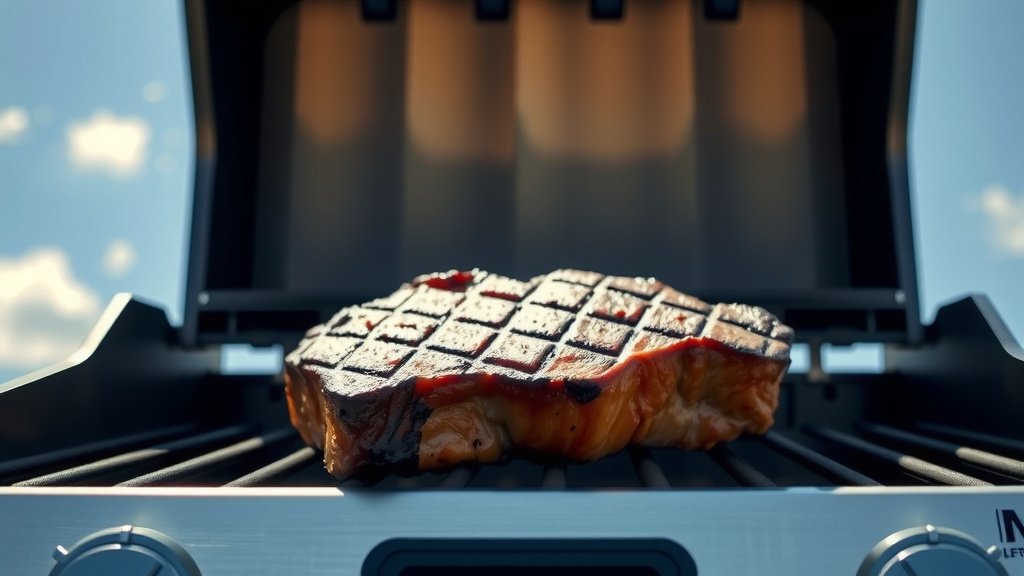
Now for the exciting part! Place your seasoned, room-temperature ribeye directly over the high-heat searing zone. Close the lid if your grill isn’t retaining heat well, but often, leaving it open allows you to watch the sear.
Sear for 2-3 minutes per side. You’re looking for a rich, dark brown crust. Don’t move the steak during this time. Let it sit and develop that amazing color and flavor. What an aroma, right?
Finishing on Indirect Heat
After searing both sides, move your ribeye to the indirect heat zone. This is where the magic of even cooking happens. Close the lid and let the steak cook gently. This method prevents the outside from burning while the inside slowly comes to temperature.
This indirect cooking time will vary based on your steak’s thickness and your desired doneness. Many experts suggest this indirect finish for thicker cuts to ensure a juicy outcome.
Checking for Doneness: No More Guessing
A good instant-read meat thermometer is your best friend. Insert it into the thickest part of the steak, avoiding any bones or large fat pockets. Don’t rely on guesswork or touch tests alone. Those are fun, but a thermometer is accurate.
| Doneness | Internal Temp (Off Grill) | What You Get |
|---|---|---|
| Rare | 120-125°F | Cool red center |
| Medium-Rare | 130-135°F | Warm red center |
| Medium | 135-140°F | Warm pink center |
| Medium-Well | 140-145°F | Slightly pink center |
| Well-Done | 150-155°F | Little to no pink |
Remember, the temperature will rise a few degrees as the steak rests, this is called carryover cooking. So, pull your steak a few degrees below your target.
The Critical Resting Period
This step is non-negotiable for a juicy ribeye. Once your steak hits your target temperature, transfer it to a cutting board. Cover it loosely with foil.
Let it rest for at least 5-10 minutes. Resting allows the juices, which have been pushed to the center by the heat, to redistribute throughout the steak. Cut into it too soon, and those precious juices will just run onto your board. We found that waiting makes a huge difference in the steak’s tenderness.
Slicing and Enjoying Your Masterpiece
After resting, slice your ribeye against the grain. This means cutting perpendicular to the direction of the muscle fibers. Cutting against the grain shortens those fibers, making each bite more tender and easier to chew. Serve immediately and savor your perfectly grilled ribeye!
Common Ribeye Grilling Mistakes
Many first-time grillers make a few simple errors. Avoiding these will make your steak much better. One common mistake is not getting the grill hot enough for searing. Another is turning the steak too often, which prevents that lovely crust.
Also, don’t press down on your steak with a spatula. You’re just squeezing out all the flavorful juices! Just let the grill do its work.
Quick Checklist for Ribeye Success
Keep these points in mind for your next grilling session:
- Thick cut ribeye (1.5 inches ideal)
- Room temperature before grilling
- Generously seasoned
- Clean, oiled, and hot grill grates
- Two-zone heat setup
- Instant-read thermometer ready
- Resting board prepared
Grill Maintenance for Future Steaks
After your delicious meal, don’t forget your grill. Let it cool down, then scrape those grates again. This prevents food residue from hardening. Keeping your grill clean ensures it’s ready for your next perfect ribeye experience.
Conclusion
Grilling a perfect ribeye on a gas grill is totally within your reach. It’s about a few simple, intentional steps: selecting a quality steak, proper preparation, mastering your grill’s heat zones, and allowing that crucial resting period. You’re not just cooking meat; you’re crafting an experience. Follow these straightforward guidelines, and you’ll be enjoying a tender, flavorful, and juicy ribeye every time. What will be your next grilled triumph?
How do I know my gas grill is hot enough for ribeye?
You’ll know your gas grill is hot enough for searing when you can only hold your hand about an inch above the grate for 2-3 seconds. The grates should look visibly hot, sometimes even glowing slightly. A proper preheat of 10-15 minutes on high heat is essential.
Should I use oil on the ribeye or the grill grates?
It’s best to lightly oil the clean grill grates just before placing the steak down. You can also lightly brush a very thin layer of high-smoke-point oil on the seasoned steak itself. Both methods help prevent sticking and promote a great crust.
Can I add wood chips to a gas grill for a smoky ribeye flavor?
Yes, you can add a smoky flavor. Wrap a handful of wood chips (like hickory or oak) in aluminum foil, poke a few holes, and place the packet under the grates on the indirect side. The chips will smolder and add a light smoky note to your ribeye.
What kind of rub is best for a ribeye?
For a ribeye, simple is often best to let the beef flavor shine. A classic mix of coarse salt and black pepper is always a winner. You can also add garlic powder, onion powder, or a touch of smoked paprika for extra depth. Avoid rubs with too much sugar, as they can burn on high heat.
My ribeye always comes out tough; what am I doing wrong?
Tough ribeye often comes from overcooking, not resting the steak, or slicing it with the grain. Ensure you’re pulling the steak at the correct internal temperature, letting it rest for at least 5-10 minutes, and always slicing against the grain to shorten muscle fibers for maximum tenderness.