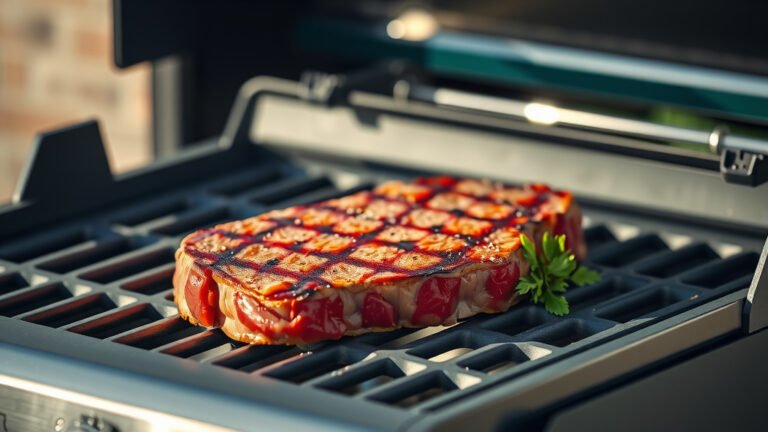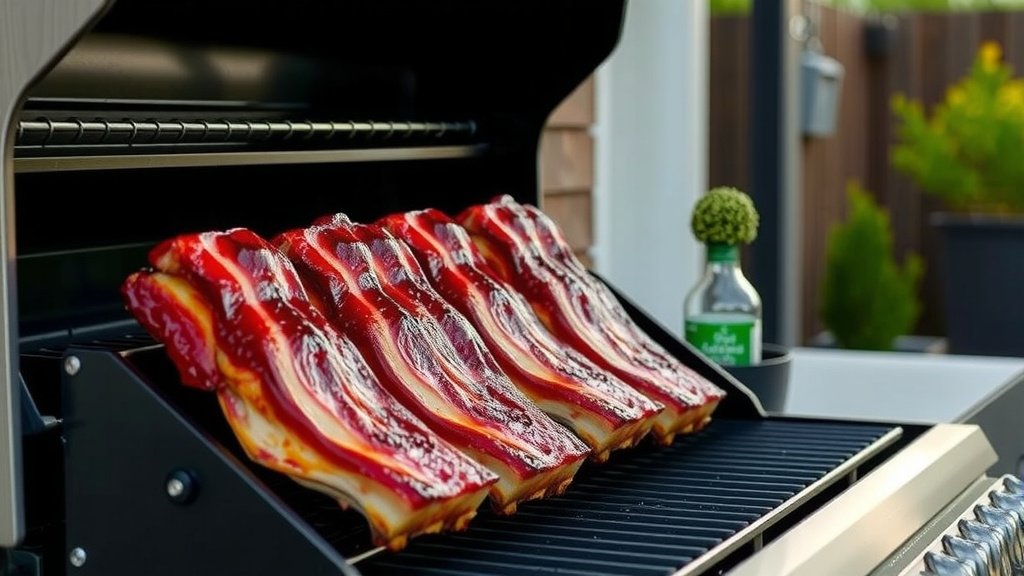
To gas grill pork ribs, you’ll want to cook them using an indirect heat method at a low temperature, around 275-300°F (135-149°C), for about 2-3 hours until they are tender.
This approach gives you succulent, fall-off-the-bone ribs without burning them, letting your gas grill act like a smoker.
Here’s a quick overview of how to gas grill delicious pork ribs:
- Choose the right ribs, like St. Louis style or baby backs, and remove the membrane.
- Season them well with your favorite rub, giving it time to soak in.
- Set up your gas grill for indirect heat, creating a hot and cool zone.
- Cook low and slow at around 275°F (135°C), often using a 3-2-1 method for tenderness.
- Finish with sauce, if you like, for a sticky, flavorful glaze.
How To Gas Grill Pork Ribs?
Grilling pork ribs on a gas grill involves a low and slow indirect cooking method. You’ll want to set your grill for two zones and maintain a consistent, lower temperature for tender results.
Have you ever stood in front of your gas grill, ribs in hand, wondering if it can truly deliver that barbecue joint flavor? The answer is a resounding yes! Your gas grill is more versatile than you might think. We will guide you through making amazing ribs today.
Choosing Your Pork Ribs
Selecting the right ribs makes a big difference in your grilling experience. You have a few great choices available at your local butcher or grocery store. Each type offers a slightly different texture and meat-to-bone ratio.
Baby Back Ribs Versus St. Louis Style
Many home cooks often pick between baby back ribs and St. Louis style. Baby backs are smaller, leaner, and curve slightly, coming from the upper part of the rib cage. They cook a bit faster and are often more tender. We found they are a popular choice for quick meals.
St. Louis style ribs, on the other hand, are spareribs that have been trimmed. They are flatter and meatier, with more fat and connective tissue. This means they often have a richer flavor and become incredibly tender when cooked slowly. Many experts say they are a pitmaster’s favorite for a reason.
Preparing Your Ribs for the Grill
Good ribs start with good preparation, even before any heat touches them. This step is super important for both taste and texture. Don’t skip these simple tasks; they really do make a difference!
Removing the Membrane
One common expert tip is to remove the silver skin, or membrane, from the back of the ribs. This thin, tough layer won’t break down during cooking. If you leave it on, your ribs can taste chewy. It also stops your seasoning from really getting into the meat. Many chefs agree that removing it improves the bite of your ribs.
To remove the membrane, simply slide a knife under one edge, then grab it with a paper towel and pull it off. It might feel a bit tricky at first, but with practice, it comes off easily. This small step ensures a much better eating experience for everyone.
Applying Your Rub
The rub is where the flavor party begins! A good dry rub creates a delicious crust and a deep flavor layer. You can use a store-bought rub or mix your own with ingredients like paprika, garlic powder, onion powder, salt, and brown sugar. Be generous with your seasoning; don’t be shy!
Apply the rub evenly all over the ribs, pressing it gently into the meat. For the best flavor, let the ribs sit with the rub for at least an hour in the fridge. Some experts suggest leaving them overnight. This allows the flavors to sink in and work their magic.
Setting Up Your Gas Grill for Ribs
Unlike steaks, ribs need indirect heat for a long time. This means you’ll create different temperature zones on your gas grill. This setup helps prevent burning and promotes even cooking.
Creating Two-Zone Heat
To achieve the perfect two-zone setup, you’ll light only some of your grill burners. For example, on a three-burner grill, light the burners on one side to medium-low. Keep the other burners off. This creates a hot zone and a cool zone. You will cook your ribs over the unlit burners.
Aim for a grill temperature of about 275-300°F (135-149°C) in the indirect zone. Use your grill’s thermometer, or a separate grill thermometer, to monitor this. Maintaining a steady, low temperature is key to tender ribs.
The 3-2-1 Method for Gas Grill Ribs
The “3-2-1 method” is a popular technique for incredibly tender ribs, especially for St. Louis style. It breaks the cooking process into three distinct stages. While it’s a guideline, it’s a great starting point for beginners.
Here’s how the 3-2-1 method generally works:
- Stage 1 (3 hours): Smoke or grill uncovered in the indirect zone. This builds bark and flavor.
- Stage 2 (2 hours): Wrap the ribs tightly in foil with a little liquid (like apple juice). This steams them tender.
- Stage 3 (1 hour): Unwrap and finish cooking, often with barbecue sauce, to glaze and firm up the bark.
Adjusting for Baby Back Ribs
For baby back ribs, which are smaller, you might use a “2-2-1” method. This shortens the cooking times slightly, but the principles are the same. Always check for tenderness, rather than relying solely on the clock. Every rack of ribs is a little different.
Monitoring Temperature and Doneness
Knowing when your ribs are ready is more art than science, but temperature helps a lot. While you want low heat for cooking, the internal temperature of the ribs tells you about safety and tenderness.
Internal Temperature for Pork
Pork ribs are fully cooked and safe to eat when they reach an internal temperature of 145°F (63°C) (USDA). However, for fall-off-the-bone tenderness, you’ll cook them much longer. Many pitmasters look for temperatures between 190-205°F (88-96°C) for optimal tenderness. At this stage, the connective tissues have broken down beautifully.
The Bend Test
A classic test for rib doneness is the “bend test.” Pick up one end of a rack with tongs and gently bounce it. If the rack bends significantly and cracks appear on the surface of the meat, it’s likely done. The meat should be pulling back from the bone a bit, too. You want tender, but not mushy, ribs.
Adding Sauce and Finishing
Do you like your ribs saucy or dry-rubbed? This is a personal choice, and both are delicious. If you prefer sauce, add it towards the end of the cooking process.
If you’re using sauce, here’s a quick guide:
| Timing | Action | Reason |
|---|---|---|
| Last 15-30 minutes of cooking | Apply a thin layer of sauce | Allows sauce to caramelize without burning |
| Every 10 minutes (optional) | Reapply another thin layer | Builds up a nice, sticky glaze |
Adding sauce too early can lead to burning, especially if your sauce has a lot of sugar. Sugar burns quickly at high temperatures. Applying it in the last stage ensures a sticky, flavorful glaze without any charring.
Resting Your Ribs
After all that patient cooking, don’t rush to cut into your beautiful ribs. Just like any other grilled meat, ribs benefit from a resting period. This lets the juices redistribute throughout the meat, keeping them moist and flavorful.
Loosely tent the ribs with foil and let them rest for 10-15 minutes. This short wait makes a big difference in the final taste and texture. Then, slice between the bones and serve!
Gas Grilling Ribs Checklist
Here’s a quick checklist to help you make amazing gas-grilled ribs:
- Choose St. Louis style or baby back ribs.
- Remove the tough membrane from the back.
- Apply your favorite dry rub generously.
- Set up your gas grill for indirect heat (275-300°F).
- Cook low and slow, using the 3-2-1 or 2-2-1 method.
- Check for tenderness with the bend test.
- Add barbecue sauce in the last 15-30 minutes.
- Rest the ribs for 10-15 minutes before serving.
Conclusion
Mastering gas-grilled pork ribs is totally achievable, even if you’re new to the process. By focusing on proper preparation, indirect heat, and patient low-and-slow cooking, you can create ribs that are incredibly tender and packed with flavor. Remember, the journey to great ribs is about managing temperature and trusting your senses. You’ve got this!
FAQs About Gas Grilling Pork Ribs
Can you really get good “smoked” flavor on a gas grill?
While a gas grill isn’t a dedicated smoker, you can add wood chips in a foil packet or smoker box to the indirect heat zone. This will infuse your ribs with a lovely smoky flavor, enhancing the overall barbecue experience.
What kind of wood chips should I use for pork ribs?
For pork, popular wood chip choices include apple, cherry, hickory, or pecan. Apple and cherry offer a milder, slightly sweet smoke, while hickory and pecan give a stronger, richer flavor. Experiment to find your favorite!
How do I prevent my ribs from drying out on the grill?
To keep ribs moist, always cook them over indirect heat at a low temperature. Wrapping them in foil during the middle stage (the “2” in 3-2-1) with a splash of apple juice or broth also helps steam them, locking in moisture and tenderness.
My ribs aren’t falling off the bone. What went wrong?
If your ribs are still a bit tough, they likely needed more cooking time. Fall-off-the-bone tenderness happens when the connective tissues fully break down, which requires extended cooking at lower temperatures. Don’t be afraid to give them a little more time on the indirect heat.
Can I marinate ribs instead of using a dry rub?
Absolutely! While dry rubs are common for ribs, a marinade can also add fantastic flavor and help tenderize the meat. Just be sure to pat the ribs dry before grilling to get a nice bark, and avoid sugary marinades that can burn quickly over direct heat.