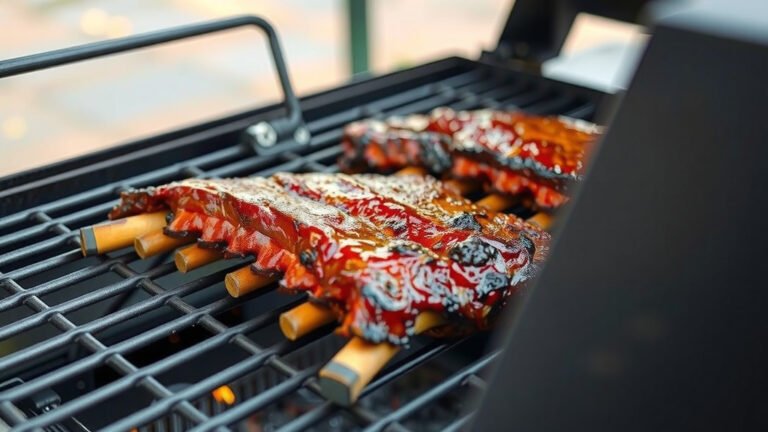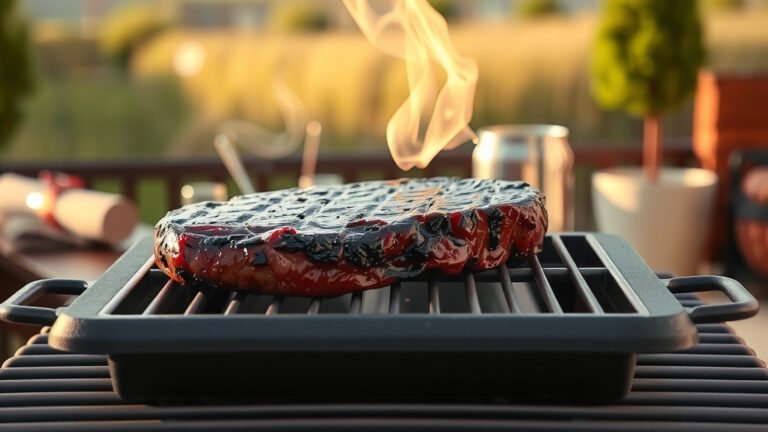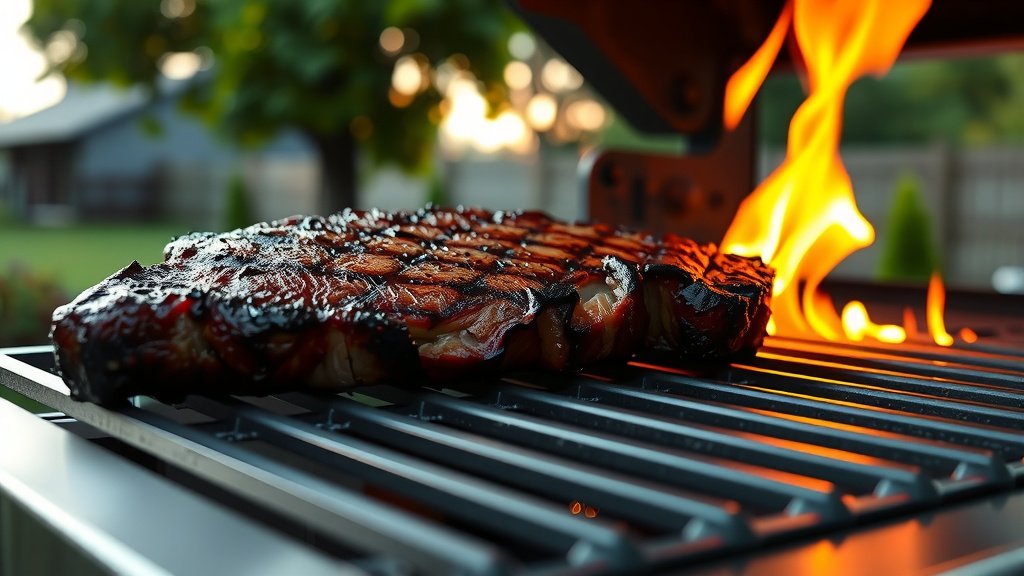
To cook a tomahawk steak on a gas grill, you will use a two-zone cooking method: sear it over high direct heat first, then finish it slowly over lower indirect heat. This approach builds a fantastic crust while ensuring the thick steak cooks evenly to your desired doneness.
Achieving a perfectly cooked tomahawk steak on your gas grill means mastering temperature control, diligent monitoring, and allowing for proper resting time after grilling.
- Sear your tomahawk steak over high direct heat for 2-3 minutes per side to build a flavorful crust.
- Then, move the steak to the indirect heat side of your gas grill to cook it through slowly.
- Monitor the internal temperature with a meat thermometer, aiming for your preferred doneness, such as 130°F for medium-rare.
- Always let your steak rest for at least 10-15 minutes after grilling to keep it juicy and tender.
Picture this: a glorious, thick-cut tomahawk steak, bone proudly extending, sizzling on your gas grill. Doesn’t that sound like a weekend dream? Cooking this impressive cut can feel a bit daunting, right? But trust us, it is simpler than you think. We will walk you through every step to conquer this culinary challenge. You will create a memorable meal that truly stands out.
How To Cook Tomahawk Steak On Gas Grill?
Cooking a tomahawk steak on a gas grill requires a two-zone setup for searing and then indirect cooking, bringing it to perfection.
Why Choose a Gas Grill for Tomahawk Steak?
A gas grill offers incredible control over temperature, which is a big plus for a thick steak like the tomahawk. You can easily create hot and cooler zones. This precision helps prevent burning the outside before the inside cooks.
Many home cooks appreciate the convenience. It means less fuss with charcoal and more focus on your fantastic steak. Plus, cleanup is generally easier, too.
What is a Tomahawk Steak Anyway?
A tomahawk steak is essentially a bone-in ribeye, famous for its extra-long, Frenched bone. It looks like a small axe or tomahawk, hence the name. This cut is usually very thick, often 2 inches or more.
The bone adds flavor and helps with even cooking, say many chefs. It is a showstopper, a real conversation starter at any meal.
Getting Your Tomahawk Steak Ready
Preparation is key to a great steak. Do not rush this part; it sets the stage for success. Think of it as the warm-up act before the main event.
Thawing and Bringing to Room Temperature
If your steak is frozen, thaw it slowly in the refrigerator for a day or two. Then, about 1-2 hours before grilling, take it out. Let it sit on the counter to reach room temperature.
This step is very important. A cold steak hitting a hot grill cooks unevenly. The outside burns while the inside remains rare (National Cattlemen’s Beef Association).
The Perfect Seasoning Blend
For a cut like a tomahawk, simple seasoning often works best. You want the beef flavor to shine. Coarse salt and freshly ground black pepper are classic choices.
Some grill masters also like a touch of garlic powder or a sprinkle of paprika. Apply your chosen seasoning generously to all sides of the steak.
Setting Up Your Gas Grill for Success
Before any meat hits the grates, you need to prepare your grill. This means knowing how your grill heats up. Are you ready to create a masterpiece?
Two-Zone Grilling Explained
This is where your gas grill really shines. Turn one or two burners on high heat for direct cooking. Leave the other burners off or on low for indirect heat.
This creates a hot zone for searing and a cooler zone for gentle cooking. It is like having two different ovens in one grill.
Preheating Your Grill
Turn on your direct heat burners to high and close the lid. Let the grill preheat for about 10-15 minutes. You want those grates screaming hot.
This high heat is what gives your steak that beautiful, dark crust. A hot grill also helps prevent sticking.
The Searing Stage: Getting That Crust
Now for the fun part! Place your seasoned tomahawk steak directly over the high heat burners. You should hear a satisfying sizzle.
Sear for 2-3 minutes per side, turning with tongs. You are looking for a deep brown, almost black crust. Do not move it too much during this time.
Moving to Indirect Heat for Doneness
Once you have a good sear on both sides, move the steak to the indirect heat zone. Close the grill lid.
This is where the magic happens. The steak will continue to cook gently, without the risk of burning. The bone helps distribute heat evenly.
Monitoring Internal Temperature
This is the most critical step for perfect doneness. Use an instant-read meat thermometer. Insert it into the thickest part of the steak, away from the bone.
Check the temperature every few minutes. Remove the steak when it is about 5-10°F below your target temperature. This is because it will continue to cook as it rests.
Doneness Levels for Your Steak
Knowing your desired doneness is key to a perfect steak. Here’s a quick guide to internal temperatures:
| Doneness Level | Target Internal Temperature | Final Resting Temperature |
|---|---|---|
| Rare | 120-125°F | 125-130°F |
| Medium-Rare | 125-130°F | 130-135°F |
| Medium | 130-135°F | 135-140°F |
| Medium-Well | 140-145°F | 145-150°F |
| Well Done | 150-155°F | 155-160°F+ |
The Importance of Resting Your Tomahawk
This step is non-negotiable! Once your steak reaches its target temperature, remove it from the grill. Place it on a cutting board and tent it loosely with foil.
Let it rest for at least 10-15 minutes, or even up to 20 minutes for a very thick steak. Research shows this allows the juices to redistribute throughout the meat (Food Science Institute).
Cutting it too soon lets all those wonderful juices spill out. You want a juicy, tender steak, right?
Slicing Your Masterpiece
After resting, carve the steak against the grain. This means slicing perpendicular to the muscle fibers. Slicing against the grain makes the meat much more tender to chew.
You can remove the bone first, then slice. Or, slice the meat off the bone as you go. Serve immediately and enjoy your hard work!
Tips for a Better Tomahawk Steak
Want to take your tomahawk steak to the next level? Here are a few extra pointers:
- Pat it Dry: Always pat your steak thoroughly dry with paper towels before seasoning. Moisture hinders a good sear.
- Oil the Steak, Not the Grill: A thin coat of high-smoke-point oil on the steak can help with searing.
- Flip Often During Searing: Some grillers prefer flipping every 30-60 seconds during searing for an even crust.
- Consider a Reverse Sear: If you have more time, try cooking on indirect heat first, then searing at the end.
- Don’t Press the Steak: Avoid pressing the steak with your spatula. You will only squeeze out precious juices.
Conclusion
Cooking a tomahawk steak on a gas grill is a rewarding experience. It combines the art of high-heat searing with the science of gentle, indirect cooking. With a little preparation and careful temperature monitoring, you can achieve a steak that is both beautiful to look at and incredibly delicious to eat.
Remember, practice makes perfect. So, fire up that grill, grab a magnificent tomahawk, and enjoy the journey to grilling greatness. Your taste buds will certainly thank you!
What is the ideal thickness for a tomahawk steak on a gas grill?
A tomahawk steak typically ranges from 1.5 to 2.5 inches thick. This thickness is ideal for achieving a good sear without overcooking the interior, especially with the two-zone grilling method.
Should I trim the fat off a tomahawk steak before grilling?
You can trim some of the excess hard fat, especially if there are very thick pieces around the edges. However, leave a good layer of fat, as it adds flavor and helps keep the steak moist during cooking. The fat will render down, creating a richer taste.
Can I add wood chips to my gas grill for a smoky flavor?
Yes, you can definitely add wood chips for a smoky touch. Place pre-soaked wood chips (like hickory or oak) in a foil packet or a smoker box. Put this directly over the direct heat burner on your grill. This will create smoke to infuse your tomahawk steak with extra flavor.
How do I prevent my tomahawk steak from flaring up on the gas grill?
Flare-ups usually happen when fat drips directly onto hot burners. To prevent this, trim excessive fat and ensure your grill grates are clean. If a flare-up occurs, move the steak immediately to the indirect heat zone until the flames subside.
Is it better to use a cast iron griddle on a gas grill for a tomahawk?
While direct grates give great grill marks, a cast iron griddle or pan on your gas grill can create an even, consistent sear. It helps retain heat very well, leading to a fantastic crust. Some prefer this method for maximum surface contact and flavor development.