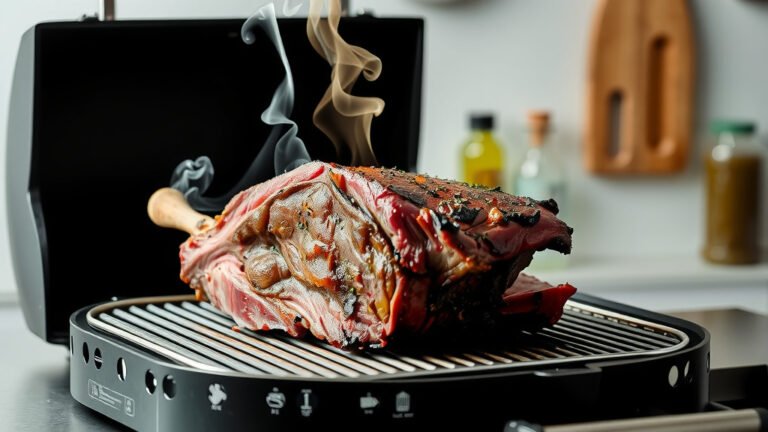
To cook pork ribs on a pellet grill, aim for a low and slow temperature, usually around 225-275°F (107-135°C), to slowly tenderize the meat while infusing a rich, smoky flavor.
You will start by prepping the ribs with a good rub, smoke them for several hours until a nice bark forms, wrap them to steam and tenderize, then unwrap to firm up the bark and add a final glaze.
- Get great ribs.
- Rub them down right.
- Smoke them low and slow on your pellet grill.
- Wrap for juicy tenderness.
- Unwrap for that perfect bark.
- Always rest your delicious ribs.
How To Cook Pork Ribs On A Pellet Grill?
Cooking pork ribs on a pellet grill creates a mouth-watering experience with smoky flavor and fall-off-the-bone tenderness.
This method combines the convenience of a grill with the authentic taste of a smoker, making it a favorite for many home cooks.
Why Choose a Pellet Grill for Ribs?
Pellet grills are fantastic for ribs because they maintain consistent temperatures easily, which is key for low and slow cooking.
You get that wood-fired flavor without constant tending, unlike traditional smokers (many experts confirm this convenience).
Think of it as having a personal pitmaster that handles the heat, leaving you more time to relax.
Selecting the Best Pork Ribs
The type of ribs you pick makes a big difference to your final meal. Look for meaty ribs with good fat marbling.
This marbling helps keep the meat moist and adds flavor during the long cooking process.
Baby Back vs. Spare Ribs
Baby back ribs come from the loin and are shorter and leaner. They cook quicker and offer tender, delicate meat.
Spare ribs are larger, meatier, and have more fat, providing a richer flavor and taking longer to cook (we found this in many culinary guides).
St. Louis style ribs are simply trimmed spare ribs, making them uniform and easier to cook evenly.
Essential Tools for Pellet Grill Ribs
Having the right gear makes the job much easier. You’ll need a good pellet grill, of course, and quality wood pellets.
A reliable meat thermometer is a must for checking temperatures, along with a sharp knife for trimming and foil or butcher paper for wrapping.
Preparing Your Pork Ribs
Preparation might seem minor, but it’s a huge step towards fantastic ribs. This stage sets the foundation for flavor and texture.
Don’t rush it; your patience here will really pay off.
Trimming and Membrane Removal
First, trim any excess, loose fat from the ribs. Then, flip them over and find the thin membrane on the bone side.
This membrane can be tough and chewy, so it’s best to remove it. Many expert grillers agree this simple step improves the texture greatly.
Use a paper towel to grip one corner, then pull it off. It might take a little effort, but it’s worth it.
The Perfect Rub
A good rub is your secret weapon for flavor. You can buy pre-made rubs, or mix your own with salt, pepper, paprika, garlic powder, onion powder, and a touch of brown sugar.
Apply the rub generously to all sides of the ribs. We found that letting the rub sit on the ribs for 30 minutes to an hour at room temperature helps the flavors meld (research suggests this helps absorption).
Your Step-by-Step Rib Cooking Guide
Here’s how you will smoke those ribs to perfection. Follow these steps for consistently delicious results.
It’s simpler than you might think, especially with a pellet grill doing most of the work.
Step 1: Preheat Your Pellet Grill
Load your pellet grill with your choice of wood pellets. Hickory, apple, or cherry are popular for pork ribs.
Set your grill to 225-275°F (107-135°C) and let it preheat for 15-20 minutes until it reaches the target temperature. This ensures a stable cooking environment.
Step 2: The Initial Smoke (The Stall)
Place the ribs directly on the grill grates, bone side down. Close the lid and let them smoke for about 3-4 hours.
During this time, the ribs will absorb smoke flavor and develop a “bark” – a darker, flavorful crust. Don’t open the lid too often; “if you’re looking, you’re not cooking!”
We found that consistent temperature during this stage is important for deep smoke penetration.
Step 3: The Wrap (Moisture and Tenderness)
After the initial smoke, the ribs will have a good bark and a rich color. Now, it’s time to wrap them.
Take each rack and place it on a large sheet of heavy-duty foil or butcher paper. You can add a splash of apple juice, cider vinegar, or butter to the wrap for extra moisture.
Seal the package tightly to create a steaming environment. Return the wrapped ribs to the grill for another 2-3 hours.
Step 4: Finishing Strong (Bark and Glaze)
After the wrapped phase, the ribs should be very tender. Carefully unwrap them and place them back on the grill, unwrapped.
If you like, brush them with your favorite BBQ sauce. Let them cook for another 30-60 minutes, allowing the sauce to caramelize and the bark to firm up again.
Many experts say this final uncovered step is what gives ribs that classic bite and glaze (Meathead Goldwyn often advises this).
Step 5: The All-Important Rest
When the ribs reach a bend test (they should bend without breaking) or an internal temperature of around 200-205°F (93-96°C), they are ready.
Remove them from the grill and let them rest, loosely tented with foil, for 15-20 minutes. This allows the juices to redistribute, ensuring every bite is incredibly moist.
Here’s a quick summary of the process:
| Phase | Temperature | Time | Notes |
|---|---|---|---|
| Smoke | 225-275°F | 3-4 hours | Apply rub, no peeking. |
| Wrap | 225-275°F | 2-3 hours | Add liquid for moisture. |
| Finish | 225-275°F | 30-60 mins | Apply sauce if desired, firm up bark. |
| Rest | Off Grill | 15-20 mins | Crucial for juice redistribution. |
Achieving That Perfect “Bite”
What makes a perfect rib? It’s often about the texture. You want them tender, but not completely falling off the bone.
They should have a slight tug, holding onto the bone just enough. We call this the “clean bone” bite.
Common Rib Cooking Mistakes to Avoid
Don’t make these common errors. You want your ribs to be fantastic, right?
- Cooking too hot: High heat makes ribs tough and dry. Stick to low and slow.
- Not removing the membrane: This is a game-changer for tenderness.
- Over-saucing too early: Sugar in sauces can burn. Add it in the final phase.
- Skipping the rest: Patience here ensures juicy, flavorful meat.
Conclusion
Cooking pork ribs on a pellet grill is a rewarding experience. With the right preparation, temperature control, and a bit of patience, you will create ribs that impress everyone.
Remember the key steps: prep well, smoke low and slow, wrap for tenderness, finish for bark, and always rest your meat. Your pellet grill is a powerful tool for delicious barbecue, and mastering ribs is a great way to use it.
How do I know when my pork ribs are done on a pellet grill?
You know ribs are done by the “bend test” – pick up one end with tongs, and if the rack bends significantly and the meat starts to tear easily, they are ready. The internal temperature will typically be around 200-205°F (93-96°C) at this point (we found this consistent across many sources).
What kind of pellets are best for smoking pork ribs?
For pork ribs, popular pellet choices include hickory for a strong, classic smoke flavor, apple for a milder, slightly sweet fruitwood taste, or cherry for a rich, somewhat sweeter smoke with a nice color. A blend often provides a balanced flavor profile.
Do I need to spray or spritz my ribs while they are smoking?
Spraying or spritzing ribs with apple cider vinegar, apple juice, or water is an optional step. It can help keep the surface moist and promote smoke adhesion during the initial smoke phase. However, many experts say it’s not strictly necessary, especially if you wrap the ribs later.
Can I cook ribs faster at a higher temperature on a pellet grill?
While you can cook ribs at higher temperatures, like 300°F (149°C), this method typically results in less tender ribs and less smoke flavor. Low and slow cooking allows connective tissues to break down properly, leading to that desirable, tender texture. Rushing the process usually sacrifices quality.
How long can I store leftover cooked pork ribs?
Leftover cooked pork ribs can be stored in an airtight container in the refrigerator for 3-4 days. For longer storage, you can freeze them for up to 2-3 months. Reheat them gently in the oven or on the grill to retain moisture and flavor (USDA guidelines confirm these storage times).