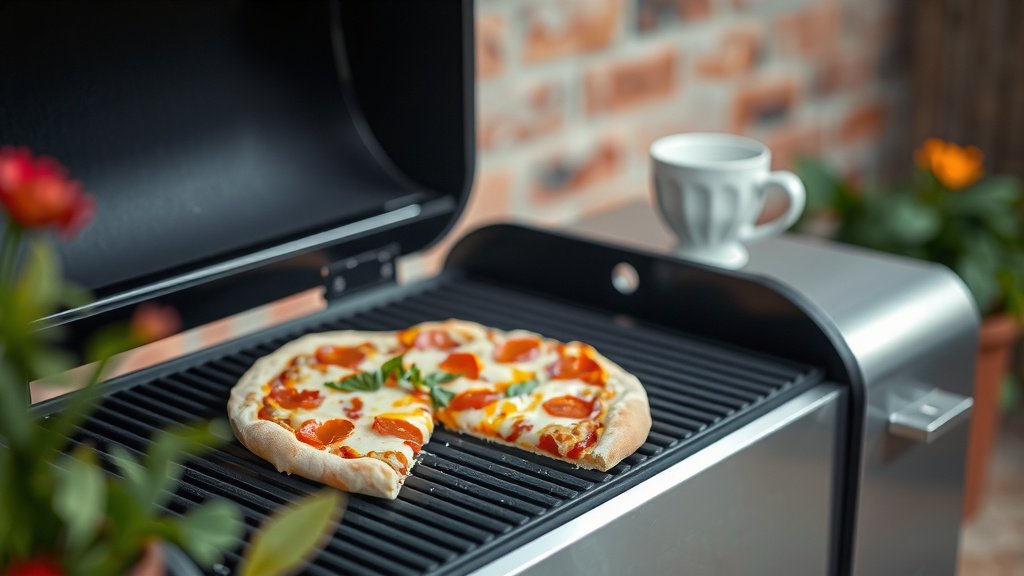
You can cook amazing pizza on a pellet grill by preheating it to high temperatures, often over 450°F, and using a pizza stone or steel to create a crispy crust.
The key to cooking pizza on a pellet grill involves maintaining consistent high heat and a quick cooking time to achieve that perfect combination of melted cheese and crunchy crust without drying out the dough.
TL;DR: How to Cook Pizza on a Pellet Grill:
- Preheat your pellet grill to 450-500°F with a pizza stone or steel inside for at least 30 minutes.
- Prepare your pizza with minimal toppings to prevent sogginess.
- Launch the pizza onto the hot stone/steel using a pizza peel.
- Cook for 5-8 minutes, rotating halfway through for even browning.
- Remove when the crust is golden and cheese is bubbly.
How To Cook Pizza On Pellet Grill?
Cooking pizza on a pellet grill involves combining the smoky flavor of wood pellets with the intense heat needed for a perfect pie. You need to prepare your grill and pizza correctly for a delicious outcome.
This method lets you enjoy pizzeria-quality results right in your backyard, with a unique smoky twist you cannot get from a regular oven.
Why Use Your Pellet Grill for Pizza?
Many home cooks might wonder, why bother with the pellet grill for pizza? It offers a distinct advantage.
Pellet grills burn wood pellets, giving your pizza a subtle smoky flavor that a conventional oven cannot match. Think of it as an outdoor brick oven, but easier to manage.
The Pellet Grill Advantage
Using your pellet grill for pizza means you get even heat distribution, which is critical for cooking a pizza consistently. We found that the fan-forced convection heat in these grills helps crisp the crust all around.
Plus, the flavor from the wood pellets adds an extra dimension. Imagine a pepperoni pizza with a hint of cherry wood smoke. Sounds good, right?
Essential Gear for Pellet Grill Pizza
Having the right tools makes all the difference when you are cooking pizza on your pellet grill. You will want to be prepared before you even think about firing it up.
These items help you manage the high temperatures and handle your pizza safely and effectively.
Pizza Stone vs. Pizza Steel
This is a big debate among pizza enthusiasts. Both a pizza stone and a pizza steel work wonders, but they have subtle differences.
A stone absorbs moisture for a crispier crust. A steel conducts heat more rapidly, leading to a quicker cook and often a more pronounced bottom char.
| Feature | Pizza Stone | Pizza Steel |
|---|---|---|
| Heat Absorption | Slower, more even heat transfer | Faster, higher heat conduction |
| Crust Crispness | Excellent, absorbs moisture | Superior, very crispy bottom |
| Durability | Can crack if thermal shock occurs | Virtually indestructible |
| Preheat Time | Longer (45-60 minutes) | Shorter (30-45 minutes) |
| Cost | Generally less expensive | Often more expensive |
Other Must-Haves
Beyond your cooking surface, you will need a few other items. A pizza peel is non-negotiable for sliding your pizza onto and off the hot grill.
An infrared thermometer helps you accurately gauge the temperature of your stone or steel, which is critical for cooking.
Prepping Your Pizza for Success
Great pizza starts long before it hits the heat. The way you prepare your dough and toppings significantly impacts the final result.
Thinking ahead about these steps will save you from common pizza pitfalls.
Dough Matters
Whether you buy pre-made dough or make your own, its quality is important. A good dough will stretch easily and hold up to high temperatures.
Many experts say a slightly drier dough helps prevent a soggy bottom when cooking on a grill.
Toppings and Sauce Tips
When adding toppings, think light. Overloading your pizza makes it heavy and can lead to uneven cooking or a raw center.
Use a thinner layer of sauce, and make sure your toppings are not too watery. Pre-cooking high-moisture vegetables like mushrooms can help reduce excess water.
Step-by-Step Guide to Pellet Grill Pizza
Ready to get cooking? Follow these steps to create a fantastic pizza on your pellet grill. It is simpler than you might think.
Precision in preheating and patience during cooking are your best friends here.
Preheat Like a Pro
Set your pellet grill to its highest temperature, typically 450°F to 500°F. Place your pizza stone or steel inside while it preheats.
Let it preheat for at least 30-45 minutes. We found that this extended preheat time ensures the stone or steel reaches an optimal temperature for a crispy crust.
Launching Your Masterpiece
Lightly flour your pizza peel. Place your stretched dough on it. Quickly add your sauce, cheese, and toppings.
Then, with a swift, confident motion, slide the pizza from the peel onto the preheated stone or steel. Do not hesitate; quick movements prevent sticking.
Cooking Time and Rotation
Pellet grill pizzas cook quickly, often in 5 to 8 minutes. You will want to keep a close eye on it.
After about 3-4 minutes, use your peel to rotate the pizza 180 degrees. This helps ensure even browning and prevents one side from burning (Cleveland Clinic).
Troubleshooting Common Pizza Problems
Even seasoned grillers sometimes face challenges. Knowing how to fix common pizza issues will make you a pellet grill pizza master.
Do not get discouraged; a few simple adjustments can fix almost anything.
Soggy Crust?
If your crust is not as crisp as you like, you might not have preheated long enough. Try extending your preheat time by another 10-15 minutes.
Also, make sure your toppings are not too wet or piled too high. Less moisture and less weight helps the crust crisp up.
Burnt Bottom?
A burnt bottom often means your stone or steel was too hot. Try reducing the grill temperature by 25-50°F on your next cook.
Some grills have hotter spots; try positioning your pizza a bit further away from the direct heat source if possible.
Uneven Cooking?
If one side is browning faster than the other, you are likely dealing with temperature variations in your grill.
The simple fix is to rotate your pizza more frequently, perhaps every 2-3 minutes, until it cooks evenly. This technique helps distribute the heat.
Pellet Grill Pizza Checklist
Here is a quick checklist to help you remember the essentials for your next pizza night:
- Pizza stone or steel preheated for 30-45 minutes.
- Pellet grill set to high heat (450-500°F).
- Dough stretched and lightly floured.
- Minimal, dry toppings applied.
- Pizza peel ready for launch and retrieval.
- Infrared thermometer for checking surface temperature.
Flavor Pairings: Best Pellets for Pizza
The type of wood pellets you choose can subtly change your pizza’s flavor profile. It is a fun way to experiment and find your favorite combination.
Different woods impart distinct aromas and tastes that can enhance your ingredients.
Different Wood Types and Their Impact
For pizza, you often want a mild to medium smoke flavor that complements, not overpowers, your toppings. We found that some woods work better than others.
Oak pellets offer a clean, mild smoke. Pecan provides a nutty, slightly sweet note. Cherry or apple pellets give a fruitier, sweeter smoke that works well with chicken or pork toppings.
Conclusion
Cooking pizza on a pellet grill is a rewarding experience that combines the joy of outdoor cooking with the deliciousness of homemade pizza. By understanding the importance of high heat, proper tools, and smart preparation, you can achieve a truly amazing pizza.
Do not be afraid to experiment with different pellet flavors and topping combinations. Your pellet grill is not just for smoking ribs; it is a fantastic pizza oven waiting to be discovered!
How hot should my pellet grill be for pizza?
Your pellet grill should be set to its highest temperature, typically between 450°F and 500°F. This high heat is essential for quickly cooking the pizza and achieving a crispy crust, mimicking a traditional brick oven.
Can I use a metal pizza pan on a pellet grill?
While you can use a metal pizza pan, a pizza stone or steel is generally recommended. A stone or steel absorbs and radiates heat more effectively, leading to a much crispier crust than a metal pan, which might result in a softer bottom.
How do I prevent my pizza dough from sticking to the peel?
To prevent sticking, generously flour your pizza peel before placing the dough on it. You can also sprinkle a little cornmeal on the peel; it acts like tiny ball bearings, helping the dough slide off easily onto the hot surface.
Should I oil my pizza stone or steel?
No, you should not oil your pizza stone or steel. Oiling can cause smoke and make the surface sticky over time. For a pizza stone, the porous surface should never be oiled. For steel, it is naturally seasoned over time through use.
My pizza crust is burning, but the toppings are not cooked. What am I doing wrong?
This often happens when the stone or steel is too hot or the grill’s heat is uneven. Try reducing your grill temperature by 25-50°F. Also, ensure you are preheating your stone or steel long enough to transfer heat evenly. Frequent rotation of the pizza also helps prevent localized burning.