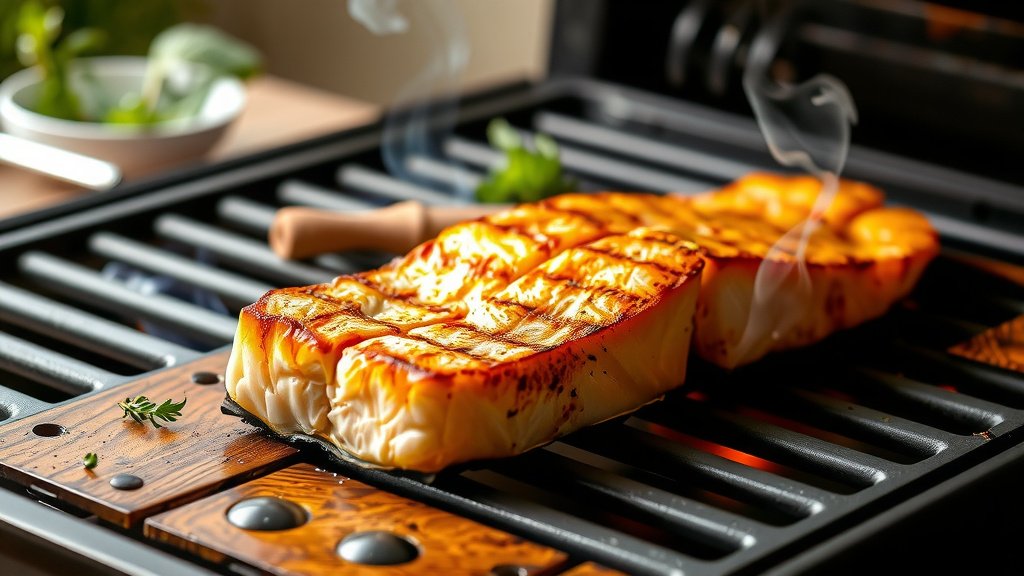
To cook cedar plank salmon on a gas grill, first soak your cedar plank in water for at least two hours. Then, preheat your gas grill to medium-low, aiming for 350-375°F (175-190°C), and place your seasoned salmon fillet directly on the soaked plank.
Grill the salmon indirectly, closing the lid, for about 15-25 minutes, or until the internal temperature reaches 145°F (63°C), creating a moist, smoky flavor without direct flame contact.
Here’s the rundown if you’re short on time and need quick answers:
- Soak your cedar plank for at least two hours.
- Season your salmon simply; salt, pepper, and lemon work wonderfully.
- Set your gas grill for indirect heat at 350-375°F (175-190°C).
- Place salmon on the plank, then the plank on the grill’s cooler side.
- Cook until fish flakes easily and internal temperature hits 145°F (63°C).
How To Cook Cedar Plank Salmon On Gas Grill?
Cooking cedar plank salmon on a gas grill involves preparing both the plank and the fish, then using indirect heat to infuse a gentle smoky flavor. This method keeps your salmon incredibly moist and flavorful.
Why Choose Cedar Plank Salmon?
Ever wonder why people go to all this effort? Cedar plank grilling offers a unique experience. It’s not just about cooking; it’s about transforming your meal.
Flavor Benefits
The cedar plank imparts a lovely, subtle smoky aroma to your salmon. This aroma isn’t overpowering, it simply complements the fish’s natural taste. We found that the woodsy notes create a depth of flavor many really enjoy.
Moisture Retention
One of the biggest wins with plank cooking is how it keeps your fish moist. The plank acts as a barrier, preventing the salmon from drying out over direct heat. This means a tender, flaky result every time.
Getting Your Cedar Plank Ready
Preparation is key for a successful plank-grilled meal. Don’t skip these simple steps, as they make a big difference in the end result. Think of it as laying the groundwork for deliciousness.
Soaking is Key
You absolutely must soak your cedar plank before grilling. Why? Soaking prevents the plank from catching fire on the grill. It also creates steam, which helps cook the salmon gently and adds that smoky flavor. Many experts say two hours is the minimum soaking time, but overnight is even better (Food Safety News).
Choosing the Right Plank
Look for untreated cedar planks specifically made for grilling. These are available in most grocery stores or hardware shops. Make sure there are no chemicals or finishes on the wood, as those are not safe for cooking.
Prepping Your Salmon Fillet
With the plank soaking, your next step is preparing the star of the show: the salmon. This part is pretty simple, allowing the fish’s natural flavors to shine. What’s your favorite way to season fish?
What Kind of Salmon?
A thick, skin-on salmon fillet works best here. The skin helps hold the fish together during cooking and provides extra flavor. King or Sockeye salmon are popular choices, offering rich taste and good texture.
Seasoning Your Fish
Keep the seasoning simple to let the cedar flavor come through. A sprinkle of kosher salt, black pepper, and a squeeze of fresh lemon juice is often perfect. Some people like a touch of brown sugar or paprika for extra zest.
Setting Up Your Gas Grill for Success
Your gas grill is an amazing tool for this. The trick is creating a stable, indirect heat zone. This is where most of the cooking will happen. It’s like setting up a mini oven on your patio.
Indirect Heat Method
For indirect grilling, light only one or two burners on one side of your grill. Leave the other burners off. You’ll place the plank on the unlit side. This prevents direct flame from scorching your salmon or burning the plank.
Grill Temperature
Aim for a medium-low heat, around 350-375°F (175-190°C), when the lid is closed. This temperature allows the salmon to cook thoroughly without drying out. Use your grill’s built-in thermometer or a separate grill thermometer for accuracy.
Grilling Your Cedar Plank Salmon
Now for the fun part! You’ve prepped everything, and your grill is ready. It’s time to bring that beautiful salmon to life with some cedar smoke. Keep a spray bottle of water nearby, just in case.
Plank Placement
Carefully place the salmon-topped cedar plank on the unlit side of your preheated grill. Close the lid immediately to trap the heat and smoke. This is where the magic really begins to happen.
Cooking Time
Your salmon will likely need 15-25 minutes, depending on its thickness and your grill’s temperature. You’re looking for an internal temperature of 145°F (63°C). A good rule of thumb is about 10 minutes per inch of thickness (USDA guidelines).
Here’s a quick guide for cooking times:
| Salmon Thickness | Approx. Cook Time (350-375°F) | Target Internal Temp. |
|---|---|---|
| 1 inch | 15-20 minutes | 145°F (63°C) |
| 1.5 inches | 20-25 minutes | 145°F (63°C) |
| 2 inches | 25-30 minutes | 145°F (63°C) |
Checking for Doneness
How do you know when your salmon is perfectly cooked? A meat thermometer is your best friend here. But you can also tell by its appearance and texture. Don’t worry, it’s easier than it sounds.
Insert an instant-read thermometer into the thickest part of the salmon. It should read 145°F (63°C). The fish should also easily flake with a fork. It will change from translucent to opaque throughout. Some people prefer a slightly lower temperature for a more rare finish, but 145°F is generally considered safe (FDA recommends).
Serving Your Masterpiece
Once cooked, carefully remove the plank from the grill. You can serve the salmon right on the plank for a rustic presentation. Or, transfer it to a serving platter. A squeeze of fresh lemon and some chopped dill are perfect garnishes.
Troubleshooting Common Issues
Even with careful planning, things can happen. It’s helpful to know how to handle a few common grilling hiccups. What do you do if the plank starts to burn?
Plank Flare-Ups
If your plank starts to smoke excessively or char heavily, it’s probably too hot or too close to a direct flame. Move it to a cooler part of the grill. If it truly catches fire, use your spray bottle to gently spritz the flame, but be careful not to overspray.
Uneven Cooking
Sometimes one side of the salmon cooks faster. If this happens, gently rotate the plank 180 degrees. This helps ensure even cooking across the entire fillet. Patience is a virtue here.
Choosing the Right Salmon
Picking the right salmon sets the stage for success. While many varieties work, some are better suited for plank grilling than others. We found that a good quality fillet makes all the difference.
Look for salmon that has a vibrant color and firm flesh. Freshness is paramount for the best flavor and texture. Wild-caught salmon is often praised for its rich flavor, while farm-raised varieties are typically fattier and more forgiving on the grill.
Beyond Basic Seasoning
While simple seasoning is great, feel free to experiment. A little creativity can really make your salmon pop. Have you tried a glaze or a dry rub before?
- Brown Sugar Glaze: Mix brown sugar, soy sauce, garlic powder, and a touch of ginger.
- Herb Butter: Combine melted butter with fresh dill, parsley, and chives.
- Spicy Rub: A blend of chili powder, cumin, and a pinch of cayenne can add a kick.
Safety Tips for Plank Grilling
Grilling is fun, but always put safety first. A few simple precautions can prevent any mishaps. Nobody wants a burnt eyebrow or a kitchen fire.
Here’s a quick checklist to ensure a smooth grilling experience:
- Always soak your plank for at least two hours.
- Keep a spray bottle of water nearby for flare-ups.
- Use long-handled tongs or spatulas to handle the plank.
- Never leave the grill unattended while cooking.
- Ensure your grill is clean before starting to prevent grease fires.
- Let the plank cool completely before discarding it.
Conclusion
Cooking cedar plank salmon on a gas grill is a fantastic way to enjoy a delicious, moist, and flavorful meal. With simple preparation, the right technique, and a little patience, you’ll create a dish that’s sure to impress. Remember to soak your plank, use indirect heat, and cook to the correct internal temperature for perfect results every time. Enjoy your grilling adventure!
What is the best type of cedar plank for grilling salmon?
The best type of cedar plank for grilling salmon is an untreated, food-grade Western Red Cedar plank. Avoid planks with chemical treatments or finishes, as these can be harmful and impart unwanted flavors to your food.
Can I reuse a cedar plank after grilling?
Generally, it’s not recommended to reuse cedar planks. After one use, planks are often charred, brittle, and have lost most of their flavor-imparting properties. For the best taste and safety, use a fresh plank each time.
How long should I soak a cedar plank for salmon?
You should soak a cedar plank for a minimum of two hours, but many experts recommend soaking it overnight for optimal results. This extended soak ensures the plank is fully saturated, helping it steam the fish and resist burning.
What if my cedar plank catches fire during grilling?
If your cedar plank catches fire, move it immediately to the cooler, unlit side of the grill. Keep a spray bottle of water handy to spritz the flame gently. Close the grill lid to help extinguish the flame, but be cautious not to put it out completely if you still want some smoke.
Can I cook other types of fish on a cedar plank?
Absolutely! Cedar planks work wonderfully with other fatty fish like halibut, cod, or even trout. The same principles apply: soak the plank, season the fish, and grill over indirect heat until cooked through.