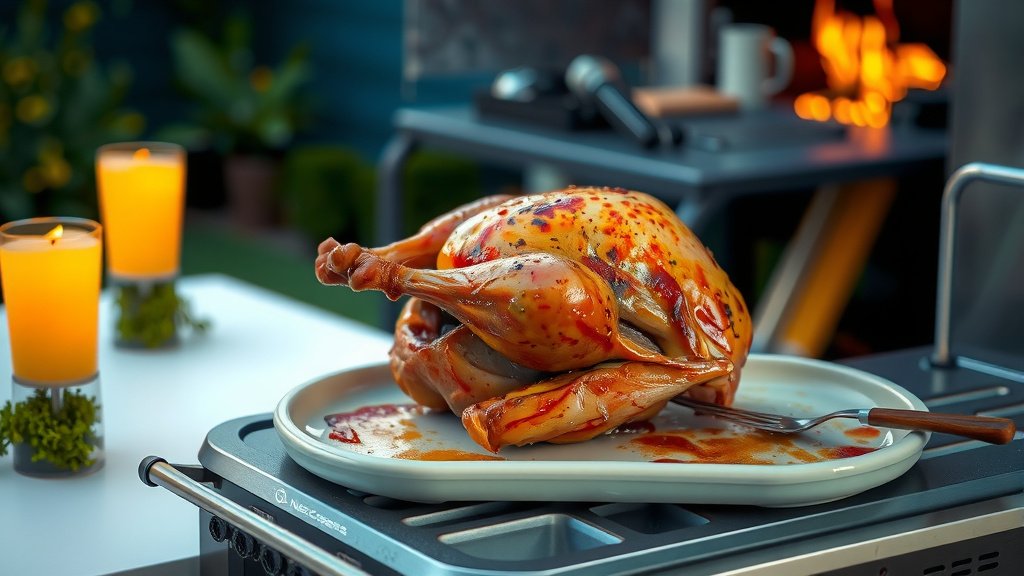
You can cook a turkey on a gas grill by using indirect heat, aiming for a consistent temperature of 325-350°F (160-175°C).
To cook a turkey on a gas grill, you’ll set up your burners to create distinct hot and cool zones, allowing the bird to roast evenly without direct flame contact.
- Achieve a juicy, flavorful turkey on your gas grill using indirect heat.
- Prep your turkey with brining or seasoning for best results.
- Maintain a steady grill temperature between 325-350°F.
- Monitor internal temperature closely for food safety and perfect doneness.
- Rest the turkey for tender slices and maximum juiciness.
How To Cook A Turkey On A Gas Grill?
Cooking a turkey on a gas grill involves using indirect heat to roast the bird slowly and evenly, resulting in a moist interior and crisp skin.
You’ll set up your grill for two-zone cooking, placing the turkey over unlit burners while lit burners provide the heat.
Why Choose the Gas Grill for Your Turkey?
Think of your gas grill as a large outdoor oven. It frees up kitchen space, especially during big holiday meals.
Plus, grilling can impart a subtle smoky flavor that’s truly delicious. It adds a whole new dimension to your bird.
Choosing the Right Turkey Size
Consider the size of your grill. A typical gas grill can handle a turkey up to 18 pounds comfortably.
For larger birds, you might need a bigger grill or consider cutting the turkey into pieces. A smaller bird often cooks more evenly.
Preparing Your Turkey for the Grill
Proper preparation is half the battle, just like getting ready for a big road trip. You want your turkey in top shape.
Always start with a thawed turkey. This is a must for even cooking and food safety.
To Brine or Not to Brine?
Brining helps keep your turkey moist and adds flavor, especially helpful on a grill (Many chefs recommend this for juicy results).
A simple salt water brine with herbs can make a huge difference. You can also opt for a dry brine, which gives a crispier skin.
Seasoning Your Bird Perfectly
After brining (or if you skip it), pat the turkey dry with paper towels. A dry surface helps achieve that beautiful, crispy skin.
Rub your favorite seasoning blend all over the bird, including under the skin. Don’t forget the cavity too for extra flavor.
Trussing and Tucking
Tying the legs together and tucking the wing tips under the body helps the turkey cook more uniformly.
This also makes for a neater presentation on your platter. It’s a small step that yields big results.
Setting Up Your Gas Grill for Success
This is where the magic of indirect grilling begins. Your goal is to create an oven-like environment.
A clean grill ensures better temperature control and prevents old food bits from burning onto your turkey.
Mastering Two-Zone Heating
For most gas grills with multiple burners, you’ll light the burners on one or both sides, leaving the middle burner(s) off.
The turkey will sit over the unlit burners, away from direct flame. This prevents burning the outside before the inside cooks.
Achieving the Ideal Temperature
Preheat your grill to 325-350°F (160-175°C). You want that temperature to be stable throughout the cooking process.
Use your grill’s built-in thermometer or, better yet, a separate grill thermometer for accuracy. Consistency is key here.
Grilling Your Turkey: The Process
Once your grill is preheated and your turkey is prepped, it’s time to get cooking. This part is surprisingly straightforward.
Remember, patience is a virtue, especially when dealing with a whole turkey.
Placement and Initial Cook Time
Place the turkey, breast-side up, directly over the unlit burners. Close the lid to let the indirect heat do its work.
Avoid peeking too often, as opening the lid lets heat escape and lengthens cooking time. Every minute counts.
Monitoring Internal Temperature
This is the most critical step for food safety and deliciousness. We found that a good meat thermometer is your best friend (USDA guidelines).
Insert the thermometer into the thickest part of the thigh, not touching any bone. The target temperature is 165°F (74°C).
Basting for Moisture and Color (Optional)
You can baste the turkey every hour or so with pan drippings or butter for added moisture and golden skin.
But remember, each time you open the lid, you lose heat, so be quick. Some people choose to skip basting entirely for less fuss.
How Long Will It Take?
Cooking time varies based on turkey size, grill temperature, and outside conditions. Here’s a general guide:
| Turkey Weight | Approximate Grill Time (Indirect Heat, 325-350°F) |
|---|---|
| 10-12 lbs | 2.5-3 hours |
| 12-14 lbs | 3-3.5 hours |
| 14-16 lbs | 3.5-4 hours |
| 16-18 lbs | 4-4.5 hours |
Always go by internal temperature, not just time. The table is a starting point, not a strict rule.
The All-Important Resting Period
Once your turkey reaches 165°F (74°C) in the thigh, remove it from the grill and loosely tent it with foil.
Let it rest for at least 20-30 minutes. This allows the juices to redistribute, resulting in a much more tender and moist turkey (Many culinary schools teach this).
Quick Checklist for Grilling Turkey
Keep these points handy for a smooth grilling experience:
- Turkey is fully thawed.
- Brined and seasoned as desired.
- Grill grates are clean.
- Burners set for indirect heat.
- Grill preheated to 325-350°F.
- Meat thermometer is ready.
- Resting spot prepared.
Conclusion
Cooking a turkey on your gas grill might seem daunting at first, but it’s a rewarding process that yields fantastic results.
By understanding indirect heat, maintaining temperature, and relying on a good meat thermometer, you can achieve a perfectly cooked, juicy bird with crispy skin.
So go ahead, take your holiday bird outside this year. Your family and friends will surely thank you for the delicious, grilled turkey.
How do I prevent my turkey from drying out on the grill?
Preventing a dry turkey involves several steps. Brining is a top recommendation to retain moisture. Also, ensure you cook using indirect heat and avoid overcooking by closely monitoring the internal temperature with a reliable meat thermometer.
Can I use a drip pan under the turkey on a gas grill?
Yes, using a drip pan is a great idea. It catches the turkey drippings, which you can use for gravy. It also helps to prevent flare-ups from fat dripping directly onto the lit burners, keeping your grill cleaner.
What if my grill’s temperature fluctuates a lot?
Temperature fluctuations can be challenging. Try to keep the grill lid closed as much as possible. If it’s windy, consider a windbreak around the grill. Also, ensure your gas tank isn’t running low, as this can affect heat output.
Should I flip the turkey while it’s grilling?
For whole turkeys cooked with indirect heat, flipping isn’t typically necessary. The indirect heat circulates around the bird, cooking it evenly from all sides. Keeping it breast-side up helps keep the breast meat moist.
How do I get crispy skin on a grilled turkey?
To get crispy skin, ensure the turkey is very dry before seasoning. Pat it thoroughly with paper towels. Cooking at a consistent temperature and avoiding too much basting (which can add moisture to the skin) will also help achieve that desirable crispness.