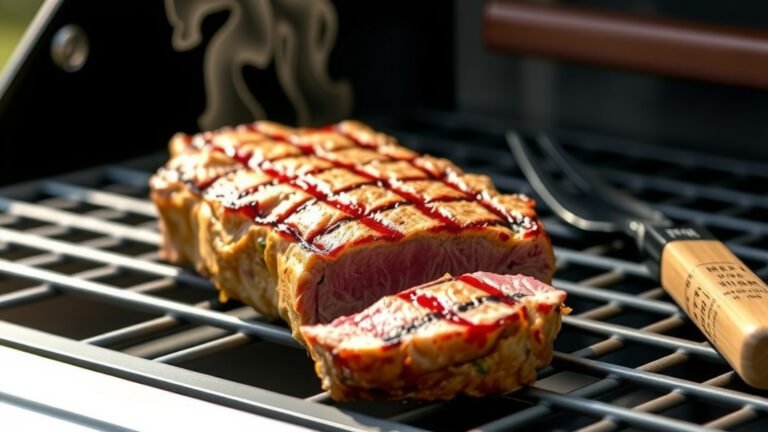
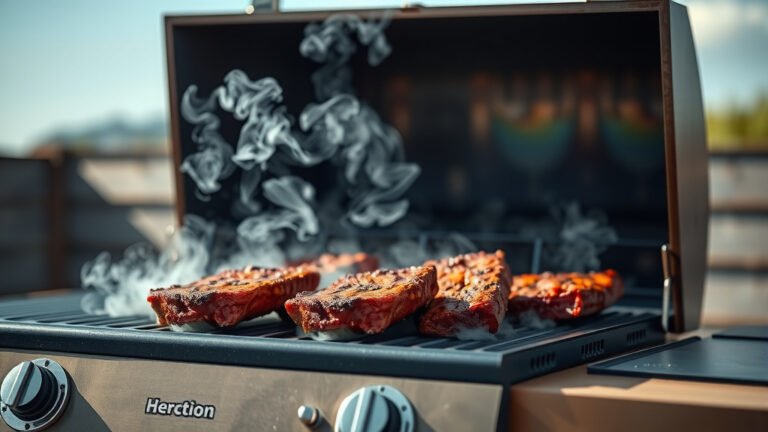
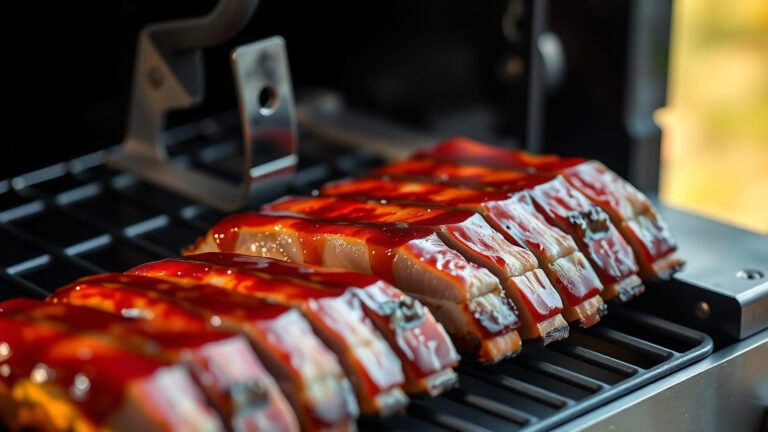
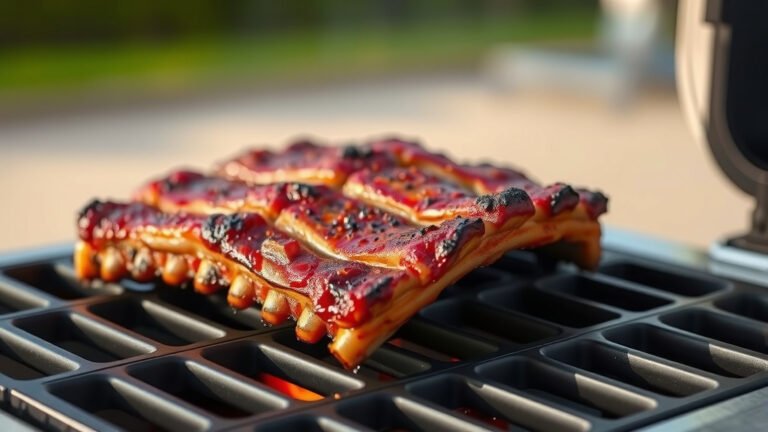
To charcoal grill ribs, you will want to use a two-zone heat method. This involves placing hot coals on one side of your grill and leaving the other side empty, creating areas for both direct searing and indirect slow cooking.
This approach helps cook the ribs slowly for tenderness, preventing them from burning while still getting that lovely smoky flavor from the charcoal.
Here’s a quick overview of how to get those perfect charcoal-grilled ribs:
- Choose your ribs: spare ribs or baby back ribs work best.
- Prepare your ribs by removing the membrane and applying a rub.
- Set up your charcoal grill for two-zone cooking.
- Cook the ribs slowly over indirect heat, maintaining a steady temperature.
- Finish them with sauce, if desired, then rest before serving.
How To Charcoal Grill Ribs?
Grilling ribs on a charcoal grill involves cooking them low and slow using indirect heat. This method tenderizes the meat while infusing it with that smoky charcoal flavor you love.
You’re aiming for fall-off-the-bone goodness, not burnt meat, so temperature control is your best friend.
Choosing Your Ribs: What’s Your Style?
When you head to the butcher, you’ll likely see two main types: baby back ribs and spare ribs. Each has its charm, really.
Baby back ribs come from closer to the loin, offering leaner meat and a shorter cooking time. They are often more tender straight out of the package.
Spare ribs, on the other hand, are meatier and fattier, coming from the belly. They have a richer flavor and need a bit more time on the grill.
Many pitmasters prefer spare ribs for their robust flavor and generous meatiness (National Barbecue Association).
Prepping Your Ribs for Perfection
Before any heat touches your ribs, a little prep goes a long way. The most important step is removing the membrane from the back of the rack.
This thin, silvery layer can make ribs tough and prevent your seasoning from really soaking in. Just slide a knife under an edge, grab it with a paper towel, and peel it off.
Once the membrane is gone, it’s rub time. A good dry rub adds a layer of flavor and helps create that delicious bark. Don’t be shy; cover every inch generously.
Crafting Your Dry Rub
A simple dry rub often includes salt, pepper, paprika, garlic powder, onion powder, and a touch of brown sugar for caramelization. Feel free to experiment!
We found that balancing sweet, salty, and spicy notes gives the best overall flavor profile.
Setting Up Your Charcoal Grill for Ribs
This is where the magic truly begins. You need a two-zone setup for grilling ribs. This means direct heat on one side and indirect heat on the other.
Pile your lit charcoal briquettes or lump charcoal on one side of the grill. This creates a hot zone for searing, though you won’t do much of that with ribs.
The empty side becomes your indirect cooking zone, perfect for slow roasting your ribs without burning them. This technique is often recommended by grilling experts for larger cuts of meat (BBQ Grilling Academy).
Getting the Right Temperature
Your target temperature for ribs on a charcoal grill is between 225°F and 275°F (107°C – 135°C). This low and slow approach is key to tender ribs.
Use a good grill thermometer, not just the one on your grill lid. Place it near the ribs in the indirect zone to get an accurate reading.
Adjust airflow with your grill vents to control the temperature. Opening the bottom vent increases oxygen, making coals burn hotter. Closing the top vent slows airflow, reducing heat.
Maintaining Consistent Heat
Consistency is important here. You might need to add a few new coals every hour or so to maintain your temperature.
Don’t add too many at once, or your temperature will spike. Think of it like a gentle nudge, not a full shove.
The Cooking Process: Low and Slow Wins the Race
Place your prepped ribs on the indirect side of the grill, away from the direct heat of the coals. Close the lid and let the smoke and heat do their work.
Resist the urge to constantly open the lid! Each time you peek, you lose heat, extending your cooking time. “If you’re looking, it ain’t cooking,” as the old saying goes.
Monitoring Your Ribs
Cooking time varies greatly depending on the type and size of your ribs, and your grill’s specific quirks. Baby back ribs might take 3-4 hours, while spare ribs often need 5-6 hours.
A good sign of readiness is when the meat starts pulling back from the bone tips, exposing about a quarter to a half-inch of bone.
Check for tenderness by picking up a rack with tongs. If it bends easily and starts to crack near the middle, they are likely ready.
The 3-2-1 Method for Spare Ribs
Many backyard grillers swear by the 3-2-1 method for spare ribs. It breaks the cooking into three stages:
- 3 Hours: Smoke directly on the grill, bone-side down, over indirect heat. This builds flavor.
- 2 Hours: Wrap the ribs tightly in foil with a little liquid (apple juice, broth, or beer). Cook indirectly. This tenderizes them.
- 1 Hour: Unwrap the ribs, apply your favorite BBQ sauce if you wish, and cook indirectly again. This sets the sauce and forms a bark.
For baby back ribs, a 2-2-1 method is often suitable, given their smaller size and faster cooking time.
When to Sauce Your Ribs
If you plan to use barbecue sauce, apply it in the last 30-60 minutes of cooking. Sugar in most sauces can burn easily over prolonged heat.
Baste lightly and often, letting the sauce caramelize without charring. This creates a beautiful, sticky glaze.
Signs of Doneness and Resting
Your ribs are done when they are tender, but not falling apart immediately. You want a slight tug when you bite into them. This is often referred to as “tooth tenderness” (Culinary Institute of America).
Another reliable sign: when you lift a rack with tongs, the meat should flex significantly without breaking, and you should see the bones slightly exposed.
Once off the grill, allow your ribs to rest for 10-15 minutes, loosely tented with foil. This lets the juices redistribute, ensuring every bite is moist and flavorful.
Slicing them too soon can cause those precious juices to run out, leaving you with drier meat.
Troubleshooting Common Rib Grilling Issues
Even seasoned grillers face challenges. Let’s talk about a few common ones you might encounter.
| Issue | Possible Cause | Solution |
|---|---|---|
| Dry Ribs | Too high heat, cooked too long, lack of moisture. | Lower grill temp, use the 3-2-1 method (wrapping), spritz with liquid. |
| Burnt Outside, Raw Inside | Direct heat too strong, ribs too close to coals. | Ensure proper two-zone setup, cook purely over indirect heat. |
| Rub Not Sticking | Ribs too dry before applying rub. | Pat ribs dry, then apply a thin layer of mustard or oil before rub. |
| Lack of Smoke Flavor | Not enough wood chunks, charcoal not smoking properly. | Add wood chunks (not chips) to your coals, ensure good airflow. |
A Quick Checklist for Perfect Ribs
- Remove the membrane? Yes!
- Apply a generous rub? Absolutely.
- Set up two-zone heat? Crucial.
- Maintain 225-275°F? Stay vigilant.
- Resist peeking? Stay strong.
- Sauce at the end? Only if you like it saucy.
- Rest before slicing? Patience is a virtue.
Conclusion
Charcoal grilling ribs truly offers a rewarding experience. It’s a bit of a commitment, but the rich, smoky flavor and tender texture are unmatched.
Remember, patience and temperature control are your best tools. Don’t be afraid to experiment with rubs and sauces to find your perfect rib recipe.
With these tips, you’re well on your way to impressing your family and friends with some seriously delicious ribs straight from your charcoal grill.
What kind of charcoal is best for grilling ribs?
Lump charcoal is often preferred by experts for grilling ribs because it burns hotter, cleaner, and imparts a more natural smoky flavor. Briquettes are also fine, offering a more consistent burn, but may contain binders.
How do I know when my charcoal grill is at the right temperature for ribs?
You’ll need a good grill thermometer, preferably one that measures the temperature at grate level, near where your ribs are cooking. Aim for a steady 225-275°F (107-135°C) in the indirect zone.
Can I add wood chips for extra smoke flavor?
Yes, absolutely! Soaking wood chips for about 30 minutes before adding them directly to the hot coals will create more smoke. Hickory, apple, and cherry are popular choices for pork ribs.
What if my ribs are cooking too fast or too slow?
If they’re too fast, reduce your airflow by closing the bottom vent slightly and check if you have too many coals. If too slow, open the bottom vent more and consider adding a few fresh coals to the fire.
Is it necessary to wrap ribs in foil?
No, it’s not strictly necessary, but many grillers choose to wrap ribs (often called the “Texas crutch”) for a period. This method helps tenderize them and keeps them moist, especially during longer cooks, preventing them from drying out.