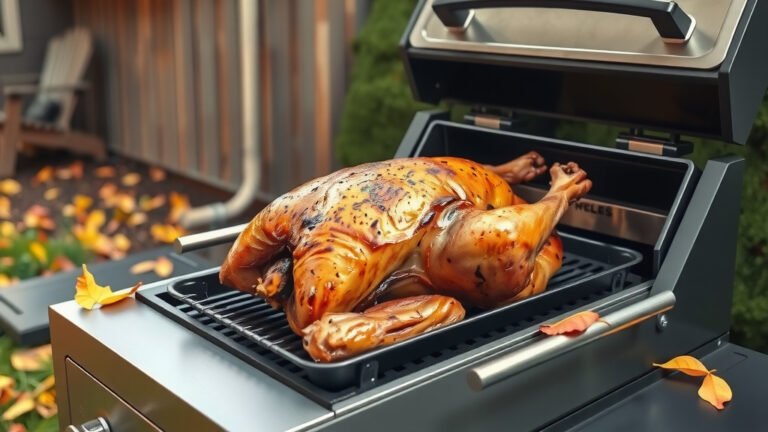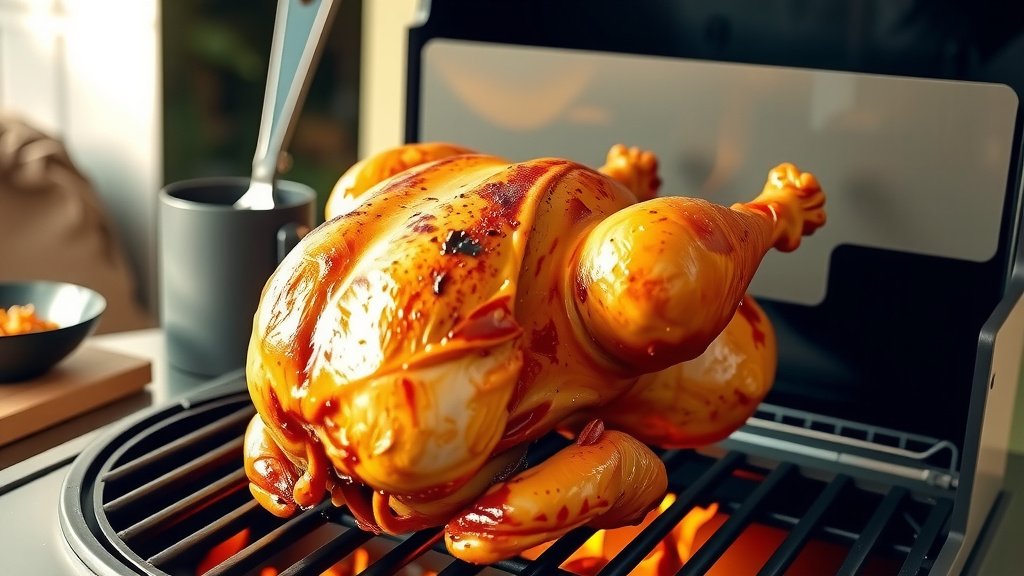
You can typically rotisserie a chicken on a gas grill for 1.5 to 2.5 hours. The real time depends on your chicken’s size and maintaining a consistent grill temperature of 325-350°F.
Always use a meat thermometer to confirm the internal temperature reaches 165°F in the thickest part of the thigh, away from the bone.
- A 3-4 lb chicken takes about 90 minutes to 2 hours.
- Larger chickens, around 5-6 lbs, might need 2 to 2.5 hours.
- Maintain a steady grill temperature between 325-350°F.
- The ultimate goal is an internal temperature of 165°F in the thigh.
- Rotisserie grilling offers incredibly juicy meat with crispy skin.
How Long To Rotisserie A Chicken On A Gas Grill?
Typically, a chicken on a gas grill will rotisserie for 1.5 to 2.5 hours. Always aim for an internal temperature of 165°F in the thickest part of the thigh.
Understanding Your Chicken’s Size
The size of your chicken is the biggest factor in cook time. Think of it like baking a cake; a bigger cake takes longer. A smaller bird, say 3-4 pounds, will cook much faster than a 6-pound roaster.
When you pick your chicken, consider how many people you are feeding. A standard 4-pound chicken is often perfect for four hungry people. Adjust your expectations for cooking duration based on its weight.
Maintaining the Right Grill Temperature
For juicy, perfectly cooked chicken, you want a consistent grill temperature. We found that 325°F to 350°F is ideal for rotisserie chicken. This temperature allows the bird to cook through without drying out.
If your grill runs too hot, the outside might burn before the inside cooks. Too low, and you risk dry chicken as it takes too long. Use your grill’s thermometer, or a separate grill thermometer, for accurate readings.
Setting Up Your Gas Grill for Rotisserie
Setting up your grill correctly makes all the difference. Most gas grills have multiple burners. You’ll want to use the indirect heat method. This means turning on the burners on the sides, but keeping the burner directly under the chicken off.
This method prevents flare-ups and provides even cooking. Some experts suggest placing a drip pan directly below the chicken to catch juices. This also helps keep your grill clean and reduces potential flames from dripping fat.
Preparing Your Chicken for the Spit
Proper preparation ensures uniform cooking and delicious results. First, make sure your chicken is clean and patted dry. Many home cooks skip the drying step, but it helps achieve that coveted crispy skin.
Trussing is a Must
Trussing means tying the chicken with butcher’s twine. This keeps the wings and legs tucked close to the body. Untrussed chicken can spin awkwardly, leading to uneven cooking and even falling off the spit (research indicates this is a common issue for beginners).
You want a compact, football-like shape. This method also helps the chicken cook more evenly, as all parts are exposed to heat similarly. Don’t skip this quick but critical step.
Seasoning Your Bird
Seasoning adds so much flavor to your rotisserie chicken. A simple mix of salt, pepper, garlic powder, and paprika works wonders. You can also experiment with your favorite dry rubs. Don’t forget to season the cavity for flavor from the inside out.
Some people like to add herbs like rosemary or thyme inside the cavity. Rubbing a little olive oil or butter on the skin before seasoning helps the spices stick and contributes to a beautiful golden crust.
The Importance of Internal Temperature
Knowing exactly when your chicken is done is key to food safety and taste. Visually, it might look ready, but sight alone can be deceiving. The only sure way is with a reliable meat thermometer.
USDA guidelines point to 165°F as the safe internal temperature for poultry. Insert the thermometer into the thickest part of the thigh, making sure you don’t touch any bone. Bone conducts heat faster, giving a false high reading.
Checking for Doneness
- Insert thermometer into the thickest part of the thigh.
- Avoid touching the bone to get an accurate reading.
- Ensure the thermometer reads 165°F.
- Check a second spot to confirm.
- Juices should run clear when you pierce the skin near the thigh.
Approximate Cook Times by Weight
This table offers a general guideline. Always use your meat thermometer for accuracy!
| Chicken Weight (approx.) | Rotisserie Time (approx.) | Internal Temperature Goal |
|---|---|---|
| 3-4 lbs | 1.5 – 2 hours | 165°F |
| 4-5 lbs | 2 – 2.25 hours | 165°F |
| 5-6 lbs | 2.25 – 2.5 hours | 165°F |
Resting Your Rotisserie Chicken
Once your chicken hits 165°F, it’s not quite ready to carve. Resting is a critical final step. Remove the chicken from the spit, cover it loosely with foil, and let it rest for 10-15 minutes.
This resting period allows the juices to redistribute throughout the meat. Without resting, those delicious juices would simply run out when you cut into it, leaving you with dry chicken. Patience here truly pays off.
Troubleshooting Common Rotisserie Issues
Even seasoned grill masters face a hiccup or two. If your chicken isn’t browning evenly, try adjusting your burner settings slightly or rotating the grill itself if possible. Sometimes one side of the grill might be hotter. Even heat is your friend.
If you notice smoke or flare-ups, your drip pan might be overflowing or the heat is too high. Adjust the drip pan, or lower the burners. Safety first, so keep an eye on things and have a spray bottle of water handy for small flare-ups.
Pre-Rotisserie Checklist
- Is the chicken thawed and patted dry?
- Is it properly trussed?
- Are the seasonings applied evenly?
- Is the rotisserie spit securely in place?
- Are your grill’s burners set for indirect heat?
- Do you have your meat thermometer ready?
Conclusion
Rotisserie chicken on a gas grill is a fantastic way to enjoy juicy, flavorful poultry with crispy, golden skin. Remember, the key to success lies in careful preparation, maintaining a consistent grill temperature, and always checking the internal temperature with a reliable thermometer.
Don’t rush the process, and definitely don’t skip the resting period. Follow these steps, and you’ll be serving up a delicious rotisserie chicken that your family and friends will surely ask for again and again. Happy grilling!
What is the ideal grill temperature for rotisserie chicken?
The ideal grill temperature for rotisserie chicken on a gas grill is between 325°F and 350°F. This range allows for even cooking and helps achieve that desirable crispy skin without burning.
Do I need to brine my chicken before rotisserie grilling?
Brining is not strictly necessary, but many people find it enhances the chicken’s moisture and flavor. If you choose to brine, a simple salt and sugar solution for a few hours can make a notable difference in the final product.
How do I prevent my rotisserie chicken from drying out?
To prevent your rotisserie chicken from drying out, maintain a consistent grill temperature, don’t overcook it past 165°F, and always allow it to rest for 10-15 minutes after cooking. Using a drip pan with a little liquid can also add moisture to the cooking environment.
Can I use a charcoal grill for rotisserie chicken?
Yes, you can absolutely use a charcoal grill for rotisserie chicken! The method is similar, but you’ll manage your heat by arranging the coals for indirect cooking, typically in two piles on either side of a drip pan, with the chicken rotating in the middle.
What kind of wood chips should I use for rotisserie chicken on a gas grill?
For a subtle smoky flavor with rotisserie chicken, mild wood chips like apple or cherry are often recommended. You can soak them briefly and then place them in a smoker box or a foil pouch directly over a lit burner to generate smoke.