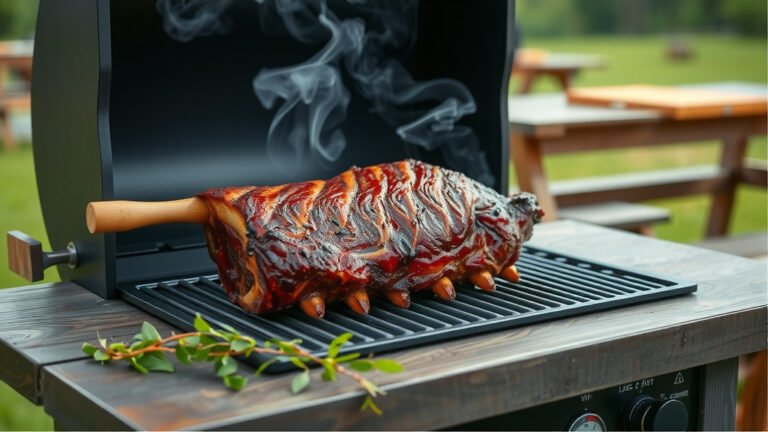
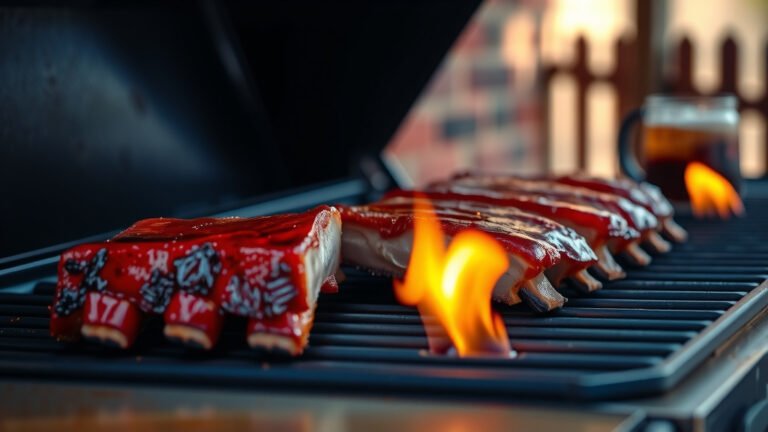
St. Louis ribs on a gas grill typically take about 2 to 3 hours to cook using indirect heat at 275-300°F (135-149°C).
The exact grilling time for St. Louis ribs depends on rib thickness, consistent grill temperature, and your desired tenderness, often confirmed with the bend test.
Here’s a quick overview of what you’ll find in this guide:
- You’ll learn that St. Louis ribs on a gas grill need about 2 to 3 hours using indirect heat.
- We will explain the popular 3-2-1 method, breaking down each step for perfect results.
- You’ll discover how to set up your gas grill for ideal, consistent temperatures.
- We’ll share crucial doneness tests, like the bend test, to ensure your ribs are tender.
- This guide offers practical tips for preparing your ribs and troubleshooting common grilling issues.
How Long To Grill St Louis Ribs On Gas Grill?
You can expect to grill St. Louis ribs on a gas grill for roughly 2 to 3 hours. This timeframe applies when cooking at a steady 275-300°F (135-149°C) using indirect heat.
Understanding St. Louis Ribs First
Before firing up your grill, let’s talk about St. Louis ribs. These aren’t just any ribs; they are pork spare ribs trimmed into a rectangular shape. This trimming removes the tougher cartilage and sternum, making them uniform and easier to grill evenly.
What Makes Them Special?
St. Louis ribs are known for their great meat-to-bone ratio and rich flavor. Their flat shape allows for consistent cooking, absorbing smoke and seasoning beautifully. Many pitmasters love them for their versatility and classic barbecue appeal.
Gas Grill Basics for Ribs
Using a gas grill for ribs is very convenient. You get precise temperature control, which is key for slow-cooked ribs. No need to constantly manage charcoal or wood, letting you focus on the flavor.
Setting Up for Indirect Heat
Indirect heat is your best friend for ribs. This means placing the ribs over an unlit burner while the other burners are lit. On a multi-burner gas grill, you might light one or two burners on one side to your target temperature, and place the ribs on the unlit side. This prevents direct scorching and ensures gentle, even cooking.
Target Temperature Sweet Spot
The ideal temperature for grilling St. Louis ribs on a gas grill is between 275°F and 300°F (135-149°C). This low and slow approach breaks down tough connective tissues, giving you that fall-off-the-bone tenderness everyone loves. We found that maintaining this temperature consistently is vital for success.
The 3-2-1 Method: A Rib Grilling Classic
The 3-2-1 method is a widely accepted technique for grilling tender, juicy ribs. It breaks the cooking process into three distinct phases. This method works incredibly well on a gas grill, giving you predictable results.
| Phase | Duration | Method | Purpose |
|---|---|---|---|
| Phase 1 | 3 hours | Indirect grill at 275-300°F | Develop bark, absorb smoke flavor |
| Phase 2 | 2 hours | Wrapped in foil (with liquid) | Tenderize meat, lock in moisture |
| Phase 3 | 1 hour | Unwrapped, indirect grill | Set glaze, firm up bark, finish cooking |
Phase 1: The Smoke Session (3 Hours)
In the first phase, you’ll place your seasoned ribs on the indirect side of your grill for about three hours. Keep the grill temperature steady at 275-300°F. If you want a smoky flavor, you can add a smoker box with wood chips over a lit burner (USDA suggests safe food handling). This helps to build a delicious “bark” on the ribs.
Phase 2: The Foil Wrap (2 Hours)
After three hours, remove the ribs and wrap them tightly in heavy-duty aluminum foil. Many experts say adding a splash of apple juice, cider vinegar, or beer inside the foil helps tenderize the meat further. Return the wrapped ribs to the indirect heat for another two hours. This steams the ribs, making them incredibly moist.
Phase 3: Finishing Strong (1 Hour)
Finally, unwrap the ribs and place them back on the indirect side of the grill. This is when you can apply your favorite barbecue sauce, if desired. Let them grill for the last hour to allow the sauce to caramelize and for the bark to firm up again. Keep a close eye on the temperature to avoid burning the sauce.
Key Factors Affecting Grill Time
While the 3-2-1 method is a good guide, several things can slightly alter your total cooking time. Being aware of these helps you adjust and get perfect ribs every time.
Rib Thickness and Size
Not all St. Louis ribs are created equal. A thicker slab of ribs will naturally take longer to cook than a thinner one. Larger racks also require more time to reach optimal tenderness. Always consider the size of your specific rack.
Grill Consistency and Weather
Your gas grill’s ability to maintain a consistent temperature plays a big role. Older grills might have hot spots or struggle in cold or windy weather. Always monitor your grill’s internal temperature with an accurate thermometer, not just the hood thermometer (Many culinary experts agree).
Your Personal Tenderness Preference
Some people like their ribs “fall-off-the-bone,” while others prefer them with a slight chew. Your desired tenderness can shorten or lengthen the final cooking phase. We found that the bend test is a reliable way to check for your preferred doneness.
Knowing When Your Ribs Are Done
How do you know when your ribs are truly ready? It’s not just about the clock; it’s about specific visual and physical cues. These tests will help you achieve perfectly cooked ribs.
The Bend Test Explained
The bend test is a popular method. Using tongs, pick up the rack of ribs from one end. If the ribs are done, they should flex significantly in the middle and almost break when you give them a gentle bounce. The meat might even show small cracks on the surface.
Meat Pull-Back from the Bone
Another clear sign of doneness is when the meat has pulled back from the ends of the bones, exposing about a quarter to half an inch of bone. This indicates that the connective tissues have broken down nicely, leaving you with tender meat.
Essential Rib Prep Tips
Proper preparation before grilling sets the stage for fantastic ribs. Don’t skip these simple but crucial steps.
Removing the Membrane
On the bone-side of the ribs, you’ll find a thin, silvery membrane. This membrane can be tough and chewy if not removed. Use a knife to lift a corner, then a paper towel to grip and pull it off. This step allows your seasoning to penetrate better and results in a more pleasant texture.
Seasoning for Flavor
A good rub is vital for flavor. Apply a generous amount of your favorite dry rub all over the ribs, ensuring full coverage. We found that letting the rub sit on the ribs for at least 30 minutes, or even overnight in the fridge, allows the flavors to deepen into the meat.
Here’s a quick checklist for your grilling success:
- Preheat your gas grill to 275-300°F.
- Set up for indirect heat.
- Remove the membrane from the ribs.
- Apply your favorite dry rub generously.
- Have a reliable grill thermometer ready.
- Keep apple juice or similar liquid for wrapping.
- Prepare your barbecue sauce for the final phase.
Troubleshooting Common Rib Issues
Grilling ribs can sometimes present challenges. If your ribs are too dry, consider wrapping them earlier or adding more liquid to the foil. If they’re tough, they likely need more time in the foil phase. Uneven cooking might mean your grill has hot spots, so try rotating the ribs periodically or adjusting burner settings slightly.
Conclusion
Grilling St. Louis ribs on a gas grill for 2 to 3 hours at 275-300°F, especially using the 3-2-1 method, will give you incredibly tender and flavorful results. Remember to focus on consistent indirect heat, proper preparation, and using doneness tests like the bend test. With a little patience and attention to detail, you’ll be serving up fantastic ribs that your friends and family will rave about. Enjoy the process and the delicious outcome!
How do I set up my gas grill for indirect heat?
To set up for indirect heat, light one or two burners on one side of your grill to reach your target temperature (275-300°F). Place the ribs on the unlit side of the grill, away from the direct flames. Close the lid and monitor the temperature using a grill thermometer.
Can I add smoke flavor on a gas grill?
Yes, you can add smoke flavor to your ribs on a gas grill. Use a smoker box or a foil pouch filled with wood chips (like hickory or applewood). Place this directly over one of the lit burners to produce smoke. Replenish the chips as needed, especially during the first few hours.
What if my ribs are cooking too fast or too slow?
If your ribs are cooking too fast, lower the heat on your lit burners or slightly open the lid to release some heat. If they’re too slow, increase the heat on your lit burners. Always rely on an accurate grill thermometer to guide your adjustments, not just the grill’s built-in gauge.
Should I flip the ribs during grilling?
During the indirect grilling phases, it’s generally not necessary to flip the ribs frequently. Once or twice during the first three hours to ensure even exposure to heat and smoke is usually enough. After wrapping, they don’t need flipping at all.
What internal temperature should St. Louis ribs reach?
While the USDA recommends pork to be cooked to 145°F, ribs are generally cooked to a much higher internal temperature for tenderness, usually between 190°F and 205°F (88-96°C). At these higher temperatures, the collagen breaks down, making the meat incredibly tender and juicy, not dry.