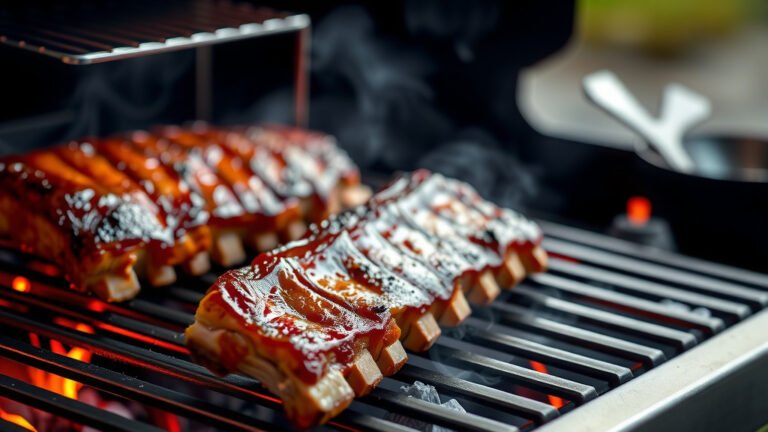
For St. Louis ribs on a charcoal grill, aim for about 4-6 hours at a consistent temperature of 225-275°F (107-135°C). The exact time depends on your grill’s temperature control and the ribs’ thickness.
You are looking for a tender, pull-off-the-bone result, which takes patience and steady low heat, not a quick sear.
- Grill St. Louis ribs for 4-6 hours at 225-275°F on a charcoal grill.
- Use a two-zone setup for indirect heat.
- Monitor internal temperature for doneness, targeting 195-203°F (90-95°C).
- Spritzing keeps ribs moist, while resting them locks in juices.
- Achieve perfect tenderness with patience and consistent temperature.
How Long To Grill St Louis Ribs On Charcoal Grill?
Grilling St. Louis ribs on a charcoal grill typically takes 4 to 6 hours. This timeframe allows the connective tissues to break down, resulting in incredibly tender and juicy ribs.
Why Does Grilling Time Vary So Much?
You might wonder why there is a 2-hour range in grilling time. Many factors influence how long your ribs will need on the grill.
Things like the actual grill temperature, the thickness of the ribs, and even the weather outside play a part.
The Role of Temperature Control
Maintaining a steady grill temperature is key for perfect ribs. If your charcoal grill runs hotter, your ribs might finish faster, but they could also dry out.
A cooler grill means longer cooking times, but often results in more tender ribs. Research shows that consistent low heat is best for breaking down tough fibers.
Rib Thickness Matters
Not all racks of ribs are created equal. A thicker rack of St. Louis ribs will naturally take longer to cook than a thinner one. Think of it like baking a thicker cake versus a thinner one.
This difference in thickness means you cannot just set a timer and walk away. You need to pay attention to the ribs themselves.
Prepping Your Ribs for Charcoal Grilling
Before you even light a single briquette, some simple prep work can make a huge difference in your final product. This is where you lay the foundation for flavor and tenderness.
Good preparation ensures the ribs cook evenly and absorb all those delicious seasonings you apply.
Trim and Prep Your Rack
Start by removing the membrane from the back of the ribs. This thin, silverskin layer can be tough and chewy if left on. Many grill masters agree it is the first step to better ribs.
You might also trim any excessive fat, although some fat helps keep the ribs moist during the long cook. Just do not overdo it.
The Magic of a Good Dry Rub
A quality dry rub is essential for St. Louis ribs. Apply it generously to both sides of the ribs, making sure to get into all the nooks and crannies. Let the rub sit for at least 30 minutes, or even overnight in the refrigerator.
This gives the flavors time to marry with the meat. Experts suggest a good rub will form a beautiful bark during cooking (Meathead Goldwyn).
Setting Up Your Charcoal Grill for Success
Your grill setup is critical for achieving that long, slow cook. You are not looking for direct heat that will char your ribs quickly.
Instead, you want a consistent, indirect heat that gently cooks them over several hours.
Two-Zone Setup: Your Best Friend
For ribs, a two-zone setup is non-negotiable on a charcoal grill. This means banking your hot charcoal to one side of the grill and leaving the other side empty.
You will cook the ribs on the indirect side, away from the direct flames. This method helps maintain a stable temperature and prevents burning.
Maintaining Consistent Heat
After lighting your charcoal, arrange it for your two-zone setup. Aim for a grill temperature between 225-275°F (107-135°C). Use your grill’s vents to control the airflow and thus the temperature.
Adding a few unlit briquettes to your existing lit coals every hour or so helps maintain that steady heat. It is like feeding a fire, but gently.
The Grilling Process: Step-by-Step
Now that your grill is ready and your ribs are prepped, it is time for the main event. This is where patience truly comes into play.
Resist the urge to constantly open the lid, as every peek lets heat escape and extends your cooking time.
The Initial Grill Time
Place your seasoned ribs on the indirect side of the grill. Close the lid and let them cook undisturbed for about 2-3 hours. This first phase helps set the rub and begin the rendering process.
You are aiming for a nice mahogany color to start forming on the surface.
To Spritz or Not To Spritz?
Some grillers love to spritz their ribs with a mixture of apple juice, cider vinegar, or even beer every hour or so. We found this practice helps keep the ribs moist and can add a subtle flavor layer.
Others prefer to leave them alone. It is a personal preference, but a quick spritz can help prevent drying.
When to Wrap Your Ribs?
After about 2-3 hours, many pitmasters choose to wrap their ribs in foil. This is often called the “Texas Crutch.” Wrap them tightly with a splash of liquid, like apple juice.
This method steams the ribs, making them incredibly tender. Continue cooking for another 1-2 hours in the foil.
| Phase | Temperature | Time | Action |
|---|---|---|---|
| Initial Cook | 225-275°F | 2-3 hours | Place ribs indirect, form bark |
| Wrapped Cook | 225-275°F | 1-2 hours | Wrap in foil with liquid for tenderness |
| Unwrapped Finish | 225-275°F | 30-60 minutes | Unwrap, firm up bark, apply sauce |
How to Know Your Ribs Are Done?
The biggest challenge for many new grillers is knowing exactly when the ribs are ready. You are looking for a specific level of tenderness, not just a set time.
Here are two reliable methods to check for doneness.
The Bend Test: A Classic Method
Pick up a rack of ribs with tongs from one end. Gently bounce the ribs. If they are done, the rack should bend significantly, and the meat should look like it is about to tear or crack in the middle.
This is a great indicator of fall-off-the-bone tenderness without being mushy.
Temperature Check: The Scientific Way
For a more precise measure, use an instant-read thermometer. Insert it into the thickest part of the meat, avoiding the bone. You are looking for an internal temperature between 195-203°F (90-95°C).
Many experts say this range means the collagen has fully broken down, making the meat incredibly tender (National Pork Board).
Resting Your Ribs: Don’t Skip This!
Once your ribs reach that perfect tenderness, remove them from the grill. Place them on a cutting board, tented loosely with foil. Let them rest for 15-20 minutes.
This resting period allows the juices to redistribute throughout the meat, resulting in a more succulent and flavorful bite. It is a small step with a big impact on juiciness.
Tips for Amazing St. Louis Ribs
Want to impress everyone with your ribs? Here are a few extra pointers to make your grilling experience even better.
- Monitor your grill temperature with a reliable thermometer.
- Use quality charcoal; briquettes offer a more consistent burn.
- Do not rush the cook; patience is your best ingredient.
- Experiment with different wood chunks for smoke flavor (hickory, apple, cherry).
- Keep a spray bottle handy for spritzing if ribs look dry.
- Have a drip pan under your ribs to catch fat and keep the grill clean.
Conclusion
Grilling St. Louis ribs on a charcoal grill is a rewarding experience that demands patience and attention to detail. While the average cook time is 4-6 hours, remember that your ribs are done when they are tender, not just when the clock says so.
By controlling your grill temperature, preparing your ribs well, and knowing how to check for doneness, you will consistently create delicious, fall-off-the-bone results that your family and friends will love.
How do I maintain a low temperature on my charcoal grill for ribs?
To maintain a low temperature (225-275°F) on a charcoal grill, use a two-zone setup. Control the airflow using your bottom and top vents. Keep the bottom vent open slightly and adjust the top vent to fine-tune the temperature. Avoid opening the lid too often.
Should I use wood chips for smoking St. Louis ribs on a charcoal grill?
Yes, adding wood chips or chunks is highly recommended for imparting a smoky flavor to your St. Louis ribs. Hickory, apple, or cherry wood are excellent choices. Add a few pieces directly to your hot coals for continuous smoke during the cook.
What is the difference between baby back ribs and St. Louis ribs?
St. Louis ribs are cut from the belly of the hog, below the loin, and are typically flatter and meatier with more fat marbling. Baby back ribs come from the loin area and are shorter, leaner, and more curved. St. Louis ribs generally take longer to cook due to their size and fat content.
Can I put BBQ sauce on my St. Louis ribs while they are grilling?
You can, but it is best to apply BBQ sauce during the last 30-60 minutes of grilling. Sugar in most BBQ sauces can burn quickly over direct heat, creating a bitter taste. Apply it after unwrapping the ribs, letting it set and caramelize slightly on the indirect side of the grill.
My ribs look dry on the grill; what should I do?
If your ribs start to look dry, consider spritzing them every hour with a liquid like apple juice, apple cider vinegar, or a mixture of both. This helps keep the surface moist and can prevent them from drying out during the long cooking process. You might also check your grill temperature to ensure it is not running too high.