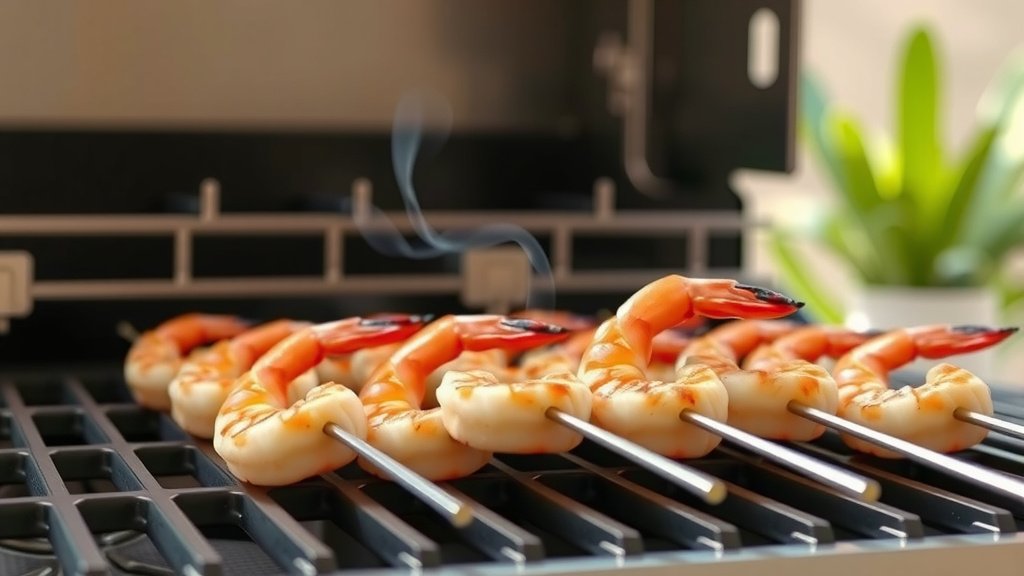
For perfectly grilled shrimp skewers on a gas grill, aim for 2-3 minutes per side over medium-high heat, which means about 4-6 minutes total cook time. You will know they are ready when they turn opaque pink and curl into a C-shape, ensuring they are juicy and flavorful.
-
Grill shrimp skewers for 4-6 minutes total on a gas grill.
-
Set your grill to medium-high heat, around 400-450°F.
-
Flip the skewers once after 2-3 minutes for even cooking.
-
Shrimp are done when they turn pink and opaque, forming a ‘C’ shape.
-
Overcooking makes shrimp tough and rubbery, so watch them closely.
How Long To Grill Shrimp Skewers On Gas Grill?
Shrimp skewers typically need only 4-6 minutes total cooking time on a gas grill set to medium-high heat. Flip them once halfway through for even cooking, creating a delicious seafood treat for your guests.
The Perfect Gas Grill Temperature for Shrimp
The sweet spot for grilling shrimp is medium-high heat. We found this usually means your grill thermometer reads between 400-450°F (200-230°C). This temperature sears the shrimp quickly, giving them a nice char without overcooking the inside. Too low, and they might steam; too high, and they could burn before cooking through.
Prepping Your Shrimp Skewers for Success
Before they hit the heat, proper preparation makes a big difference. If you are using wooden skewers, remember to soak them in water for at least 30 minutes. This prevents them from burning up on the grill, keeping your shrimp securely in place. Marinating your shrimp for 15-30 minutes also adds a burst of flavor. Just do not let them sit too long in acidic marinades; shrimp are delicate!
Choosing the Right Shrimp Size
Shrimp come in many sizes, and this impacts your grill time. Larger shrimp (like jumbo or colossal) will need a minute or two more than medium or large shrimp. Aim for uniform size on each skewer to ensure they all cook at the same rate. This helps avoid some shrimp being undercooked while others are perfectly tender.
Thawing Shrimp Properly
Always grill thawed shrimp. Frozen shrimp will cook unevenly and release too much water, preventing that lovely sear. The best way to thaw shrimp is in the refrigerator overnight. If you are in a rush, place them in a bowl of cold water for about 15-20 minutes, changing the water once or twice. This ensures they are ready for the grill.
Signs Your Shrimp Skewers Are Done
Knowing when shrimp are perfectly cooked is key to avoiding rubbery results. Many grilling experts agree that shrimp are done when they turn opaque pink all over. They will also curl into a loose ‘C’ shape. If they form a tight ‘O’ shape, they are likely overcooked. A slightly gray center means they need a tiny bit more time. You want them just firm, not hard. This visual check is often the most reliable indicator.
Here is a quick reference table for grilling shrimp skewers:
| Shrimp Size | Grill Temp | Cook Time (per side) | Total Cook Time |
|---|---|---|---|
| Medium (31-40 ct) | Medium-High (400-450°F) | 1.5 – 2 minutes | 3 – 4 minutes |
| Large (21-30 ct) | Medium-High (400-450°F) | 2 – 2.5 minutes | 4 – 5 minutes |
| Jumbo (16-20 ct) | Medium-High (400-450°F) | 2.5 – 3 minutes | 5 – 6 minutes |
| Colossal (U/15 ct) | Medium-High (400-450°F) | 3 – 3.5 minutes | 6 – 7 minutes |
Top Tips for Grilling Perfect Shrimp Skewers
Grilling shrimp skewers on a gas grill is simple, but a few tricks can elevate your meal. We have gathered some of the best advice to ensure your shrimp are always a hit. From seasoning to timing, these tips help you master the grill.
Seasoning and Marinades that Work Wonders
Keep your seasoning simple to let the shrimp’s natural flavor shine. Salt, pepper, garlic powder, and a dash of paprika are often all you need. For marinades, citrus-based options (lemon, lime) with olive oil, herbs, and garlic work well. Remember, do not marinate for more than 30 minutes, or the shrimp can get mushy. Quick flavors mean happier taste buds.
The Importance of Oiling Your Grill Grates
Shrimp love to stick, and that is no fun. Always oil your grill grates before placing the skewers down. You can use a paper towel dipped in high-smoke-point oil (like canola or grapeseed) and held with tongs. Rub it over the hot grates. This creates a non-stick surface, ensuring your shrimp release easily and you get those beautiful grill marks.
Do Not Crowd the Grill
It is tempting to throw all the skewers on at once, but resist the urge. Crowding the grill lowers the temperature and prevents proper searing. Cook your shrimp in batches if necessary, leaving a little space between each skewer. This allows for even heat circulation and gives you more room to flip them, leading to better overall results.
Resting Your Shrimp (or Not)
Unlike meat, shrimp do not need to rest after grilling. Their small size means they cook through very quickly, and resting will only cool them down without any real benefit. Serve them straight off the grill for the best texture and warmth. This means you can enjoy your meal right away, experiencing maximum freshness and flavor.
Common Grilling Mistakes to Avoid
Even seasoned grill masters can make mistakes with shrimp. The most common error is overcooking, which makes shrimp rubbery. Another frequent issue is using shrimp that are not fully thawed or trying to grill them on too low a heat. Being aware of these pitfalls helps you create a perfect grilled dish every time.
Checking Your Grill’s Hot Spots
Gas grills can have hot spots, areas where the heat is more intense. Learn where these are on your grill by doing a simple bread test (placing slices of bread over the grates and seeing where they toast fastest). Rotate your skewers as needed to ensure all shrimp cook evenly. This small step can prevent some shrimp from burning while others are still cooking, ensuring a consistent culinary experience.
Here is a quick checklist for perfect grilled shrimp skewers:
- Thaw shrimp completely before grilling.
- Soak wooden skewers for at least 30 minutes.
- Marinate shrimp for no more than 30 minutes.
- Preheat grill to medium-high (400-450°F).
- Oil grill grates before adding skewers.
- Cook for 2-3 minutes per side.
- Remove when pink, opaque, and in a ‘C’ shape.
Conclusion
Grilling shrimp skewers on a gas grill is a fast and flavorful way to enjoy seafood. By paying attention to grill temperature, proper prep, and those critical doneness cues, you can achieve perfectly cooked shrimp every time. Remember, the goal is tender, juicy shrimp with a lovely char, not rubbery, overcooked bits. With these tips, you are well on your way to becoming a shrimp grilling champion. Enjoy your delicious meal!
FAQ: What kind of shrimp is best for grilling skewers?
Many experts suggest using large (21-30 count) or jumbo (16-20 count) shrimp for grilling. These sizes are substantial enough to skewer easily and hold up well to the grill’s direct heat without drying out too quickly.
FAQ: Can I grill shrimp without skewers?
Yes, you can absolutely grill shrimp without skewers! If grilling individual shrimp, consider using a grill basket or a cast-iron skillet on the grill to prevent them from falling through the grates. The cooking time will be similar, but you will need to flip them individually.
FAQ: How do I prevent shrimp from sticking to the grill?
To prevent sticking, ensure your grill grates are clean and hot before oiling them. Use a high-smoke-point oil (like canola or grapeseed oil) to lightly coat the grates. You can also lightly toss the shrimp itself in a small amount of oil before seasoning.
FAQ: What is the best marinade for grilled shrimp?
A simple yet effective marinade often includes olive oil, lemon juice (or other citrus), minced garlic, salt, pepper, and fresh herbs like parsley or dill. Avoid overly sugary marinades, as they can burn quickly on the grill.
FAQ: How do I know if my gas grill is at medium-high heat?
You can check your grill’s thermometer, aiming for 400-450°F. If you do not have a thermometer, use the hand test: you should be able to hold your hand about 5 inches above the grates for only 3-4 seconds before needing to pull it away due to intense heat.