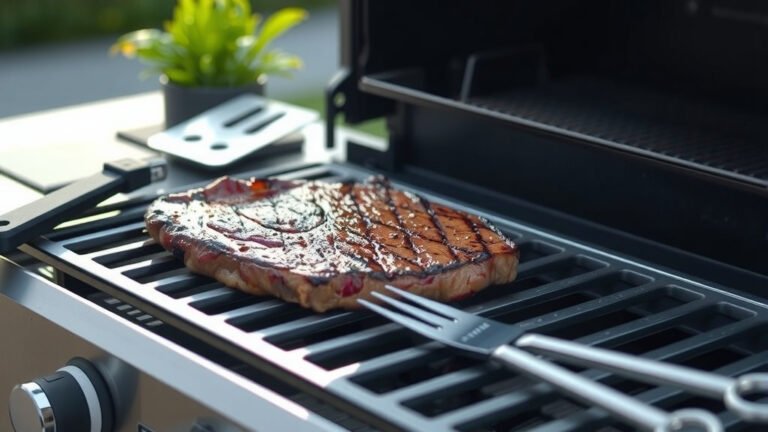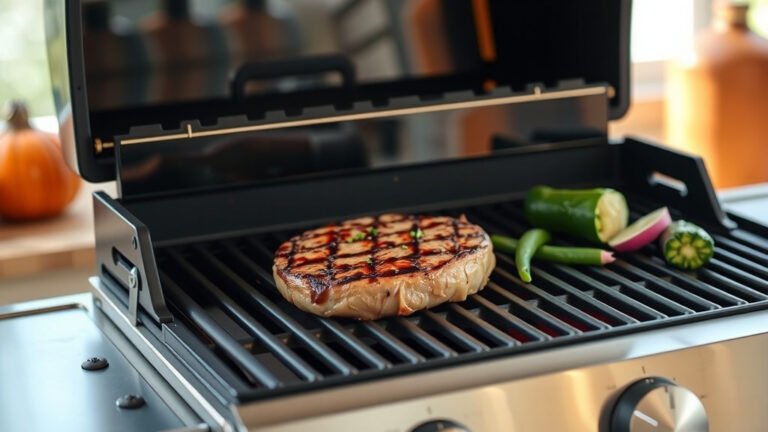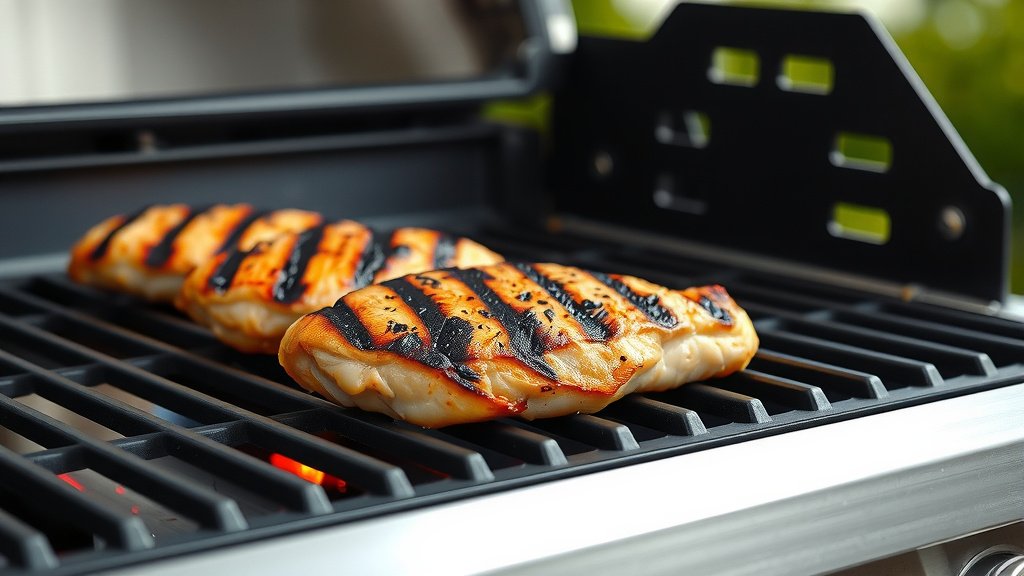
Gas grilling chicken breast typically takes 6 to 10 minutes per side, totaling 12 to 20 minutes, for boneless, skinless breasts cooked over medium-high heat (400-450°F or 204-232°C).
Always cook chicken breast until it reaches an internal temperature of 165°F (74°C) measured with a meat thermometer at its thickest part, regardless of the time on the grill.
Here’s a quick summary of what you’ll learn about gas grilling chicken breast:
- Aim for 12-20 minutes total on a gas grill at medium-high heat.
- Always check for an internal temperature of 165°F (74°C) with a meat thermometer.
- Thicker breasts need more time; thinner ones cook faster.
- Pounding chicken to an even thickness helps with uniform cooking.
- Rest your chicken for 5-10 minutes after grilling for juicy results.
You’re ready to fire up the grill, right? There’s nothing quite like a perfectly grilled chicken breast. That smoky char, the tender, juicy inside… it’s summer on a plate! But how long do you leave it on the gas grill? It’s a common question, and getting it wrong means dry, rubbery chicken or, worse, undercooked meat.
How Long To Gas Grill Chicken Breast?
Expect to grill boneless, skinless chicken breasts for about 12 to 20 minutes in total, turning them halfway through. This timing works best on a gas grill set to medium-high, which means a surface temperature around 400-450°F (204-232°C).
Why Does Timing Vary So Much?
You might be thinking, “12 to 20 minutes? That’s a big range!” And you’re right. The truth is, many things affect how long your chicken breast needs to cook. Think of it like baking a cake; different sizes need different times.
Thickness of Your Chicken
This is probably the biggest factor. A thin, delicate chicken cutlet will cook much faster than a thick, plump breast. A standard boneless, skinless breast, roughly 1-inch thick, is what our 12-20 minute guideline is for.
Grill Temperature Matters
Every gas grill is a little different. Your “medium-high” might be hotter or cooler than your neighbor’s. A hotter grill cooks faster, but it also increases the risk of burning the outside before the inside is done.
Bone-In or Boneless?
We’re focusing on boneless, skinless breasts today. If you’re grilling bone-in chicken, you’ll need significantly more time. The bone acts as an insulator, slowing down the cooking process.
Getting Your Grill Ready: The Perfect Heat
Before any chicken touches the grates, you need to prepare your grill. This step is like setting the stage for a great performance; it simply cannot be skipped. Many experts say a well-preheated grill is key to preventing sticking and ensuring even cooking.
Preheating Your Gas Grill
Turn all your gas burners to high. Close the lid and let your grill heat up for 10-15 minutes. This gets the grates screaming hot, ideal for a good sear. Once preheated, lower the heat to medium-high (400-450°F or 204-232°C).
Clean Grates Are Happy Grates
Ever had chicken stick to the grill? It’s frustrating! Use a stiff wire brush to clean those hot grates right before you add the chicken. This removes any old food bits. Then, lightly oil the grates with a paper towel dipped in high-smoke-point oil, like canola or grapeseed.
Preparing Your Chicken Breasts for Grilling
The chicken itself needs a little love before it hits the heat. A few simple steps here make a huge difference in the final taste and texture.
Pound It Out for Even Cooking
Chicken breasts often have a thicker end and a thinner end. This means the thin part will dry out by the time the thick part is cooked. A simple solution? Place your chicken between two pieces of plastic wrap and pound the thicker parts with a meat mallet (or a heavy pan) until the entire breast is about 3/4 to 1 inch thick. This simple trick promotes even cooking.
Seasoning Your Chicken Right
Don’t be shy with the seasoning! Salt, pepper, garlic powder, onion powder, paprika – whatever you love. A good rub creates flavor and helps with browning. You can also marinate your chicken for at least 30 minutes, or even a few hours, for extra flavor and tenderness.
The Grilling Process: Step-by-Step
Alright, chicken is ready, grill is hot. Let’s get grilling! This part is where the magic happens.
- Place chicken breasts directly over medium-high heat.
- Close the lid and cook for 6-8 minutes.
- Lift the lid and carefully flip the chicken.
- Cook for another 6-8 minutes with the lid closed.
- Always check internal temperature for doneness.
Creating Perfect Grill Marks
For those beautiful crosshatch grill marks, place the chicken on the grates, cook for 3-4 minutes, then rotate it 45 degrees without flipping. Cook for another 3-4 minutes, then flip the chicken and repeat the process on the other side. It’s all about presentation!
Knowing When Your Chicken is Done: The Only True Way
Visual cues can be tricky. Is it white all the way through? Is the juice clear? While helpful, these don’t guarantee safety or perfect doneness. The only reliable method is a meat thermometer.
Target Internal Temperature
According to USDA guidelines, all poultry, including chicken breast, is safely cooked when it reaches an internal temperature of 165°F (74°C). Insert the thermometer into the thickest part of the breast, making sure it doesn’t touch any bone.
Here’s a quick guide to internal temperatures for different doneness levels, though we always recommend 165°F for chicken:
| Meat Type | Minimum Safe Internal Temperature |
|---|---|
| Chicken (Breast, Thighs, Whole) | 165°F (74°C) |
| Ground Meats | 160°F (71°C) |
| Fish | 145°F (63°C) |
| Pork | 145°F (63°C) |
Resting Your Chicken: Don’t Skip This!
Once your chicken hits 165°F (74°C), take it off the grill immediately. Place it on a clean cutting board or plate and tent it loosely with foil. Let it rest for 5-10 minutes. Why? Resting allows the juices, which have been pushed to the center during cooking, to redistribute throughout the meat. This gives you incredibly juicy, tender chicken instead of dry, tough pieces. Trust us, it’s worth the wait!
Troubleshooting Common Grilling Issues
Even seasoned grillers face challenges. What if your chicken is burning or drying out?
Chicken Is Burning Outside, Raw Inside
This usually means your grill is too hot. Lower the heat slightly. You might also move the chicken to a cooler part of the grill, or use indirect heat for a portion of the cooking time if your grill has multiple zones.
Chicken Is Dry and Tough
You probably overcooked it. Use that meat thermometer! Also, make sure you’re pounding it to an even thickness and not forgetting to rest it. A good marinade can also help keep moisture in.
Your Pre-Grilling Checklist
Feeling ready to tackle that chicken? Here’s a quick checklist to make sure you’re all set for success:
- Preheat your gas grill to medium-high (400-450°F).
- Clean and oil your grill grates.
- Pound chicken breasts to even thickness.
- Season generously or marinate.
- Have your meat thermometer handy.
- Prepare a clean plate for resting.
Conclusion
Grilling chicken breast on a gas grill doesn’t have to be a guessing game. By focusing on proper grill temperature, knowing the chicken’s thickness, and most importantly, using a reliable meat thermometer to reach 165°F (74°C), you’re set for success. Remember to let your chicken rest for juicy results. With these tips, you’ll be serving up perfectly cooked, flavorful chicken breasts every time you fire up the grill. Happy grilling!
What if my chicken breasts are very thin?
If your chicken breasts are very thin, like cutlets, they will cook much faster, possibly in as little as 2-3 minutes per side. Always use a meat thermometer to ensure they reach 165°F (74°C) and avoid overcooking.
Can I grill frozen chicken breast?
For food safety and quality, it’s best to thaw chicken breast completely before grilling. Grilling frozen chicken can lead to uneven cooking, where the outside cooks too quickly while the inside remains cold, potentially allowing harmful bacteria to multiply (USDA).
How do I prevent chicken breast from sticking to the grill?
To prevent sticking, make sure your grill grates are clean and well-oiled. Preheat your grill properly to a high temperature, then brush the grates with a wire brush, and finally, lightly oil them with a paper towel dipped in a high-smoke-point oil just before adding the chicken.
Is it okay if there’s a little pink inside after resting?
No, chicken breast should be thoroughly cooked and reach an internal temperature of 165°F (74°C). Any pink color, especially near the bone or in the center, means it’s not fully cooked. Always rely on a meat thermometer for safety.
Can I use a marinade to help keep chicken moist?
Absolutely! Marinating chicken for at least 30 minutes, or up to a few hours, can add a lot of flavor and help keep the meat moist during grilling. Acidic marinades (with lemon juice or vinegar) also tenderize the chicken. Just remember to discard any leftover marinade that touched raw chicken.