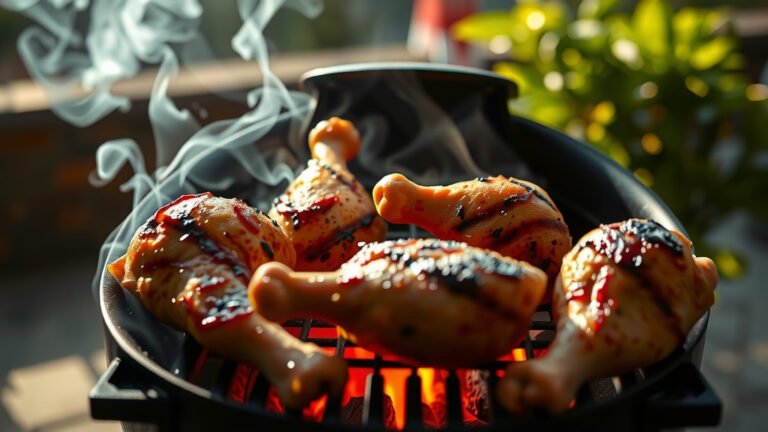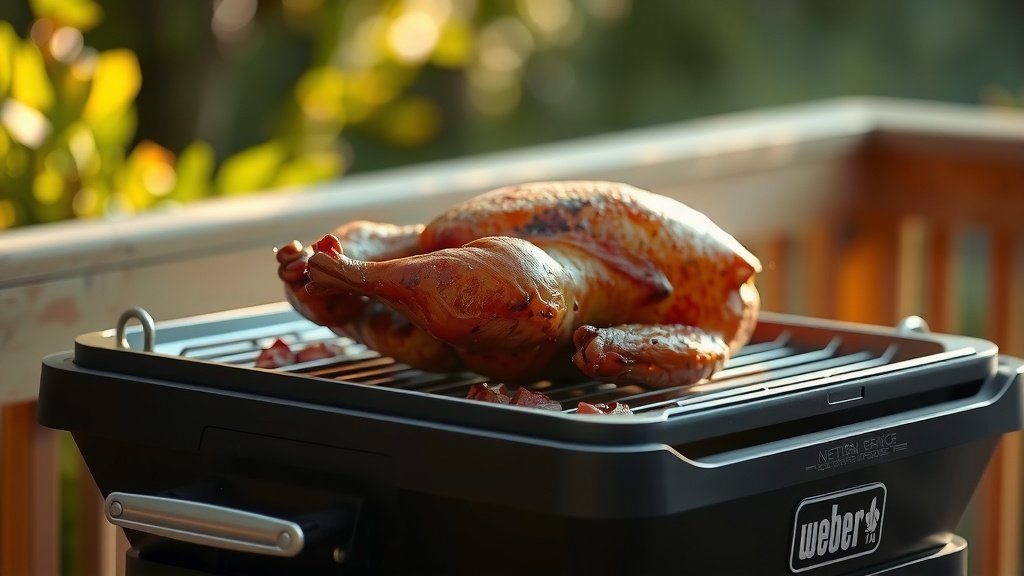
Cooking a turkey on your Weber charcoal grill typically takes about 10 to 13 minutes per pound when maintaining a consistent grill temperature of 325-350°F using indirect heat.
For a perfect result, you’ll want to aim for an internal temperature of 165°F in the deepest part of the thigh without touching bone, verified with a reliable meat thermometer.
TL;DR: Grilling a turkey on your Weber is a rewarding experience! Here’s the quick scoop:
- Aim for about 10-13 minutes per pound at 325-350°F.
- Use a two-zone, indirect heat setup on your charcoal grill.
- Always check for an internal temperature of 165°F in the thigh.
- A good meat thermometer is your best friend for accuracy.
- Don’t forget to let your turkey rest after cooking for juicy results.
How Long To Cook Turkey On Weber Charcoal Grill?
Cooking a turkey on a Weber charcoal grill usually takes around 2 to 4 hours, depending on the turkey’s size and your grill’s consistent temperature.
Understanding Your Turkey’s Size and Type
When you’re planning your grilled turkey feast, the turkey’s size is your biggest factor for cook time. A smaller 10-pound bird cooks much faster than a large 20-pound one, right?
Think about if your turkey is fresh or frozen. A frozen turkey needs to be fully thawed before grilling, which can take several days in the refrigerator. Many experts say a partially frozen bird will cook unevenly (USDA).
The Magic of Charcoal Grilling for Turkey
There’s something special about cooking with charcoal. It imparts a wonderful smoky flavor that you just can’t get from an oven.
For turkey, you’re not looking for direct flame. Instead, we found that indirect heat is your secret weapon. This mimics an oven, letting the bird cook gently and evenly.
Setting Up Your Weber for Success
To create indirect heat, arrange your hot charcoal briquettes on one side of the grill, or split them to both sides, leaving the middle empty. This is your two-zone fire setup.
Place an aluminum drip pan in the empty space. This catches drippings and helps maintain a moist environment. It also makes cleanup easier later.
Target Temperature for Turkey
Safety first! We found that the absolute most important temperature is the internal temperature of your turkey. You are aiming for 165°F.
Why 165°F? This temperature ensures all harmful bacteria are eliminated (USDA). Don’t guess; an instant-read thermometer is a must-have grilling tool for this.
General Cooking Time Guidelines (The Big Question)
As a general rule, you can expect your turkey to cook for about 10 to 13 minutes per pound. This is when your grill consistently holds a temperature between 325°F and 350°F.
So, a 12-pound turkey might take 2 to 2.5 hours. A 16-pound turkey could be 2.5 to 3.5 hours. These are estimates, of course, because many factors come into play.
Factors That Influence Your Turkey’s Cook Time
Grill temperature consistency is a big deal. If your charcoal loses heat, the cooking time will stretch out considerably.
The weather outside also plays a role. A cold, windy day can make your grill work harder, slowing things down. Your turkey’s starting temperature matters too; a room-temperature bird cooks faster than a cold one.
Stuffing adds more time, typically requiring an extra 30-60 minutes. Many experts suggest cooking stuffing separately for safety and faster turkey cooking.
Brining Your Turkey: A Flavorful Choice
Have you ever tried brining a turkey? It’s a simple process of soaking the bird in a saltwater solution. This helps the turkey stay incredibly juicy and flavorful.
Brining can also affect cooking time slightly, sometimes making the bird cook a little faster. But really, the main benefit is succulent meat every time.
The Importance of a Reliable Thermometer
We’ve said it before, and we’ll say it again: a good meat thermometer is your best friend. An instant-read thermometer gives you a quick check without losing too much heat.
For probe thermometers, insert the probe into the deepest part of the thigh, making sure it doesn’t touch the bone. Bone can give you a false high reading.
Step-by-Step Cooking Process Overview
First, get your turkey ready – thawed, brined if you wish, and seasoned. Set up your Weber for indirect heat, aiming for that 325-350°F zone. Then, place your turkey on the grill, breast side up, over the drip pan.
Monitor your grill’s temperature, adjusting vents as needed. Check the turkey’s internal temperature periodically, especially towards the end of the estimated cooking time. Once it hits 165°F, remove it and let it rest. It’s a simple, rewarding process!
Checking for Doneness: Beyond the Timer
While timers are helpful guides, the thermometer gives you the true story. Insert it into the thickest part of the thigh and breast. The thigh should reach 165°F, and the breast will likely be around the same. Some experts prefer a slightly higher breast temperature of 170°F for extra tenderness (Mayo Clinic).
Resting Your Turkey: Don’t Skip This!
Imagine running a marathon and then immediately collapsing. Your muscles need to relax, right? A turkey is similar. After cooking, the juices are active and moving around.
If you cut into it too soon, those precious juices will pour out. Resting your turkey for 20-30 minutes under foil allows the juices to redistribute, resulting in a wonderfully moist bird.
Troubleshooting Common Grilling Challenges
Is your turkey cooking too fast? You might have too much charcoal or too much airflow. Close your bottom vents slightly to reduce the heat. Is it too slow? Add more hot coals, or open those vents a bit more to increase airflow. Practice makes perfect when managing charcoal heat!
Flare-ups can happen if fat drips directly onto hot coals. That drip pan is your friend! If you get one, quickly move the turkey away from the flames, or close the lid briefly to smother the fire. Safety first with those flames!
Quick Checklist for a Perfect Grilled Turkey
- Thaw turkey completely.
- Preheat grill to 325-350°F (indirect heat).
- Use a drip pan under the turkey.
- Have a reliable meat thermometer ready.
- Monitor grill temperature often.
- Rest the turkey for 20-30 minutes.
Cooking Time Table for Various Turkey Sizes
Here’s a handy table to give you a rough idea of how long you might be grilling. Remember, these are estimates, so always rely on your thermometer!
| Turkey Weight | Approximate Cook Time (325-350°F Indirect) |
|---|---|
| 10-12 lbs | 2 – 2.5 hours |
| 12-14 lbs | 2.5 – 3 hours |
| 14-16 lbs | 3 – 3.5 hours |
| 16-18 lbs | 3.5 – 4 hours |
| 18-20 lbs | 4 – 4.5 hours |
Conclusion
Grilling a turkey on your Weber charcoal grill might seem daunting at first, but with the right setup and a trusty thermometer, you’re set for success. Focus on consistent indirect heat, maintaining that 325-350°F range, and prioritizing the 165°F internal temperature. Don’t forget the crucial resting period to lock in all those delicious juices. You’ve got this! Enjoy the rich, smoky flavors that only a charcoal grill can provide, making your holiday meal or family dinner truly unforgettable.
What is the best way to maintain grill temperature for a turkey?
To keep your Weber charcoal grill at a steady 325-350°F, use a chimney starter to get your coals glowing, then arrange them for indirect heat. Manage the heat by adjusting your bottom and top grill vents. More open vents mean more airflow and hotter coals; closing them down reduces oxygen, cooling the grill.
Should I brine or inject my turkey for grilling?
Brining or injecting your turkey can dramatically improve its moisture and flavor, especially on a grill where it can sometimes dry out. Many grill masters find that brining helps keep the meat succulent, while injecting can add rich flavor directly into the meat. Either method is a great choice, but brining might be simpler for a beginner.
Can I use wood chips for extra smoke flavor?
Absolutely! Adding wood chips like hickory, apple, or cherry can enhance the smoky flavor of your grilled turkey. Soak the chips in water for about 30 minutes, then add a handful directly onto your hot charcoal every hour or so. This creates a slow, steady stream of flavorful smoke without excessive burning.
How do I prevent the turkey skin from burning or getting too dark?
If you notice the turkey skin getting too dark before the internal temperature is reached, you can loosely tent it with aluminum foil. This helps shield the skin from direct radiant heat while allowing the turkey to continue cooking. Ensuring consistent indirect heat also prevents scorching.
Is it better to spatchcock or grill a whole turkey?
Spatchcocking, or butterflying, your turkey involves removing the backbone so the bird lays flat. This allows for more even cooking and significantly reduces cooking time, often resulting in juicier meat and crispier skin. Grilling a whole turkey is more traditional and still delivers excellent results, but it takes longer and requires more precise temperature management to ensure even cooking.