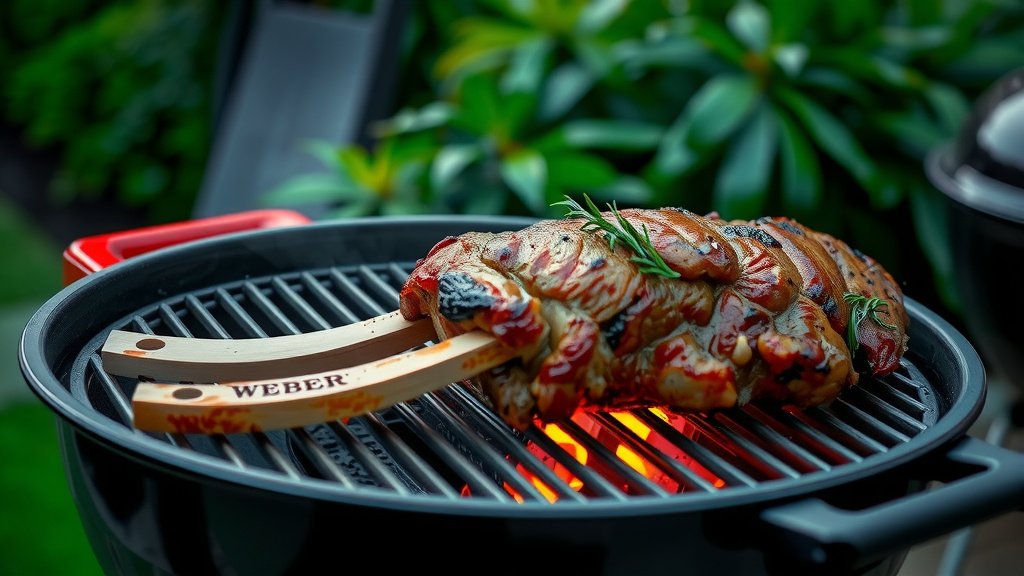
To cook prime rib on a Weber charcoal grill, plan for about 12-15 minutes per pound for medium-rare, or roughly 2 to 2.5 hours for a 6-pound roast at an indirect temperature of 325°F (163°C).
The total time to cook prime rib on a Weber charcoal grill depends heavily on the roast’s weight and your desired doneness, always using an instant-read thermometer for accuracy.
- For medium-rare, budget 12-15 minutes per pound for your prime rib.
- Maintain an indirect grill temperature of 325°F (163°C) on your Weber charcoal grill.
- Use a two-zone fire setup to ensure even, gentle cooking.
- Always check doneness with a reliable instant-read meat thermometer.
- Rest your prime rib for 15-30 minutes after grilling for juicy results.
How Long To Cook Prime Rib On Weber Charcoal Grill?
You can expect a 6-pound prime rib to cook in about 2 to 2.5 hours on your Weber charcoal grill for a perfect medium-rare, assuming an indirect heat of 325°F (163°C).
Why Choose a Weber Charcoal Grill for Prime Rib?
Grilling prime rib on a Weber charcoal grill isn’t just about cooking; it’s about creating a memorable experience. Many chefs believe it adds a depth of flavor you simply can’t achieve with gas.
The Charm of Charcoal Flavor
There’s something magical about charcoal smoke. It infuses your prime rib with a rich, smoky taste that’s incredibly satisfying. This natural flavor boost makes all the effort worthwhile.
Maintaining Consistent Heat
Weber kettle grills are known for their ability to hold steady temperatures once you get the hang of them. This stability is perfect for slow-roasting a prime rib evenly.
Prepping Your Prime Rib for the Grill
Before any heat hits the meat, a little preparation goes a long way. Think of it as setting the stage for a culinary masterpiece.
Choosing the Right Cut
Start with a good quality prime rib roast. Bone-in cuts often yield more flavor and stay juicier. Look for good marbling, which means more flavor and tenderness.
Seasoning for Success
A simple salt, pepper, garlic, and herb rub is often all you need. Don’t be shy with the seasoning; remember, it’s a big piece of meat! Apply it generously a few hours before grilling, or even overnight.
Setting Up Your Weber Kettle for Indirect Heat
This is where the magic of “low and slow” really comes in. Indirect heat is key for a tender, evenly cooked prime rib.
Two-Zone Fire is Key
Create a two-zone fire by piling lit charcoal on one side of the grill. You’ll place the prime rib on the opposite side, away from the direct flames. This setup prevents burning and ensures gentle roasting.
Aiming for the Right Temperature
Your goal is to maintain an indirect grill temperature of 325°F (163°C). Use your grill’s lid vents to control airflow and temperature. More airflow means hotter coals; less airflow cools them down.
The Cooking Process: Time and Temperature
Cooking prime rib is more about internal temperature than strict timing. However, knowing general timeframes helps you plan your day.
We found that a good rule of thumb is about 12-15 minutes per pound for medium-rare prime rib. This can vary based on your grill’s actual temperature and the roast’s starting temperature.
| Doneness | Internal Temperature | Approx. Time (per pound) |
|---|---|---|
| Rare | 120-125°F (49-52°C) | 10-12 mins |
| Medium-Rare | 130-135°F (54-57°C) | 12-15 mins |
| Medium | 135-140°F (57-60°C) | 15-17 mins |
Monitoring Internal Temperature (Crucial!)
A reliable instant-read meat thermometer is your best friend. Insert it into the thickest part of the roast, avoiding bone. Many food safety experts, like the USDA, agree this is the most accurate way to check doneness.
When is it Done?
Remove the prime rib from the grill when it reaches about 5-10 degrees BELOW your target final temperature. It will continue to cook during the resting period (carryover cooking).
The Importance of Resting Your Roast
Don’t skip this step! It’s as important as the grilling itself. Resting allows the juices to redistribute throughout the meat, making it incredibly tender and flavorful.
Tent the prime rib loosely with foil and let it rest for 15-30 minutes. If you cut into it too soon, those precious juices will run out onto your cutting board instead of staying in the meat.
Troubleshooting Common Prime Rib Grilling Issues
Even seasoned grill masters hit snags. Don’t worry, we’ve got you covered with some common fixes.
- Temperature swings: Adjust vents incrementally; too much charcoal can also make it hard to control.
- Uneven cooking: Ensure your prime rib is centered over the indirect zone and rotate it halfway through cooking if needed.
- Dry exterior: Consider a quick sear at the very end over direct heat if you want a crust, but avoid overcooking the interior.
- Not done fast enough: Check your grill thermometer and charcoal levels; add a few more briquettes if the heat is too low.
Essential Tools for Grilling Prime Rib
Having the right gear makes the job much easier and more enjoyable. Here’s a quick checklist:
- Weber charcoal grill (of course!)
- Charcoal chimney starter
- Good quality charcoal briquettes
- Instant-read meat thermometer
- Long-handled tongs and grill spatula
- Drip pan (for indirect cooking)
- Heat-resistant grilling gloves
- Large cutting board with a juice well
Conclusion
Grilling prime rib on your Weber charcoal grill is a rewarding experience, creating a roast that’s both flavorful and juicy. While timing suggestions are a guide, your meat thermometer is your true compass. Focus on maintaining consistent indirect heat and always, always rest your roast for that perfect finish. With a little practice, you’ll be serving up impressive prime rib every time, making those gatherings truly special. Enjoy the journey and the delicious results!
How do I prevent my prime rib from drying out on the grill?
To prevent your prime rib from drying, use indirect heat and monitor its internal temperature closely with a thermometer. Removing it at the correct temperature (before it overcooks) and then resting it properly will keep it juicy. Some grillers also found that placing a drip pan with water under the roast helps maintain moisture.
Can I sear my prime rib on the Weber charcoal grill?
Yes, absolutely! Many experts suggest reverse searing. You can cook the prime rib slowly with indirect heat until it’s about 10-15 degrees below your target temperature, then remove it. Crank up the heat on your grill by moving coals to direct heat or adding fresh hot coals, and sear each side for a few minutes to develop a beautiful crust.
What kind of charcoal is best for prime rib?
For prime rib, consistent burning lump charcoal or high-quality briquettes work well. Lump charcoal often offers a purer smoke flavor, while briquettes provide a more predictable, even burn. We found using natural hardwood lump charcoal provides a wonderful smoky flavor, but quality briquettes are perfectly acceptable.
Should I use a rotisserie for prime rib on a Weber grill?
Using a rotisserie for prime rib on your Weber grill can lead to very even cooking and a fantastic crust all around. It’s a great option if you have the attachment. Ensure your rotisserie motor can handle the weight of the roast and set up your coals for indirect heat underneath the spinning meat.
How do I know when to add more charcoal during cooking?
Keep an eye on your grill’s temperature gauge. If it starts to drop significantly and consistently below your target of 325°F (163°C), it’s likely time to add more charcoal. You can carefully add a few lit briquettes to your existing charcoal pile to boost the heat, or use a chimney starter to light new coals and add them.