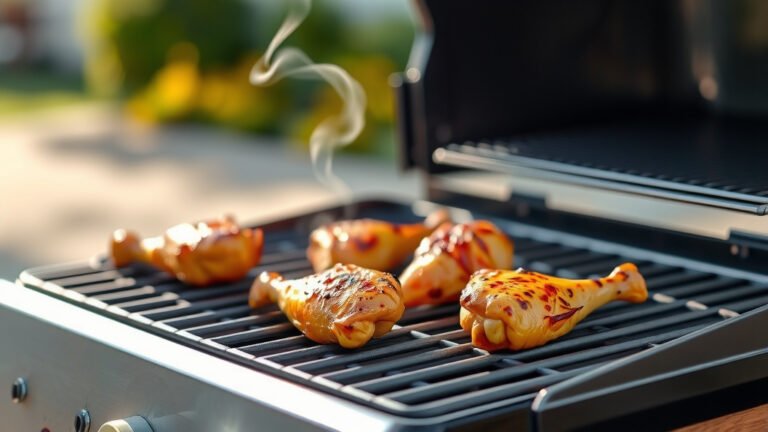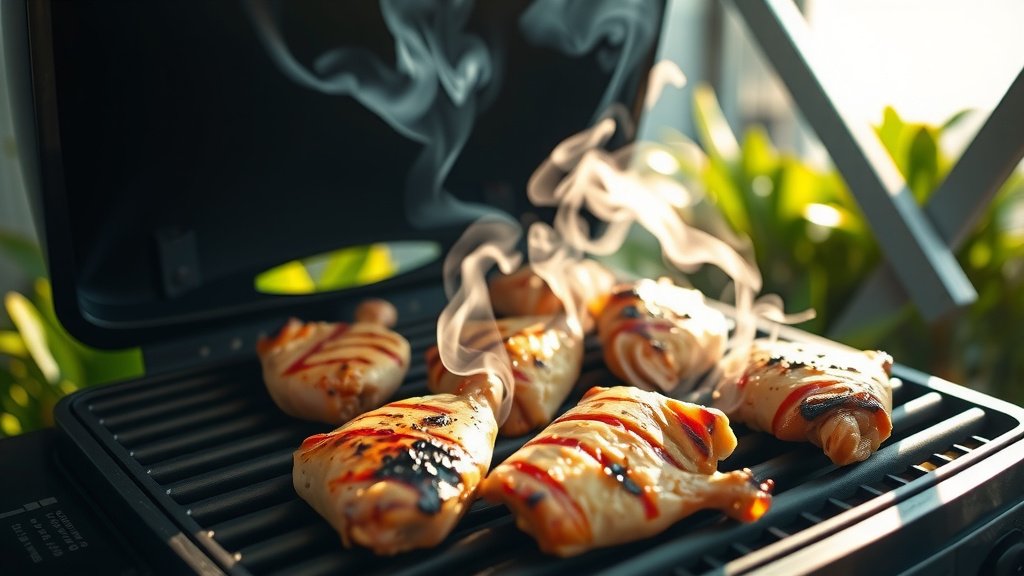
Cooking chicken thighs on a pellet grill typically takes between 30 to 60 minutes, depending on whether they are bone-in or boneless and your grill temperature.
For bone-in, skin-on chicken thighs, expect about 45-60 minutes at 275°F (135°C), aiming for a safe internal temperature of 175-180°F (79-82°C).
- To cook chicken thighs on a pellet grill, aim for an internal temperature of 175-180°F (79-82°C) for optimal juiciness and safety.
- Bone-in thighs at 275°F (135°C) usually take 45-60 minutes, while boneless thighs need about 30-45 minutes.
- Always use a reliable meat thermometer; visual checks aren’t enough for food safety.
- Factors like thigh size, skin presence, and grill temperature fluctuations can change cook times.
- Resting your chicken after grilling is key for juicy, tender results.
How Long To Cook Chicken Thighs On Pellet Grill?
You’re looking for that perfect balance of crispy skin and juicy meat, right? Generally, a bone-in chicken thigh will take 45 to 60 minutes.
Boneless, skinless thighs will cook faster, often ready in 30 to 45 minutes on your pellet grill. It’s all about reaching that ideal internal temperature.
Why Choose a Pellet Grill for Chicken Thighs?
Pellet grills are fantastic for chicken thighs because they provide consistent, indirect heat. This helps prevent dry spots and encourages even cooking.
Plus, you get that wonderful smoky flavor without constantly tending a charcoal fire. It’s like having a barbecue assistant in your backyard.
Bone-In vs. Boneless: The Big Difference in Cook Time
The bone in chicken thighs acts as a heat conductor, but it also slows cooking down. Boneless thighs, having no bone, heat up much quicker.
That’s why you see such a time difference. Always consider which type you’re grilling when planning your meal.
Ideal Temperature for Chicken Thighs on a Pellet Grill
Many experts agree that 275°F (135°C) is a sweet spot for chicken thighs on a pellet grill. This temperature allows the fat to render slowly.
You get incredibly tender meat and crispy skin without scorching the exterior. It’s a lower, slower approach that really pays off.
Temperature and Time Chart for Chicken Thighs
Let’s break down estimated cooking times at a consistent grill temperature. Remember, these are guidelines, so always check with your thermometer.
We found this general chart to be very helpful for planning your grill sessions. It helps you get a good starting point for your cook.
| Chicken Thigh Type | Pellet Grill Temperature | Estimated Cook Time | Target Internal Temperature |
|---|---|---|---|
| Bone-In, Skin-On | 275°F (135°C) | 45-60 minutes | 175-180°F (79-82°C) |
| Boneless, Skinless | 275°F (135°C) | 30-45 minutes | 175-180°F (79-82°C) |
The Role of a Good Meat Thermometer
A reliable meat thermometer is your best friend when grilling chicken. You can’t tell if chicken is done just by looking at it.
We found that inserting a probe into the thickest part of the thigh, avoiding the bone, gives the most accurate reading. It’s a small tool with a huge impact on food safety and taste.
Checking for Doneness: What Temperature to Aim For
For juicy, safe chicken thighs, target an internal temperature between 175°F (79°C) and 180°F (82°C). The USDA recommends 165°F for poultry safety, but thighs benefit from a little more heat.
Cooking to 175-180°F breaks down the connective tissues, making the meat incredibly tender without drying it out. You’ll thank yourself for that extra effort.
Factors Affecting Chicken Thigh Cook Time
Not all chicken thighs are created equal, and neither are all grills. A few things can impact how long your chicken needs on the pellet grill.
Understanding these variables helps you adjust and get perfect results every time. Don’t be afraid to adapt your plan.
Skin-On vs. Skinless Thighs
Skin-on thighs have a layer of fat and skin that acts as insulation. This can add a few minutes to your cook time.
Skinless thighs, on the other hand, cook faster because there’s less barrier to the heat. They also tend to dry out more quickly if you’re not careful.
Thigh Size Matters
Are your chicken thighs petite or absolute monsters? Larger, thicker thighs will naturally take longer to cook through than smaller ones.
This is where your meat thermometer becomes truly indispensable. It removes all the guesswork, no matter the size.
Pellet Grill Temperature Consistency
Even though pellet grills are known for consistency, outside factors can cause minor fluctuations. Wind, ambient temperature, and even opening the lid too often can affect the internal grill temperature.
Try to keep the lid closed as much as possible to maintain a steady temperature. “If you’re looking, you’re not cooking,” as the saying goes!
Resting Your Chicken Thighs After Grilling
This step is often overlooked, but it’s crucial for succulent chicken. Once your thighs hit the target temperature, remove them from the grill.
Let them rest tented loosely with foil for 5-10 minutes. This allows the juices to redistribute throughout the meat, resulting in a much more tender and flavorful bite.
Prepping for Perfection: A Quick Checklist
Getting your chicken ready before it hits the grill makes a big difference. Follow these simple steps for optimal results.
A little prep goes a long way in ensuring your chicken thighs are a hit with everyone. You’ll be glad you took these extra moments.
- Pat chicken thighs dry with paper towels to encourage crispy skin.
- Season generously with your favorite rub or spices.
- Preheat your pellet grill to the desired temperature (e.g., 275°F).
- Clean your grill grates to prevent sticking.
- Have your reliable meat thermometer ready.
Flavor Boosts and Tips for Your Thighs
Want to take your chicken thighs from good to amazing? Consider adding a few extra touches. These can really make your meal memorable.
Even small additions can have a big impact on the overall taste. Don’t be afraid to experiment with different combinations.
- Try a dry brine for extra juiciness before seasoning.
- Finish with a light glaze of BBQ sauce during the last 15 minutes of cooking.
- Add a smoke tube for an extra punch of smoky flavor.
- Consider different wood pellet flavors like apple, cherry, or hickory.
Troubleshooting Common Chicken Thigh Issues
Sometimes things don’t go exactly as planned, and that’s okay. Here are a couple of common issues and how to fix them.
Being prepared for these little bumps means your meal will still turn out great. You’ve got this!
Problem: Rubber Skin
This happens when the skin doesn’t get hot enough to crisp up. Many experts say starting at a lower temperature (225°F for 30 min) then increasing to 375-400°F for the last 10-15 minutes helps.
Alternatively, you can finish the chicken under a broiler for a few minutes. Just keep a close eye on it!
Problem: Dry Chicken Thighs
Often, dry chicken means it was cooked too long or at too high a temperature. Always use your meat thermometer to prevent overcooking.
Remember that resting step? It’s your secret weapon against dry chicken, allowing juices to settle. Don’t skip it!
Conclusion
Cooking delicious chicken thighs on a pellet grill is definitely achievable with a little patience and the right tools. It’s all about consistent heat and precise temperature control.
By understanding the differences between bone-in and boneless, using a good meat thermometer, and allowing for rest, you’ll be serving up perfectly juicy and flavorful chicken every time. Happy grilling!
How do I get crispy skin on chicken thighs on a pellet grill?
For crispy skin, research suggests starting the thighs at a lower temperature, around 225-250°F (107-121°C), for the first 30 minutes. Then, increase the grill temperature to 375-400°F (190-204°C) for the remaining cook time. This renders the fat slowly before crisping. Alternatively, a quick sear on a hot cast iron pan or under a broiler after grilling can achieve crispy skin.
Can I cook frozen chicken thighs directly on a pellet grill?
It’s generally not recommended to cook frozen chicken directly on a pellet grill without thawing. Many food safety guidelines, including those from the USDA, advise against cooking frozen poultry. Thawing ensures even cooking and prevents bacteria from lingering in colder sections. Always thaw chicken completely in the refrigerator before grilling.
What internal temperature is safe for chicken thighs?
The USDA recommends cooking all poultry to a minimum internal temperature of 165°F (74°C) for food safety. However, for chicken thighs, many grill masters and culinary experts suggest cooking to 175-180°F (79-82°C). This higher temperature helps break down connective tissue, resulting in a more tender and flavorful product, without drying it out if rested properly.
How long should chicken thighs rest after grilling?
You should let chicken thighs rest for 5 to 10 minutes after removing them from the pellet grill. Loosely tent them with foil during this time. This crucial step allows the meat fibers to relax and reabsorb the juices, ensuring your chicken remains incredibly moist and tender when you cut into it.
What are some common mistakes when cooking chicken thighs on a pellet grill?
Common mistakes include not using a meat thermometer, which often leads to under or overcooking. Another error is neglecting to pat the chicken dry before seasoning, which hinders crispy skin development. Opening the grill lid too often also prolongs cook time and causes temperature fluctuations. Lastly, skipping the resting period can result in less juicy chicken.