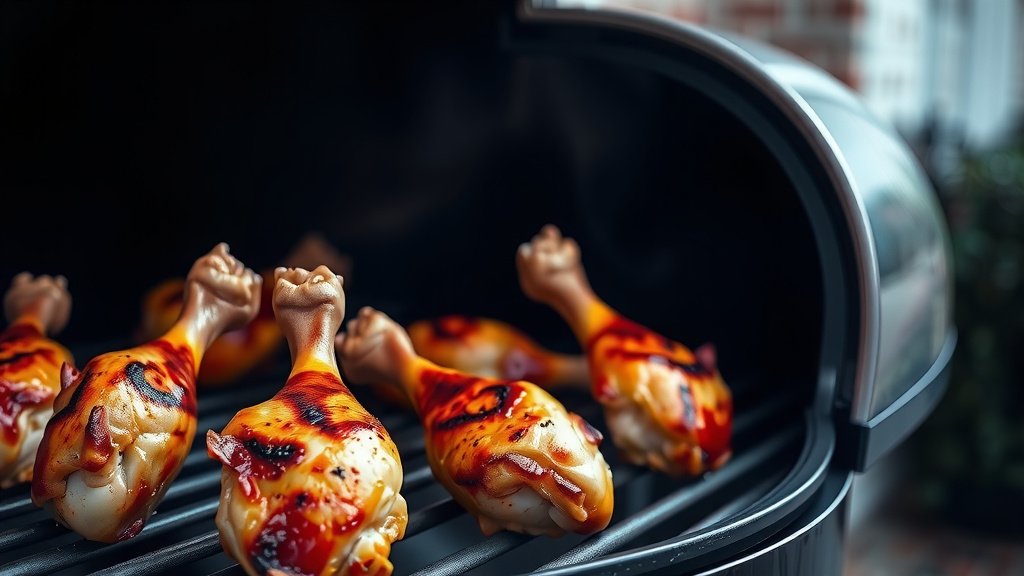
Cooking chicken legs on a pellet grill typically takes about 45-60 minutes at 375°F (190°C) for juicy results, but always prioritize an internal temperature of 175°F (79°C) for food safety and optimal tenderness.
The exact time to cook chicken legs on your pellet grill can vary based on size, grill temperature consistency, and whether you’re aiming for crispy skin, so using a reliable meat thermometer is your best friend.
Here’s a quick rundown of what you need to know:
- Aim for a grill temperature of 375°F (190°C).
- Chicken legs usually cook in 45-60 minutes.
- Always check for an internal temperature of 175°F (79°C) for done-ness.
- For extra crispy skin, finish with a blast of higher heat or direct flame if your grill allows.
- Brining or marinating can help keep them moist and flavorful.
How Long To Cook Chicken Legs On Pellet Grill?
You can expect chicken legs to cook on a pellet grill in roughly 45 to 60 minutes at 375°F (190°C), though checking the internal temperature with a meat thermometer is key.
Understanding Your Pellet Grill’s Role
Pellet grills are fantastic for chicken legs because they offer consistent heat and a touch of smoky flavor. Unlike traditional grills, they cook with indirect heat, which helps prevent charring while ensuring even cooking. Think of it like an outdoor convection oven with a wood-fired kick!
Why Temperature Matters So Much
When cooking chicken legs, temperature isn’t just a number; it’s about flavor and safety. Too low, and your chicken might dry out before the skin crisps. Too high, and you risk burnt exteriors with undercooked insides. We’ve found that a steady 375°F (190°C) hits that sweet spot.
Prepping Your Chicken Legs for Success
Before they even hit the grates, a little prep goes a long way. Patting the chicken legs dry with paper towels is a small step, but it makes a big difference for crispy skin. Also, consider a light seasoning or a simple brine.
The Power of a Simple Brine
A brine isn’t just for Thanksgiving turkeys. Even a quick 30-minute soak in saltwater can infuse your chicken legs with moisture and flavor. Many chefs consider brining a fundamental step for succulent poultry (Culinary Institute of America).
Seasoning for Flavor Boost
Don’t be shy with your seasoning. A good rub not only adds incredible flavor but also helps with that gorgeous golden-brown crust. Paprika, garlic powder, onion powder, salt, and pepper are classic winners.
Setting Up Your Pellet Grill Correctly
Getting your grill ready is crucial. Preheat it to your target temperature of 375°F (190°C). Make sure your pellet hopper has enough fuel for the entire cook. Nobody wants to run out of pellets mid-cook, right?
Which Pellets for Chicken Legs?
For chicken, fruitwoods like apple or cherry, or milder woods like pecan, are excellent choices. They impart a subtle, sweet smoke that complements poultry beautifully without overpowering it. Oak and hickory can be a bit strong for chicken, but some people enjoy that robust flavor.
The Cooking Process: Step-by-Step
Once your grill is hot and ready, arrange the chicken legs in a single layer on the grates. Make sure there’s some space between each piece for even airflow. This helps promote consistent cooking and crispy skin.
Here’s a simple checklist:
- Preheat pellet grill to 375°F (190°C).
- Pat chicken legs dry and season them well.
- Place chicken legs on grates, leaving space.
- Cook for 25-30 minutes, then flip them over.
- Continue cooking, checking internal temperature frequently.
- Remove when they reach 175°F (79°C) in the thickest part.
Why Internal Temperature is Non-Negotiable
The single most important tool in your grilling arsenal is a reliable meat thermometer. While many people say you can cook chicken to 165°F (74°C), we find that chicken legs taste better and have a more tender texture when cooked to 175°F (79°C). This extra bit of heat helps break down connective tissues in the dark meat (USDA).
Probe Placement for Accurate Readings
When checking the temperature, insert the thermometer into the thickest part of the chicken leg, making sure not to touch the bone. The bone can give you a false high reading, and nobody wants that.
Achieving That Perfect Crispy Skin
Crispy skin on chicken legs is the holy grail for many grill masters. If your pellet grill has a “high smoke” or “sear” setting, you can use it for the last 5-10 minutes. Alternatively, some models allow direct flame exposure, which can really crisp up that skin. Just watch it carefully to avoid burning.
Resting Your Chicken Legs
Once your chicken legs hit that target internal temperature, remove them from the grill and let them rest for 5-10 minutes. This resting period allows the juices to redistribute throughout the meat, resulting in a more flavorful and moist bite. It’s a small wait for a big reward.
Troubleshooting Common Pellet Grill Issues
Even seasoned grillers face challenges. If your chicken isn’t getting crispy, try increasing the heat for the last few minutes. If it’s cooking too fast, your grill might be running hotter than it says, so calibrate your thermometer. Uneven cooking might mean poor airflow or too many items on the grill at once.
Understanding Carryover Cooking
Remember that food continues to cook for a few minutes after it’s removed from the heat. This is called carryover cooking. It’s usually a small rise, maybe 5 degrees or so, but it’s worth keeping in mind, especially for larger cuts.
A Quick Comparison: Chicken Leg Cooking Times
To give you a better idea, here’s a general comparison of cooking times for chicken legs based on different methods, assuming a similar starting weight and temperature:
| Method | Approximate Temperature | Approximate Cooking Time | Internal Temp. Goal |
|---|---|---|---|
| Pellet Grill | 375°F (190°C) | 45-60 minutes | 175°F (79°C) |
| Gas Grill (Indirect) | 375°F (190°C) | 45-60 minutes | 175°F (79°C) |
| Oven Baking | 400°F (205°C) | 40-50 minutes | 175°F (79°C) |
| Air Fryer | 375°F (190°C) | 20-25 minutes | 175°F (79°C) |
As you can see, pellet grilling times are quite similar to traditional oven or gas grilling when aiming for similar doneness.
Conclusion
Cooking chicken legs on a pellet grill is a rewarding experience that consistently delivers flavorful, tender results. By maintaining a steady 375°F (190°C) and closely monitoring the internal temperature to reach 175°F (79°C), you’ll achieve perfectly cooked chicken every time. Don’t forget that crucial resting period for maximum juiciness. Enjoy the delicious smoky goodness you’ve created!
How do I prevent chicken legs from drying out on a pellet grill?
To prevent chicken legs from drying out, consider brining them before grilling, not overcooking them (always check the internal temperature, aiming for 175°F or 79°C), and ensuring your grill temperature stays consistent rather than too high for too long.
Can I cook frozen chicken legs on a pellet grill?
It’s generally not recommended to cook chicken legs directly from frozen on a pellet grill. Thawing them completely first ensures even cooking and reduces the risk of foodborne illness. Frozen chicken can cook unevenly and prolong the cooking time significantly.
What’s the best way to get crispy skin on chicken legs?
For crispy skin, first pat the chicken legs very dry before seasoning. Cook them at a slightly higher temperature (like 375°F/190°C), and for the last 5-10 minutes, increase the heat further if your grill allows, or use a direct flame sear function if available. This direct, high heat helps render the fat and crisp the skin.
Should I flip chicken legs while cooking on a pellet grill?
Yes, flipping chicken legs about halfway through the cooking process is a good idea. For a 45-60 minute cook, you would flip them around the 25-30 minute mark. This helps ensure even browning and consistent cooking on all sides, especially for the skin.
How do I know when chicken legs are done without a thermometer?
While a meat thermometer is the most reliable way to check for doneness, if you don’t have one, you can tell chicken legs are done if the juices run clear when you poke them with a knife or fork. The meat should also be opaque all the way through, and the bone should show no signs of pinkness, but this method is less precise than a thermometer.