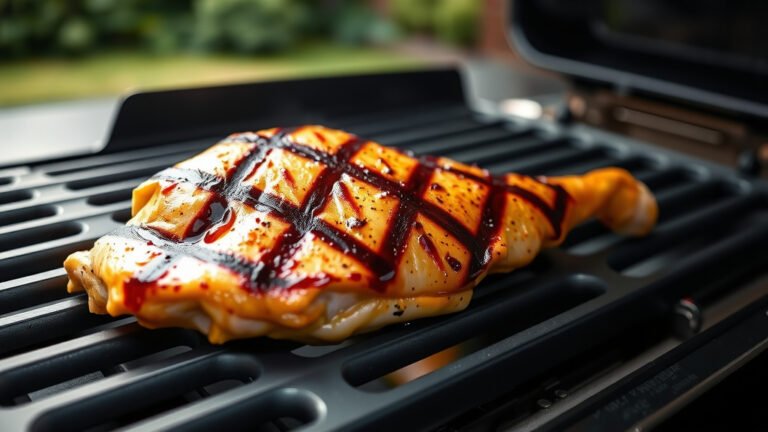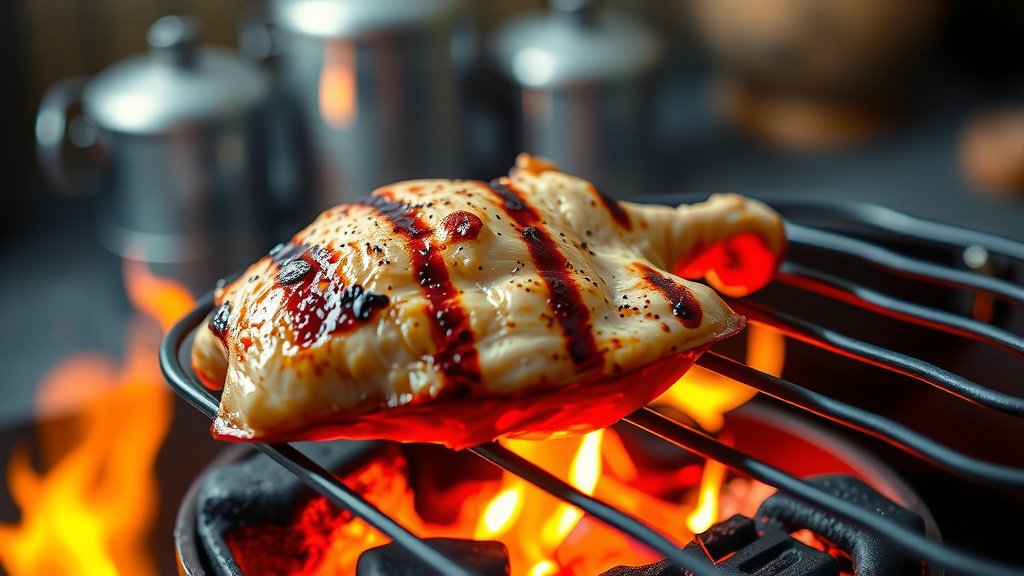
Cooking bone-in chicken breast on a charcoal grill generally takes about 35 to 45 minutes to reach a safe internal temperature of 165°F (74°C).
The precise cooking time for bone-in chicken breast on a charcoal grill will depend on the thickness of the chicken, your grill’s temperature, and whether you’re using direct or indirect heat zones.
Here’s a quick overview of what you’ll learn in this guide:
- Grilling bone-in chicken breast on charcoal needs about 35-45 minutes.
- Always check for an internal temperature of 165°F (74°C) with a meat thermometer.
- Set up your charcoal grill with both direct and indirect heat zones for best results.
- Bone-in chicken cooks slower but stays moister thanks to the bone.
- Rest your chicken after grilling to keep those delicious juices locked in.
How Long To Cook Bone In Chicken Breast On Charcoal Grill?
You’ve got that beautiful bone-in chicken breast, and your charcoal grill is just waiting. So, how long does it really take? We found that cooking bone-in chicken breast on a charcoal grill usually requires 35 to 45 minutes. This time allows the meat to cook through while the bone helps keep it moist and flavorful. Your goal is always a safe internal temperature of 165°F (74°C), checked in the thickest part.
Why Bone-In Takes Longer
You might notice bone-in chicken cooks a bit slower than boneless. This isn’t a bad thing at all! The bone actually acts as an insulator, conducting heat more slowly to the surrounding meat. This gentle cooking helps keep the chicken breast incredibly juicy, reducing the chances of it drying out. Many grill masters prefer bone-in for this very reason.
Getting Your Grill Ready: The Zone Setup
Prepping your charcoal grill correctly is a game-changer for bone-in chicken. You want both a hot zone and a cooler zone. This two-zone setup gives you control, letting you sear the chicken for color and then move it to finish cooking gently.
Direct Heat Zone
Your direct heat zone is where you’ll get that beautiful sear. Pile your hot charcoal briquettes on one side of the grill. This area provides high heat, perfect for browning the surface of your chicken quickly. Think of it as your express lane for flavor development.
Indirect Heat Zone
On the opposite side, leave it clear of charcoal. This creates your indirect heat zone. After searing, you’ll move your chicken here. It’s like an outdoor oven, cooking the chicken through slowly and evenly without burning the outside. This is where the magic happens for thorough cooking.
Prep Your Chicken for Success
A little preparation goes a long way when grilling. You want your chicken to be as flavorful and tender as possible. Don’t just throw it on; take a few moments to set yourself up for grilling greatness.
Brining for Juicy Results
Many experts say that brining chicken, especially lean cuts like breast, can make a huge difference. A simple brine of water, salt, and maybe some sugar and herbs helps the chicken retain moisture. Even 30 minutes can boost juiciness, as research often shows (Cook’s Illustrated).
Seasoning is Key
Don’t forget to season your chicken generously! Salt and pepper are your basic friends. Consider adding garlic powder, paprika, or your favorite poultry rub. Seasoning not only adds flavor but also helps create a delicious crust on the outside.
The Grilling Process: Step-by-Step
Ready to get grilling? It’s not just about slapping it on the grates. Follow these steps for perfectly cooked, bone-in chicken breast every time.
Sear First, Then Move
Place your seasoned bone-in chicken breasts skin-side down over the direct heat. Sear them for about 5-7 minutes per side until they have a nice golden-brown crust. This step develops incredible flavor and color. Flip them once to sear the other side.
Monitoring Temperature is Crucial
After searing, move the chicken to the indirect heat zone. Close the lid to allow the heat to circulate. This is where your meat thermometer becomes your best friend. Always check the internal temperature in the thickest part of the breast, avoiding the bone.
| Desired Doneness | Internal Temperature | Notes |
|---|---|---|
| Safe to Eat | 165°F (74°C) | Minimum for poultry (USDA) |
| Very Juicy | 160-165°F (71-74°C) | Pull at 160°F and rest to reach 165°F |
| Well Done | 170°F (77°C) | Still good, but may be slightly less moist |
Signs Your Chicken is Done
Besides temperature, you’ll notice other signs. The juices should run clear when you poke it. The meat will feel firm to the touch. But honestly, your meat thermometer is the most reliable way to tell if it’s done without guessing. Trust that digital reading!
Resting Your Chicken
Once your chicken hits 165°F (74°C), take it off the grill. Don’t slice into it right away! Let it rest on a cutting board, loosely tented with foil, for 5-10 minutes. This resting period allows the juices to redistribute throughout the meat, making it incredibly tender and moist. Skipping this step is a common mistake!
Common Mistakes to Avoid
Grilling bone-in chicken can be straightforward, but a few pitfalls can ruin your meal. Here’s a quick checklist to keep you on the right track:
- Don’t forget to preheat your grill properly, establishing two zones.
- Avoid turning the chicken too often; let it sear to get a good crust.
- Never rely solely on visual cues; always use a meat thermometer.
- Don’t overcrowd the grill, as it lowers the temperature and causes uneven cooking.
- Remember to rest the chicken after it comes off the grill.
Troubleshooting Common Grill Issues
Even seasoned grillers face challenges sometimes. Don’t worry if things don’t go perfectly on your first try. Knowing how to handle common issues will make you a more confident grill master.
Flare-Ups: What to Do
Flare-ups happen when fat drips onto hot coals, causing flames to shoot up. If this happens, move your chicken immediately to the indirect heat zone. You can also sprinkle a little water on the coals to calm the flames, but don’t douse them entirely. Prevention is best; trim excess fat before grilling.
Uneven Cooking
If you notice some parts of your chicken cooking faster than others, it could be uneven heat distribution on your grill. Try rotating the chicken pieces occasionally while they are in the indirect zone. This helps ensure every part gets the same amount of heat exposure for uniform doneness.
Conclusion
Grilling bone-in chicken breast on a charcoal grill is truly rewarding. You’re looking at about 35 to 45 minutes of cooking time, always aiming for that magical 165°F (74°C) internal temperature. By setting up two heat zones, prepping your chicken with care, and using a trusty meat thermometer, you’ll achieve succulent, flavorful results every time. Remember to rest your chicken, and don’t be afraid to troubleshoot common issues. Your journey to perfectly grilled bone-in chicken is now well-equipped!
What is the best way to tell if bone-in chicken breast is cooked through?
The absolute best way to tell if bone-in chicken breast is cooked through is by using a reliable meat thermometer. Insert it into the thickest part of the breast, making sure not to touch the bone. The chicken is safe to eat when it reaches an internal temperature of 165°F (74°C) (USDA guidelines).
Should I brine bone-in chicken breast before grilling?
Yes, brining bone-in chicken breast before grilling is highly recommended. It helps the meat retain moisture, resulting in a much juicier and more tender final product. Even a quick 30-minute brine can make a noticeable difference in texture and flavor, as many culinary institutions teach.
Why is bone-in chicken breast better for grilling than boneless?
Many grillers prefer bone-in chicken breast because the bone helps insulate the meat, leading to slower, more even cooking. This process helps prevent the breast from drying out, keeping it juicier and more flavorful compared to its boneless counterpart. The bone also contributes to the overall flavor profile.
Can I grill bone-in chicken breast without a two-zone fire?
While you can, it’s much harder to get great results without a two-zone fire. A single, direct heat zone makes it very challenging to cook the chicken through without burning the outside. A two-zone setup allows you to sear for flavor and then finish cooking gently, preventing charring and ensuring doneness.
How do I prevent my bone-in chicken breast from sticking to the grill?
To prevent sticking, ensure your grill grates are clean before you start. Also, oil the grates well just before placing the chicken on them. You can use a paper towel dipped in high-smoke-point oil (like canola or grapeseed) and rub it over the hot grates. Make sure your chicken is also lightly oiled or has a bit of fat on the skin.