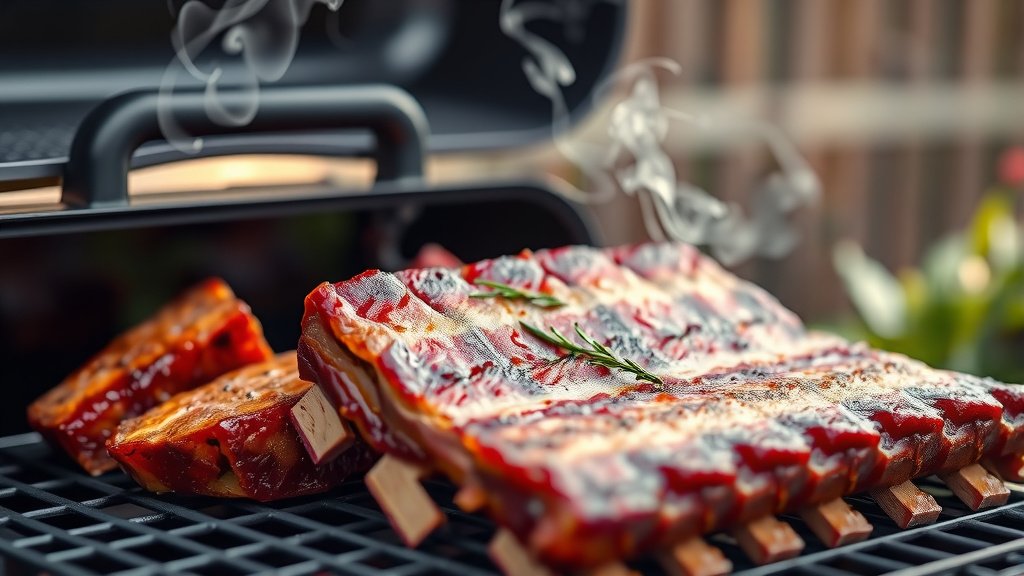
Smoking ribs on a pellet grill typically takes between 3 to 6 hours, largely depending on the rib cut and your preferred cooking method. Always aim for a specific internal temperature and fork-tender doneness, not just a set time, to get the best results.
- For baby back ribs, expect 3-4 hours at 225°F (107°C).
- St. Louis style or spare ribs usually require 5-6 hours at the same temperature.
- The popular 3-2-1 method adds extra time but promises fall-off-the-bone tenderness.
- Always check for proper internal temperature and that lovely bend test.
How Long Do You Smoke Ribs On A Pellet Grill?
You’ll generally smoke ribs for 3-6 hours, depending on the rib type and your chosen smoking method. Focus on internal temperature and tenderness rather than just time.
Understanding Rib Types and Their Smoking Times
Not all ribs are created equal, right? Different rib cuts have varying amounts of meat and fat, which impacts how long they need to cook. Knowing your rib type is the first step to success on your pellet grill.
Baby Back Ribs: Quick and Easy
Baby back ribs are smaller and leaner. They cook faster than their larger cousins. We found that most people finish baby backs in about 3-4 hours on a pellet grill.
St. Louis Style and Spare Ribs: More Meat, More Time
These larger cuts come from the belly of the hog. They have more meat and fat, which means they need a bit longer. You’ll often find these cuts taking 5-6 hours to reach perfection on a pellet grill.
The Ideal Smoking Temperature for Ribs
When it comes to smoking ribs, temperature control is your best friend. A consistent low temperature helps break down tough connective tissues, giving you that incredible tenderness.
Many experts say that 225°F (107°C) is the sweet spot for smoking ribs on a pellet grill. This temperature allows the smoke to penetrate the meat effectively without drying it out too quickly.
The Famous 3-2-1 Method for Ribs
Have you heard of the 3-2-1 method? It’s a favorite for many pitmasters, especially for St. Louis or spare ribs. It breaks the smoking process into three clear stages.
- 3 Hours: Smoke the ribs unwrapped directly on the grates. This is where they absorb most of that delicious smoky flavor.
- 2 Hours: Wrap the ribs tightly in foil with a splash of apple juice or cider. This braising step tenderizes the meat beautifully.
- 1 Hour: Unwrap the ribs and return them to the grill. This last hour helps set the bark and allows you to add a final glaze of barbecue sauce.
Adjusting the 3-2-1 for Baby Backs
For baby back ribs, which are smaller, you might adjust the method slightly. Many grillers find a 2-2-1 or even a 2-1-1 approach works best. This prevents them from becoming too mushy.
Doneness Indicators: Beyond the Clock
While time guides you, it’s not the final judge. How do you know your ribs are truly ready? We found that relying on visual cues and physical tests is always better than just looking at the clock.
The Bend Test: A True Sign of Readiness
Pick up one end of a rack of ribs with tongs. If the meat droops significantly and looks like it’s about to break apart, your ribs are likely done. This bend is a fantastic indicator of tenderness.
Internal Temperature: The Safety Check
For food safety, pork ribs need to reach an internal temperature of 145°F (63°C) (USDA). However, for fall-off-the-bone tenderness, you’re aiming much higher, usually around 195-203°F (91-95°C). Use a reliable meat thermometer between the bones.
The Toothpick Test: Simple and Effective
Gently push a toothpick into the meat between the bones. If it slides in with very little resistance, much like pushing into soft butter, your ribs are ready.
Factors Affecting Rib Smoking Time
Many things can sway how long your ribs need to smoke. Think of your pellet grill like an oven; various elements can change its performance.
Here’s a quick overview of what might extend or shorten your smoking time:
| Factor | Impact on Smoking Time | Notes |
|---|---|---|
| Rib Thickness | Thicker cuts take longer | More meat means more heat transfer time |
| Pellet Grill Accuracy | Varies by model | Some grills hold temperature better than others |
| Outside Temperature | Colder weather extends time | Grill works harder to maintain heat |
| Wind Conditions | Wind can cool the grill faster | Consider a wind break if it’s breezy |
| Opening the Lid | Each peek adds time | “If you’re lookin’, it ain’t cookin’!” |
| Desired Tenderness | Fall-off-bone needs more time | Chewier ribs require less cooking |
Prepping Your Ribs for the Pellet Grill
Good ribs start long before they hit the grill. A little prep work goes a long way in ensuring a beautiful, evenly cooked product.
Removing the Membrane: A Must-Do Step
On the back of the ribs, you’ll find a thin, silvery membrane. This membrane gets tough when cooked. Take a butter knife to lift an edge, then use a paper towel to grip and peel it off. You’ll thank yourself later.
Seasoning Your Ribs: Flavor First
Once the membrane is gone, it’s time for seasoning. A good rub adds incredible flavor and helps build a bark. Apply an even layer of your favorite rub to all sides of the ribs. Let them sit for at least 30 minutes, or even overnight, in the fridge.
Tips for Amazing Ribs Every Time
Want to impress everyone at your next backyard cookout? These practical tips can help you achieve competition-level ribs.
Don’t Over-Sauce Too Early
If you’re using a sugary barbecue sauce, wait until the last 30-60 minutes of cooking. Sugar burns easily, and you don’t want to ruin your bark with a charred coating.
Rest Your Ribs: Patience Pays Off
After your ribs come off the grill, resist the urge to slice right away. Wrap them loosely in foil and let them rest for 15-20 minutes. This allows the juices to redistribute, resulting in more tender, flavorful meat.
Troubleshooting Common Rib Smoking Issues
Even seasoned grillers run into hiccups sometimes. Here are a few common problems and how to fix them.
Ribs Are Dry: What Went Wrong?
Dry ribs usually mean they cooked too long or at too high a temperature. Try wrapping them sooner next time, or adding a bit more liquid during the wrap stage. Keeping an eye on the internal temperature helps prevent this.
Ribs Are Tough: Not Tender Enough
If your ribs are tough, they simply need more time on the grill. Remember, tenderness comes from breaking down connective tissue, which requires low heat over a longer period. Increase your cooking time slightly next time.
Not Enough Smoke Flavor
Ensure your pellet grill is producing a “thin blue smoke” rather than thick white smoke. Use quality pellets, and consider increasing your smoke setting if your grill has one. The first few hours are critical for smoke absorption.
Your Rib Smoking Checklist
Before you fire up your pellet grill, run through this quick checklist:
- Ribs trimmed and membrane removed.
- Generously seasoned with your preferred rub.
- Pellet grill preheated to a stable 225°F (107°C).
- Enough pellets in the hopper for the entire cook.
- Meat thermometer ready for accurate readings.
- Apple juice or cider for the wrapping stage.
- Barbecue sauce if you plan to glaze at the end.
Conclusion
Smoking ribs on a pellet grill is a rewarding experience that balances art and science. While the general smoking time ranges from 3-6 hours, remember that the type of rib, consistent temperature, and doneness indicators are your true guides. Don’t be afraid to experiment with methods like the 3-2-1, and always prioritize tenderness over a strict timeline. With a little practice, you’ll be pulling off incredible, smoky ribs that everyone will adore.
Frequently Asked Questions About Smoking Ribs
Should I spray my ribs while smoking?
Spraying your ribs with apple cider vinegar, apple juice, or water every hour or so can help keep them moist. This practice, often called “misting,” also helps build a nice bark. It’s not strictly necessary, but many find it improves the final product.
Can I smoke ribs too long?
Yes, you absolutely can smoke ribs too long. Overcooking can lead to dry, mushy ribs that have lost their texture and flavor. Pay attention to the bend test and internal temperature to know exactly when they are done. You want them tender, not disintegrated.
What kind of pellets are best for ribs?
For ribs, popular pellet choices include hickory, apple, cherry, or a competition blend. Hickory provides a strong, classic smoke flavor, while fruitwoods like apple and cherry offer a milder, sweeter taste. It often comes down to personal preference.
Do I need to soak my ribs before smoking?
No, soaking ribs before smoking is not generally recommended. Soaking can waterlog the meat and dilute its natural flavors. Instead, focus on a good dry rub and consistent smoking temperatures for the best results.
My ribs aren’t falling off the bone; what should I do?
If your ribs aren’t as tender as you’d like, they simply need more cooking time. Return them to the pellet grill, perhaps wrapped, and continue cooking until they reach the desired tenderness. Remember the bend test and the toothpick test are great for judging.