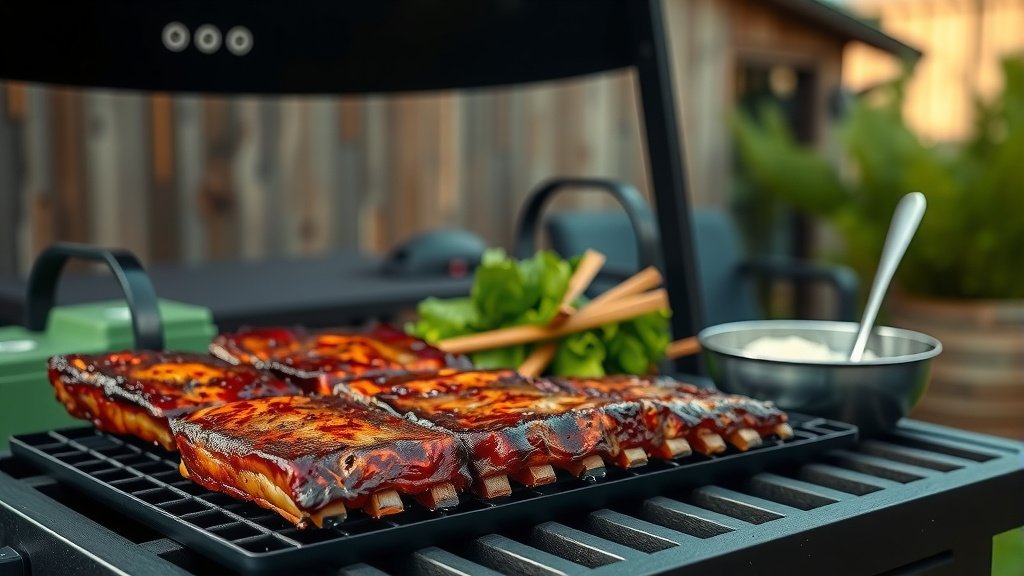
Cooking ribs on a charcoal grill generally takes about 3 to 6 hours, depending on the rib type and your desired tenderness.
You’re aiming for fall-off-the-bone results, which means maintaining a low and slow temperature around 225-275°F (107-135°C) to get those ribs just right.
TL;DR:
- Cooking ribs on a charcoal grill typically takes 3-6 hours.
- Maintain a consistent low temperature of 225-275°F for best results.
- Use the 3-2-1 method for spare ribs and 2-2-1 for baby back ribs.
- Tenderness is key; look for a bone wiggle and internal temperature of 195-203°F.
- Keep your grill steady, manage smoke, and enjoy juicy, flavorful ribs.
How Long Do You Cook Ribs On A Charcoal Grill?
Cooking ribs on a charcoal grill typically requires 3 to 6 hours to achieve that perfect tenderness, varying by rib cut. The secret is low and slow heat, ensuring every bite is juicy and flavorful.
Understanding Rib Types and Their Cooking Times
Before you even light the charcoal, knowing your ribs helps a lot. Are you working with baby back ribs or spareribs? This choice greatly affects your cooking timeline.
Baby Back Ribs vs. Spareribs
Baby back ribs are smaller and leaner, found closer to the loin. They generally cook quicker. Spareribs, from the belly, are larger, meatier, and have more fat, needing more time.
General Timing Guidelines
We found that baby back ribs often cook in 3-4 hours. For spareribs, you should plan on 5-6 hours. These are general estimates, of course, as every grill and slab of ribs is a bit different.
Setting Up Your Charcoal Grill for Success
A charcoal grill is fantastic for ribs because it offers that unique smoky flavor. But it needs careful setup to maintain a steady temperature. Think of it as creating a mini barbecue oven.
The Two-Zone Setup
For ribs, you’ll want a two-zone fire. Pile your charcoal on one side of the grill. This creates a direct heat zone and an indirect heat zone. Your ribs will cook over the indirect heat zone.
Achieving the Ideal Temperature (225-275°F)
Many experts say the sweet spot for ribs is between 225°F and 275°F (107-135°C). Use a reliable grill thermometer, not just the lid thermometer, which can be inaccurate. Adjust your vents to control the airflow and, thus, the temperature. More air means hotter coals, less air means cooler coals.
The Legendary 3-2-1 Method for Spareribs
If you’ve heard about smoking ribs, you’ve likely heard of the 3-2-1 method. It’s a popular strategy for spareribs because it breaks down the cooking into phases, ensuring tenderness and flavor.
Phase 1: The Smoke (3 Hours)
Place your spareribs bone-side down over the indirect heat. Add wood chips or chunks for smoke. Let them cook for about 3 hours, just letting that beautiful smoke penetrate the meat.
Phase 2: The Wrap (2 Hours)
After 3 hours, wrap the ribs tightly in foil with a little liquid (apple juice, cider vinegar). This steams them, making them incredibly tender. Return them to the grill for another 2 hours.
Phase 3: The Uncover and Sauce (1 Hour)
Unwrap the ribs, apply your favorite BBQ sauce if desired, and put them back on the grill for the final hour. This allows the sauce to set and creates a nice bark. This final hour makes the ribs perfect (BBQ Guys).
Adjusting for Baby Back Ribs: The 2-2-1 Method
Baby back ribs, being smaller, don’t need quite as much time. Many pitmasters adapt the method to 2-2-1 for them.
| Rib Type | Phase 1: Smoke (Unwrapped) | Phase 2: Wrap (Liquid) | Phase 3: Uncover (Sauce) | Total Time (Approx.) |
|---|---|---|---|---|
| Spareribs | 3 Hours | 2 Hours | 1 Hour | 6 Hours |
| Baby Back Ribs | 2 Hours | 2 Hours | 1 Hour | 5 Hours |
When Are Your Ribs Done? The Doneness Tests
Cooking by time is a guide, but don’t forget to test for doneness. This is where the magic happens and you ensure your ribs are perfect, not just ‘done’.
The Bend Test
Pick up a rack of ribs with tongs in the middle. If they are ready, they should bend significantly and show cracks in the bark. They shouldn’t break apart entirely, but they should be very flexible.
The Bone Wiggle Test
Gently twist one of the bones. If it wiggles easily or even pulls out, your ribs are ready. This indicates the connective tissue has broken down, leading to that tender, juicy bite.
Internal Temperature
While tenderness is king for ribs, food safety guidelines suggest cooking pork to at least 145°F (63°C) (USDA). For fall-off-the-bone ribs, we found that experts aim for an internal temperature between 195-203°F (90-95°C).
Essential Tips for Amazing Charcoal Ribs
Here are a few pointers to help you get the best ribs possible, every single time.
- Use a good thermometer: A digital probe thermometer is your best friend for monitoring grill and meat temperature.
- Don’t rush the process: Low and slow is the motto. Resist the urge to crank up the heat.
- Limit peeking: Every time you open the lid, you lose heat and smoke. “If you’re looking, you’re not cooking!”
- Experiment with wood: Apple, cherry, hickory, and oak all give different smoke flavors. Find your favorite.
- Let them rest: After cooking, let the ribs rest, loosely tented with foil, for 15-20 minutes. This allows the juices to redistribute, making them even more tender.
Troubleshooting Common Rib Grilling Issues
Sometimes, things don’t go perfectly. Don’t worry, even the pros have off days. Here are quick fixes for common problems.
Ribs are Too Dry
This usually means they cooked too long or at too high a temperature. Next time, monitor your grill temperature more closely and perhaps wrap them earlier. Adding liquid to the wrap phase also helps.
Ribs are Not Tender Enough
They simply needed more time. Be patient! Tenderness is a gradual process. If you pulled them off too soon, they will be chewy. Consider a lower temperature for a longer cook.
Your Rib Grilling Checklist
Before you start, quickly go through this list:
- Have you prepped your ribs (membrane removed)?
- Is your charcoal grill set up for two-zone cooking?
- Do you have enough charcoal and smoking wood?
- Is your grill thermometer calibrated and ready?
- Are you ready to be patient and enjoy the process?
- Do you have your favorite BBQ sauce ready for the final hour?
Conclusion
Cooking ribs on a charcoal grill is a rewarding experience that demands patience and attention to detail. While the timeline can range from 3 to 6 hours, mastering the low and slow temperature of 225-275°F is truly the secret weapon. Whether you follow the 3-2-1 method for spareribs or the 2-2-1 for baby backs, remember to use tenderness tests like the bend or bone wiggle. With these tips, you’re well on your way to creating incredibly juicy, flavorful, and fall-off-the-bone ribs that everyone will rave about. Happy grilling!
Frequently Asked Questions About Grilling Ribs
How do I prevent my ribs from burning on a charcoal grill?
To prevent burning, always cook your ribs over the indirect heat zone of your charcoal grill. Ensure your grill temperature stays within the ideal range of 225-275°F. Too much direct flame or excessive heat will scorch the surface before the inside is tender.
Can I cook ribs without wrapping them in foil?
Yes, you can cook ribs without wrapping them, a method often called “naked ribs.” This typically results in a chewier texture and a stronger bark. However, wrapping in foil during the middle phase helps retain moisture and accelerates the tenderizing process significantly.
What’s the best wood for smoking ribs on a charcoal grill?
For pork ribs, popular wood choices include apple, cherry, hickory, and oak. Apple and cherry offer a milder, fruitier smoke, while hickory and oak provide a stronger, more traditional BBQ flavor. Experiment to find your personal preference!
How do I maintain a consistent low temperature on a charcoal grill for hours?
Maintaining a consistent low temperature involves careful management of your grill’s vents. Keep the bottom vents mostly open to feed oxygen to the coals, and adjust the top vent to control the heat. Smaller adjustments are better, and avoid opening the lid too often, as this causes significant temperature drops.
My ribs look done but are still tough. What went wrong?
If your ribs look cooked but are tough, it almost always means they needed more time to break down the connective tissues. Ribs become tender not just by reaching a certain temperature, but by holding that temperature for an extended period. Patience is key; continue cooking at a low temperature until they pass the bend and wiggle tests.