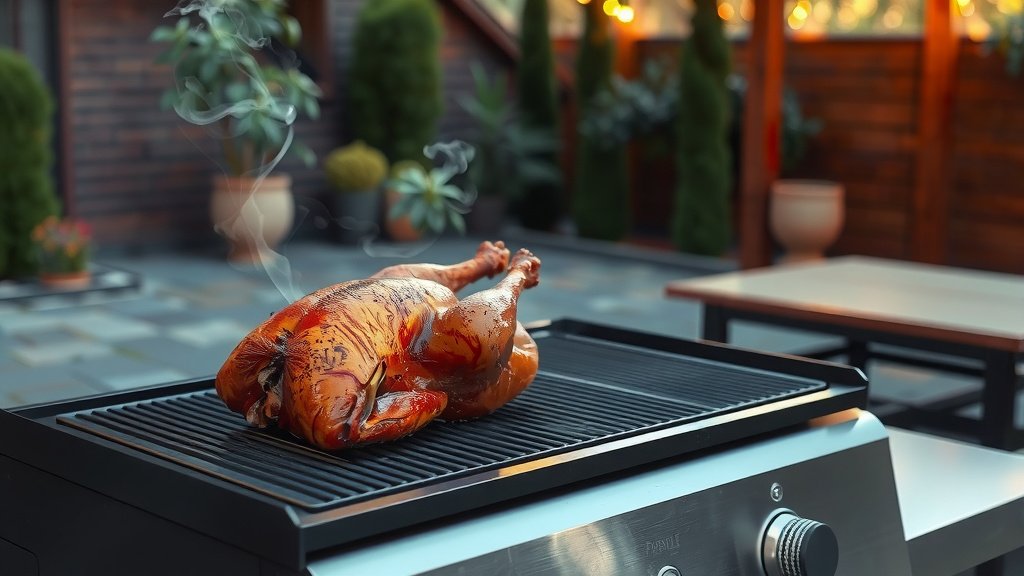
To smoke a turkey on a pellet grill, you first brine the bird for moisture and flavor. Then, set your grill to a low temperature, around 225-250°F, using fruitwood pellets for a gentle smoke.
Cook until the deepest part of the thigh reaches 175°F and the breast hits 165°F, allowing about 30-45 minutes per pound, then rest the turkey for a juicy finish.
- Brine your turkey for ultimate moisture and taste before smoking.
- Choose mild wood pellets like apple or cherry for a balanced smoke flavor.
- Maintain a consistent grill temperature between 225°F and 250°F.
- Always monitor the turkey’s internal temperature with a reliable thermometer.
- Rest the smoked turkey for at least 30 minutes after cooking to redistribute juices.
How Do You Smoke A Turkey On A Pellet Grill?
Smoking a turkey on a pellet grill gives you incredible flavor and moist meat. You will get a delicious bird with less effort than traditional smokers, making your holiday meal or family gathering a joy.
It’s simpler than you might think, and the results are consistently amazing. Imagine carving into a perfectly smoked turkey, full of flavor and incredibly tender.
Why Smoke Your Turkey on a Pellet Grill?
You might wonder what makes a pellet grill so good for turkey. Many experts say it is the ease of temperature control. This means you can “set it and forget it” for hours, allowing the low, slow heat to work its magic.
We found that pellet grills also deliver a consistent smoke output. This ensures your turkey gets an even smoky taste without becoming overpowering. It’s a happy medium between traditional smoking and oven roasting.
The Pellet Grill Advantage
Think of your pellet grill as a precise oven that also adds smoke. You do not need to constantly check charcoal or wood chips. This automation saves you time and stress, especially when preparing a large meal.
Plus, you get to choose from a variety of wood pellets. This allows you to fine-tune the smoke flavor to your liking. It truly simplifies the smoking process for beginners and seasoned grillers alike.
Choosing the Right Turkey
Selecting the right turkey is your first step to success. A good starting point is usually a 10-15 pound bird for smoking. This size generally fits well in most pellet grills and cooks more evenly.
Consider the number of guests you will have. A good rule of thumb is about 1 to 1.5 pounds of turkey per person. Remember, this includes bone weight, so you will want a bit extra for leftovers.
Fresh vs. Frozen Turkeys
You can use either fresh or frozen turkey for smoking. If you choose frozen, make sure to thaw it completely. This usually takes several days in the refrigerator, about 24 hours for every 4-5 pounds of turkey.
A fresh turkey saves you thawing time, which is a convenience. However, they can sometimes be harder to find, depending on the season. Always check the “use by” date for freshness.
Essential Prep: Brining Your Turkey
Brining is a step you should not skip if you want a truly moist turkey. It helps the meat absorb moisture and flavor before cooking. This means a more tender and juicy bird, even after hours in the smoker.
Many guidelines point to brining as the secret to preventing dry turkey (Cook’s Illustrated). It’s a simple process that makes a huge difference in the final product. Trust us, your taste buds will thank you.
Wet Brine vs. Dry Brine
You have two main choices for brining: wet or dry. A wet brine involves soaking the turkey in a salt-water solution, often with herbs and spices. This method adds a lot of moisture.
A dry brine, on the other hand, means rubbing the turkey with a salt and spice mix and letting it sit. This draws out moisture from the skin, leading to crispier skin while seasoning the meat deeply. Both work well; it often comes down to personal preference or available fridge space.
Seasoning for Success
Once brined, it is time to season your turkey. This adds another layer of flavor and helps create a beautiful crust. Do not be shy with your seasoning choice; it will really make the turkey shine.
You can use a pre-made poultry rub or mix your own. We found that blends with paprika, garlic powder, onion powder, and a touch of brown sugar work wonderfully. Pat the turkey dry first for better rub adherence.
What Rub Should You Use?
For a classic flavor, a mix of sage, thyme, rosemary, salt, and black pepper is a winner. If you like a little kick, add some cayenne pepper to your rub. Remember to apply the rub under the skin too, especially on the breast, for maximum flavor penetration.
Some people even like to add a thin layer of butter or oil under the skin before applying the rub. This helps with browning and moisture. It’s all about building those layers of taste.
Setting Up Your Pellet Grill for Turkey
Your pellet grill setup is important for a successful smoke. Clean your grill grates before starting to prevent sticking and old residue flavors. This simple step helps ensure a clean, fresh smoke taste.
Make sure your pellet hopper is full. Running out of pellets mid-cook is a common pitfall you will want to avoid. A full hopper means uninterrupted smoking, which is key for a large bird like a turkey.
Picking the Perfect Pellets
For turkey, you want a milder smoke flavor that complements, not overpowers. We found that fruitwoods like apple, cherry, or pecan are excellent choices. They give a sweet, gentle smoke that pairs wonderfully with poultry.
Avoid strong woods like mesquite or hickory unless you prefer a very bold smoke. Many experts agree that a lighter touch is best for turkey. You want the turkey’s natural taste to still come through.
Target Temperature Settings
Most experts recommend smoking turkey at a lower temperature first for maximum smoke flavor. A good range is 225°F to 250°F for the initial phase. This slow cook infuses the meat deeply.
You might consider increasing the temperature to 325-350°F towards the end. This helps crisp up the skin and ensures the turkey finishes cooking in a reasonable time. This two-stage approach gives you the best of both worlds: smoke and crispy skin.
Smoking Your Turkey: Step-by-Step
Place your prepared turkey directly on the grill grates. Make sure it is centered to allow for even cooking. Some people put a drip pan underneath to catch juices and keep the grill clean.
Insert your meat thermometer into the thickest part of the breast and thigh, avoiding bones. This is your guide for doneness. Close the lid and let the magic happen. Resist the urge to constantly open the lid; “if you’re looking, you’re not cooking.”
Monitoring Internal Temperature
The internal temperature is your true indicator of doneness. You are aiming for 165°F in the breast and 175°F in the thigh. Research often connects these temperatures with safe poultry consumption (USDA).
Start checking the temperature about halfway through the estimated cooking time. Use a reliable digital thermometer. Remember, different parts of the turkey cook at different rates.
Achieving That Perfect Golden Skin
One common concern with smoked turkey is the skin. Sometimes it can be rubbery. To help crisp it up, as mentioned, raise the grill temperature to 325-350°F for the last hour or so of cooking.
You can also brush the skin with melted butter or oil during the last hour. This helps with browning and adds richness. Some people even spray with cooking oil. A good dry brine also helps make crispy skin.
The Crucial Resting Period
Once your turkey hits the target internal temperature, remove it from the grill. Do not carve it immediately! This is a common mistake that can lead to dry turkey. Instead, tent it loosely with foil.
Allow the turkey to rest for at least 30 minutes, or even up to an hour for a larger bird. This resting period allows the juices to redistribute throughout the meat, making every slice incredibly moist and flavorful. It is truly a game-changer.
Common Smoking Turkey Mistakes to Sidestep
Here are a few pitfalls you can easily avoid for a perfect smoked turkey:
- Not Brining: This is probably the biggest miss. Brining prevents dryness.
- Overcooking: Always trust your thermometer, not just the clock.
- Ignoring the Rest: Carving too soon lets all those precious juices escape.
- Opening the Lid Too Often: Every time you open the lid, you lose heat and smoke.
- Wrong Pellets: Using too strong a wood can make the turkey taste bitter.
Troubleshooting: What if Your Turkey Isn’t Perfect?
Even with careful planning, things can happen. If your turkey breast is cooking faster than the thighs, you can shield the breast with foil. This slows down the cooking there.
If the skin isn’t browning, try a higher heat at the end, as we discussed. If the turkey is dry, next time, consider a longer brine or even injecting it with a flavorful broth. Learning from each cook is part of the fun!
| Turkey Weight | Estimated Smoking Time (225-250°F) | Final Temp Check |
|---|---|---|
| 10-12 lbs | 4-5 hours | 165°F (breast), 175°F (thigh) |
| 12-14 lbs | 5-6 hours | 165°F (breast), 175°F (thigh) |
| 14-16 lbs | 6-7 hours | 165°F (breast), 175°F (thigh) |
| 16-18 lbs | 7-8 hours | 165°F (breast), 175°F (thigh) |
Conclusion
Smoking a turkey on a pellet grill is a rewarding experience that yields delicious results. By following these steps – from brining and seasoning to maintaining proper temperatures and resting – you are sure to create a holiday masterpiece.
Remember, it is about patience and preparation. Your pellet grill does most of the heavy lifting. So, relax, trust the process, and get ready to enjoy a wonderfully moist, smoky turkey that your family and friends will rave about.
Do you put water in a pellet smoker for turkey?
While some traditional smokers use a water pan to maintain humidity, most pellet grills do not require one for smoking a turkey. Pellet grills naturally create a more humid environment than many charcoal smokers. Adding a water pan can be optional, if you wish, but it is not typically necessary for great results.
Should you baste a turkey when smoking?
Basting a turkey while smoking is not usually recommended. Every time you open the smoker lid, you lose valuable heat and smoke, which extends cooking time. A proper brine and a good rub will keep your turkey moist and flavorful without constant basting.
What temperature do you smoke a whole turkey?
Many experts recommend starting your turkey at a lower temperature, around 225-250°F, for the first few hours to maximize smoke absorption. Then, you can increase the temperature to 325-350°F for the remainder of the cook to crisp the skin and finish cooking more quickly.
How long does it take to smoke a 12lb turkey on a pellet grill?
A 12-pound turkey typically takes about 5 to 6 hours to smoke on a pellet grill set between 225-250°F. This estimate can vary based on your grill, external temperature, and the turkey’s initial temperature. Always cook to an internal temperature of 165°F in the breast and 175°F in the thigh.
Can you put a frozen turkey in a smoker?
No, you should never put a frozen turkey directly into a smoker. A frozen turkey will cook unevenly and spend too much time in the “danger zone” where bacteria can multiply, posing a food safety risk. Always ensure your turkey is fully thawed before smoking.