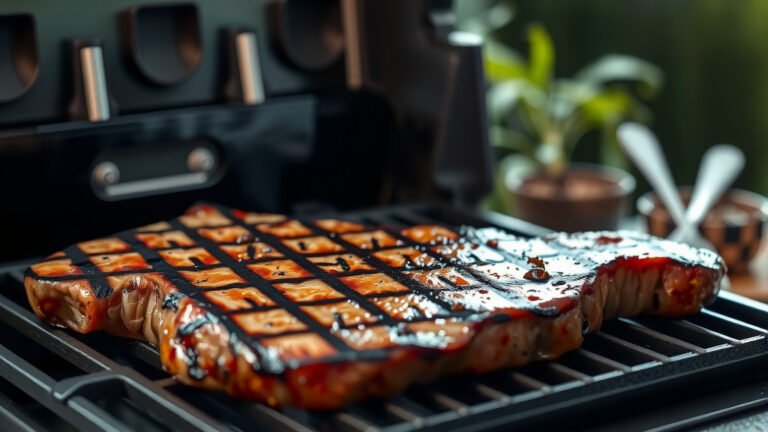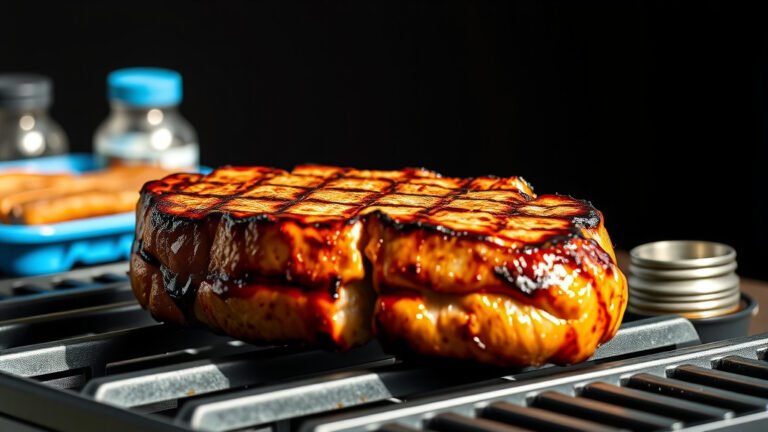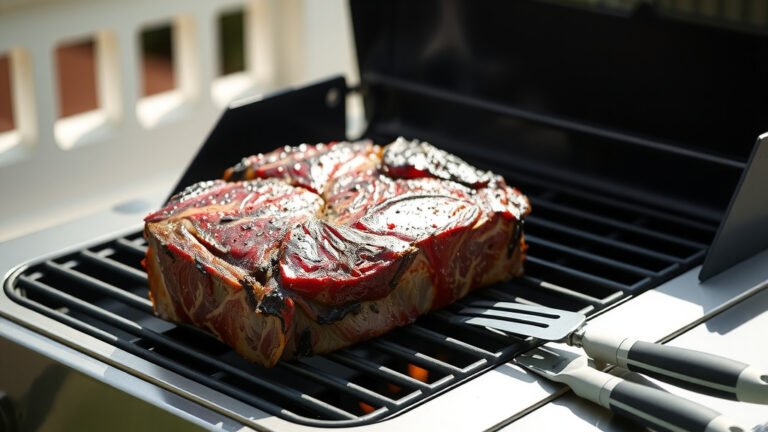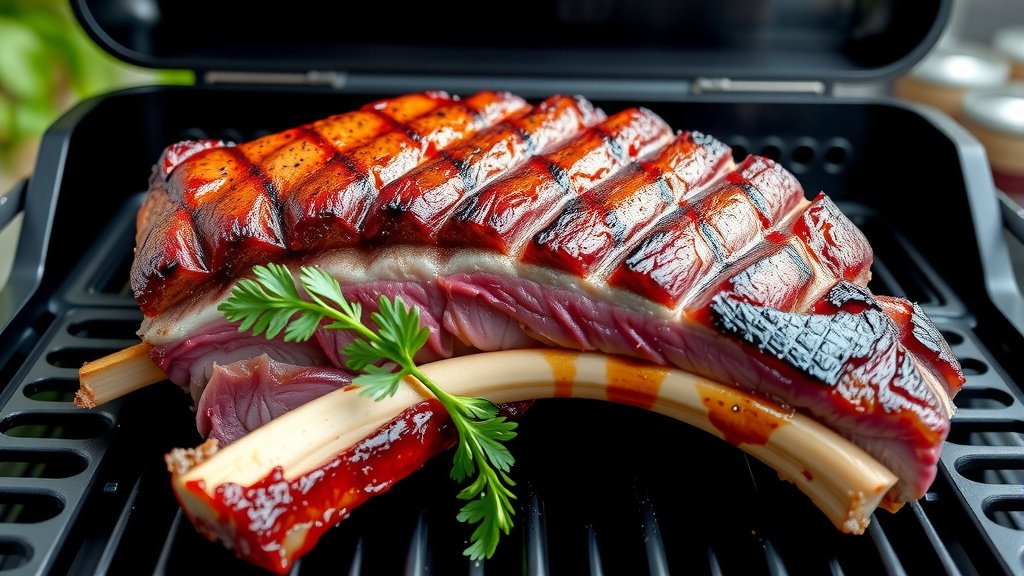
To cook prime rib on a gas grill, you’ll achieve an amazing result by first searing it over high heat, then finishing it with indirect low heat until it reaches your desired internal temperature.
This method ensures a beautiful, savory crust and a tender, juicy interior for your special prime rib roast, making your gas grill a true hero.
- Prime rib on a gas grill requires a **two-zone cooking setup**: searing first, then slow cooking.
- Achieve a delicious, **crispy exterior** and perfectly cooked interior by managing grill temperatures.
- Key steps include proper seasoning, using a reliable meat thermometer, and allowing for **sufficient resting time**.
- Indirect heat is crucial for gentle, **even cooking** after the initial high-heat sear.
- You can truly create a **restaurant-quality meal** right in your own backyard.
How Do You Cook Prime Rib On A Gas Grill?
You cook prime rib on a gas grill by using a two-zone setup, starting with a hot sear to brown the outside, then moving it to indirect heat to slowly cook to perfection.
This technique creates a fantastic crust while keeping the inside wonderfully tender and juicy.
Why Cook Prime Rib on a Gas Grill?
Ever thought about bringing that special occasion prime rib outdoors? Using your gas grill offers **unique flavor benefits** you might not get from your oven.
It’s all about creating that beautiful, smoky char and a **delicious, roasted aroma** that fills your backyard.
The Benefits of Gas Grilling
Your gas grill gives you amazing **temperature control**, which is vital for a cut like prime rib. You can easily switch between high heat and low heat.
Plus, the open flame can add a **subtle smoky flavor** that truly elevates the meat’s taste. Many experts agree it adds a fantastic dimension.
Gathering Your Grilling Essentials
Before you even unwrap that magnificent roast, let’s talk about what you’ll need. Being prepared makes the entire cooking process **much smoother and enjoyable**.
Having the right tools at hand truly sets you up for **grilling success** with such a premium cut of meat.
What You’ll Need
- A high-quality prime rib roast (bone-in or boneless)
- A reliable meat thermometer (digital is best)
- A sturdy roasting pan or aluminum drip pan
- Your favorite seasonings and herbs
- Long-handled grilling tongs
- A sharp carving knife
Preparing Your Prime Rib for the Grill
Getting your prime rib ready is more than just opening the package; it’s about setting the stage for amazing flavor. A little **prep work goes a long way** for a perfect cook.
Think of it as the warming up before the big show; it ensures your roast performs at its **absolute best on the grill**.
Seasoning Secrets
For prime rib, a generous rub of salt, black pepper, garlic powder, and dried herbs like rosemary and thyme works wonders. We found that a **simple, robust seasoning** lets the meat’s flavor shine.
Don’t be shy; you want to create a **flavorful crust** that will develop during grilling.
Trimming and Tying
If your roast has a fat cap, you might want to trim it slightly, leaving about a quarter-inch. Some people say to leave it all for flavor, but we found **moderate trimming helps even cooking**.
Tying the roast with butcher’s twine, if it’s boneless, helps it keep its shape and ensures **uniform cooking throughout** the cut (Meat Science Review).
Setting Up Your Gas Grill for Success
Your grill isn’t just a heat source; it’s a precision cooking tool for prime rib. Proper setup is the **secret sauce for achieving perfection** with this luxurious roast.
A well-prepared grill ensures you have the **right cooking zones** ready for each stage of the process.
Two-Zone Cooking Explained
This is where your gas grill shines. You’ll turn one side of your grill to high heat (for searing) and the other side to low or off (for indirect cooking). This creates **distinct hot and cool zones**.
This setup allows you to achieve that beautiful crust without burning, and then slowly cook the inside **without drying out the meat**.
The Searing Stage: Getting That Perfect Crust
This is the exciting part! Place your prime rib directly over the high heat zone. You’re looking for a **rich, brown crust** to form on all sides.
Sear each side for about 3-5 minutes. You’ll hear that satisfying sizzle, which tells you the **Maillard reaction is happening** – creating incredible flavor.
Moving to Indirect Heat: The Slow Cook
Once seared, move the prime rib to the indirect heat side of your grill. Close the lid and let the magic happen. This slow, gentle heat will **cook the roast evenly** to your desired doneness.
Keep your grill’s temperature around 275-300°F (135-150°C) for this stage. This steady temperature helps **prevent overcooking or drying**.
Monitoring Internal Temperature
This is probably the **most important step** for a perfect prime rib. A reliable meat thermometer is your best friend. Insert it into the thickest part of the roast, avoiding bone.
Remove the prime rib from the grill when it’s about 5-10°F below your target temperature, as it will **continue to cook while resting** (USDA Food Safety)..
| Doneness Level | Target Internal Temperature (on grill) | Final Resting Temperature |
|---|---|---|
| Rare | 120-125°F (49-52°C) | 130-135°F (54-57°C) |
| Medium-Rare | 125-130°F (52-54°C) | 135-140°F (57-60°C) |
| Medium | 130-135°F (54-57°C) | 140-145°F (60-63°C) |
Resting Your Masterpiece: Don’t Skip This!
Once your prime rib hits the target temperature, transfer it to a cutting board and tent it loosely with foil. Let it **rest for at least 20-30 minutes**.
This crucial step allows the juices to redistribute throughout the meat, ensuring every slice is incredibly **tender and full of flavor**. Patience truly pays off here!
Slicing and Serving Your Prime Rib
After resting, it’s time for the grand reveal. Use a sharp carving knife to slice the prime rib against the grain. This helps to **maximize tenderness in each bite**.
Serve immediately with your favorite sides. Imagine the proud look on your guests’ faces as they see your **perfectly grilled creation**.
Troubleshooting Common Grilling Issues
Even the most seasoned grill masters face a hiccup now and then. Don’t worry if things don’t go exactly as planned; a few simple tips can **save your prime rib**.
Knowing how to handle common problems can turn a near miss into a **grilling triumph for you**.
Uneven Cooking Concerns
If you notice one side cooking faster, simply rotate the roast on the indirect heat zone. Sometimes, grills have hotter spots, even in indirect areas, so **periodic rotation helps**.
Also, make sure your grill grates are clean; buildup can create **uneven heat distribution**.
Flare-Ups: What to Do
Flare-ups happen when fat drips onto the flames. If you see one, move your prime rib immediately to a cooler spot on the grill. You might need to **temporarily close the lid** to starve the flames of oxygen.
Using a drip pan under the roast during indirect cooking can also **help prevent flare-ups** entirely. This is a common practice we found experts recommend.
Conclusion
Cooking prime rib on a gas grill is a rewarding experience that yields an incredibly delicious meal. By following these steps—from proper preparation and two-zone grilling to crucial resting—you’ll create a show-stopping roast.
Remember, your gas grill is a versatile tool capable of producing that coveted seared crust and perfectly tender interior. Don’t be afraid to try this method; your guests (and your taste buds) will thank you for this truly amazing feast.
How do I prevent my prime rib from drying out on the gas grill?
To prevent drying, always use a two-zone cooking method and cook primarily over indirect heat after searing. A drip pan filled with a little water or broth under the roast can also add moisture to the cooking environment.
Can I cook a boneless prime rib on a gas grill the same way as bone-in?
Yes, you can. Boneless prime rib cooks similarly, but you might find it cooks slightly faster since there’s no bone to insulate the meat. Adjust your cooking time and rely on the internal thermometer for accuracy.
What’s the best way to get a good crust on prime rib using a gas grill?
Achieving a good crust involves searing the prime rib over high, direct heat for several minutes per side at the beginning of the cook. Ensure the grill grates are very hot before placing the roast on them.
How long does it typically take to cook a 5-pound prime rib on a gas grill?
A 5-pound prime rib might take about 1.5 to 2.5 hours on a gas grill using the two-zone method, depending on your grill’s consistency and desired doneness. Always cook to internal temperature, not just time.
Do I need to flip the prime rib while it’s cooking on indirect heat?
It’s not strictly necessary to flip the prime rib when it’s on indirect heat. However, some grillers prefer to rotate it once or twice during the cook to ensure truly even exposure to the indirect heat, particularly if your grill has minor hot spots.