
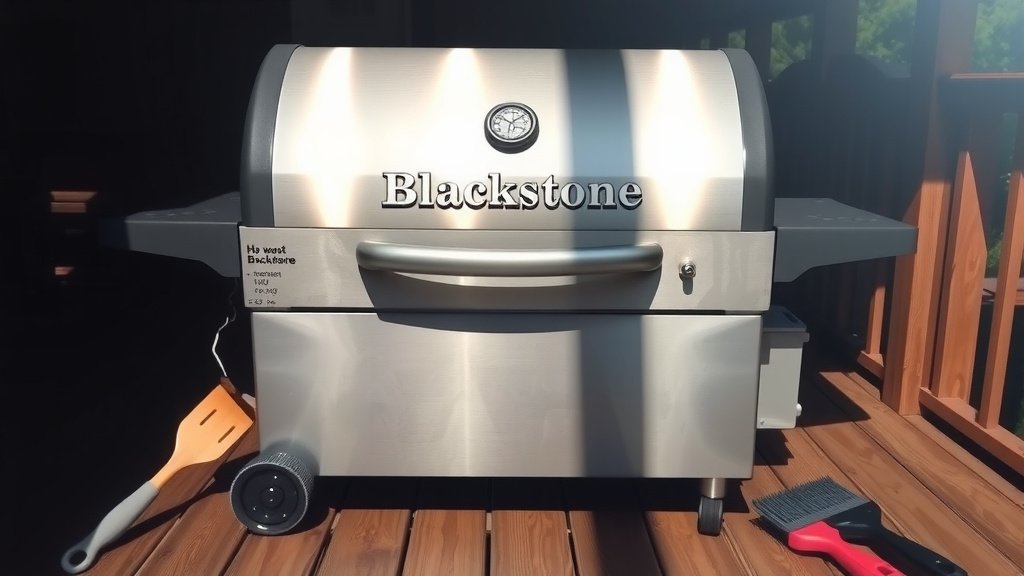
To clean a Blackstone grill, you’ll first want to scrape off any food debris while the griddle is still warm, then wipe it clean and apply a thin layer of cooking oil.
Maintaining your Blackstone grill involves simple steps right after each use to keep its surface non-stick and ready for your next culinary adventure.
Here’s a quick overview of how to keep your Blackstone looking great:
- Clean it while it’s still warm to make food scraps easier to remove.
- Use a griddle scraper to push off food and grease into the grease trap.
- Wipe the surface with paper towels, adding a little water for stubborn spots.
- Always dry the griddle completely to prevent rust.
- Re-season with a thin layer of high smoke point cooking oil after every clean.
How Do You Clean A Blackstone Grill?
Cleaning your Blackstone grill is straightforward when you know the right steps. You’ll typically clean it while it’s still warm, making the process much easier and more effective.
Think of it like clearing your dinner plate right after you finish eating, not letting it sit for hours. This proactive approach keeps your griddle performing its best.
Why Clean Your Blackstone Grill Right Away?
Cleaning your Blackstone grill immediately after cooking is key. When the griddle is still warm, food bits and grease haven’t hardened onto the surface yet, making them simple to remove.
This practice helps preserve the seasoning, which is that fantastic non-stick layer on your griddle. Skipping this step means more effort later and can even invite rust.
Essential Tools for Your Cleaning Kit
Before you even fire up your grill, it’s wise to have your cleaning tools ready. You don’t need fancy gadgets; the basics work wonders for proper maintenance.
Having these items handy ensures you can tackle the post-cook cleanup without delay. What do you need to get started?
- A good quality griddle scraper.
- Plenty of paper towels or a clean cloth.
- A spray bottle filled with water.
- High smoke point cooking oil (like grapeseed, flaxseed, or avocado oil).
- Optional: A grill brick or griddle cleaning pad for deeper cleans.
The Power of a Griddle Scraper
A sturdy griddle scraper is your best friend for a Blackstone grill. It allows you to push off cooked-on food and excess oil into the grease trap effortlessly.
Many experts say choosing a scraper with a comfortable handle and a sharp, durable edge makes a big difference (Blackstone Products User Guide).
Using Water for Stubborn Spots
Sometimes, simply scraping isn’t enough. For those really stuck-on bits, a little water can create steam to lift them. You just need a small amount.
We found that adding a tablespoon or two of water to a warm griddle creates enough steam to loosen grime. Just be careful, as the steam will be hot.
Step-by-Step Daily Cleaning After Cooking
This is your routine after almost every cookout. It’s quick, simple, and vital for a healthy griddle. You’ll be surprised how fast it goes once you get the hang of it.
Step 1: Scrape Off Food and Grease
With the griddle still warm (not blazing hot), grab your scraper. Push all the food residue and excess grease towards the grease trap at the back of the griddle.
It’s like clearing crumbs off a table, ensuring everything ends up in one spot. This prevents old food from baking onto your surface.
Step 2: Wipe the Surface Clean
Once scraped, use several paper towels to wipe the griddle clean. You might see some dark residue; this is normal and part of the seasoning process.
If some spots remain sticky, pour a tiny bit of water onto the warm surface. The steam will help lift the grime. Then, scrape and wipe again until it looks clean.
Step 3: Dry Completely
This step is non-negotiable. Any moisture left on the griddle can cause rust, which is the enemy of a well-maintained Blackstone. Wipe it until it’s bone dry.
You can even turn the heat back on low for a minute or two to ensure any remaining water evaporates. Remember, a dry griddle is a happy griddle.
Step 4: Re-Season with Oil
After drying, apply a thin, even layer of cooking oil. Use a paper towel to spread it across the entire griddle surface. This step replenishes the seasoning.
A well-oiled griddle is protected from rust and maintains its non-stick qualities. It’s like moisturizing your skin after a shower; it keeps it supple and protected.
When Does Your Blackstone Need a Deeper Clean?
While daily cleaning is great, sometimes your griddle needs a little more love. This might happen after cooking particularly sticky foods, or if you notice some rust appearing.
A deeper clean isn’t an everyday event; think of it as a biannual car wash, not a daily wipe-down.
| Cleaning Type | Frequency | Primary Tools | Goal |
|---|---|---|---|
| Daily Clean | After every cook | Scraper, paper towels, oil | Maintain seasoning, remove debris |
| Deep Clean | Rarely (e.g., rust, heavy buildup) | Scraper, grill brick/pad, water, oil | Restore surface, remove rust/heavy grime |
Tackling Stubborn Grime and Rust
If you have really stubborn, burnt-on residue or spots of rust, a grill brick or griddle cleaning pad can help. Gently scrub the affected areas.
Research often connects rust formation with improper drying and lack of seasoning (Culinary Institute of America guidelines). Be gentle; you don’t want to remove all the seasoning, just the problem areas.
The Griddle Restoration Process
For extensive rust, you might need to completely strip and re-season your griddle. This means scrubbing off all the old seasoning and rust down to bare metal.
Then, you’ll apply multiple thin layers of oil, heating and cooling between each layer, until a new, protective seasoning is built up. It’s a bit of work, but your griddle will thank you.
Common Blackstone Cleaning Mistakes to Avoid
Nobody wants to damage their prized griddle, right? Knowing what not to do is just as important as knowing what to do. Avoid these pitfalls to keep your Blackstone in top shape.
Do Not Use Dish Soap
Many experts say never to use dish soap on your seasoned griddle. Soap is designed to break down fats and oils, which is exactly what your griddle’s seasoning is made of.
Using soap will strip away that hard-earned non-stick layer, leaving you with a sticky, possibly rusty surface. Stick to water and scraping for cleaning.
Don’t Let Food Sit and Harden
Leaving food particles and grease on your griddle after cooking is a recipe for disaster. These bits will harden, making them much harder to remove later.
It also gives rust a chance to form, especially if any moisture is present. A quick clean-up saves you much more time and effort later on.
Never Forget to Re-Oil
This is perhaps the most important final step. Neglecting to apply a fresh, thin layer of oil after cleaning leaves your griddle exposed and vulnerable to rust.
Think of the oil as a protective shield. Without it, your griddle is like an unprotected car in the rain – it’s bound to rust over time.
Your Blackstone Cleaning Checklist
Here’s a quick list to make sure you hit all the marks after your next griddle session:
- Griddle still warm? Check.
- Food debris scraped into trap? Check.
- Surface wiped clean with paper towels? Check.
- Stubborn bits removed with a splash of water and scrape? Check.
- Griddle completely dry? Check.
- Thin layer of cooking oil applied? Check.
Conclusion
Cleaning your Blackstone grill doesn’t have to be a chore; it’s a simple, ongoing process that ensures countless delicious meals. By following these steps, especially the immediate post-cook cleaning and re-oiling, you’re not just cleaning, you’re investing in its longevity.
Treat your griddle with a little care after each use, and it will keep serving up fantastic food for years to come. Happy griddling!
How often should you clean your Blackstone grill?
You should perform a light cleaning of your Blackstone grill after every single use. This involves scraping off food and grease, wiping it down, drying it, and applying a thin layer of oil. Deep cleaning is only needed rarely, for example, if rust appears or there’s significant carbon buildup.
Can you use soap to clean a Blackstone griddle?
No, you should never use dish soap on a seasoned Blackstone griddle. Soap breaks down oils and will strip away the protective seasoning layer that prevents rust and provides a non-stick surface. Stick to water and scraping for cleaning.
What kind of oil should you use to season a Blackstone?
You should use a high smoke point cooking oil to season your Blackstone grill. Grapeseed oil, flaxseed oil, avocado oil, and even vegetable oil are good choices. These oils polymerize well, creating a durable, non-stick surface when heated.
What if my Blackstone grill starts to rust?
If your Blackstone grill shows rust, you’ll need to clean it more aggressively. Use a griddle scraper and potentially a grill brick or heavy-duty scrubbing pad to remove the rust. Once the rust is gone, thoroughly dry the griddle and re-season it by applying multiple thin layers of oil and heating it repeatedly until a new, dark seasoning forms.
How do you prevent food from sticking to a Blackstone after cleaning?
To prevent food from sticking, always ensure your Blackstone griddle is properly seasoned and re-oiled after each cleaning. A thin, even layer of high smoke point oil baked onto the surface creates a non-stick barrier. Also, make sure your griddle is preheated to the correct temperature before adding food.
