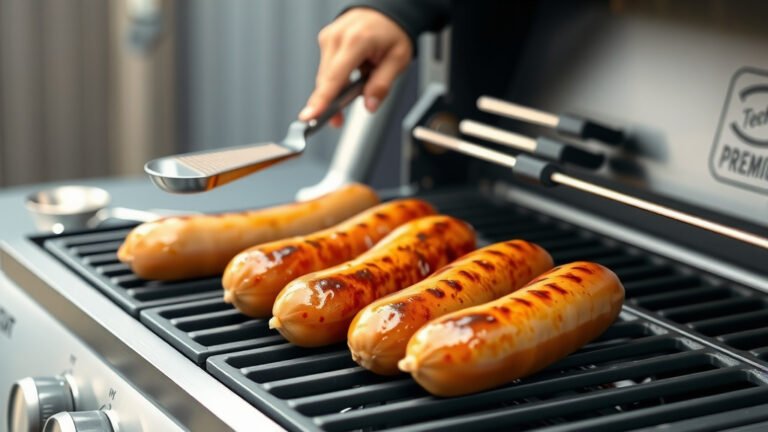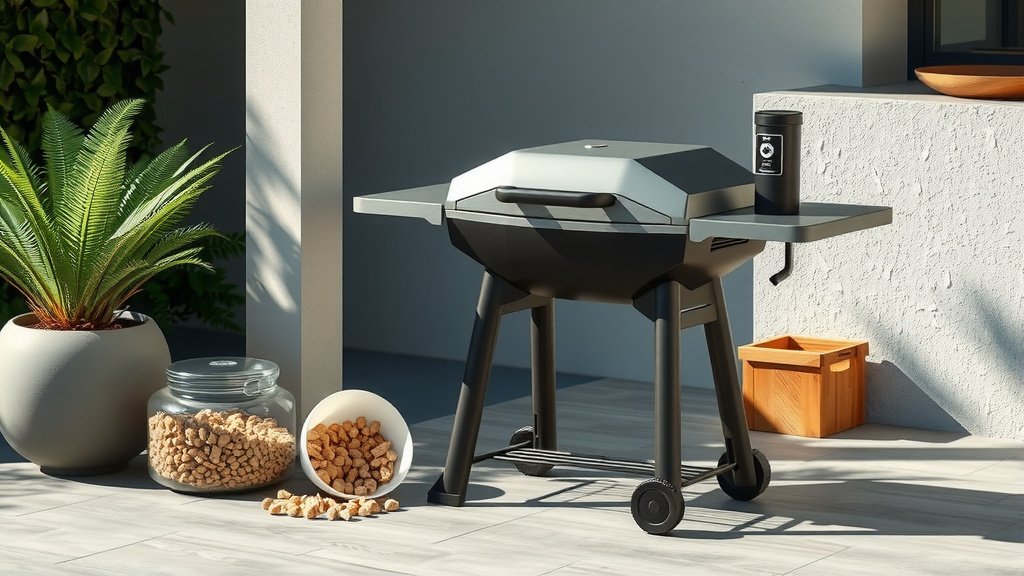
A pellet grill works by automatically feeding hardwood pellets from a hopper into a firepot, where an electric igniter starts and maintains combustion.
This automated system, controlled by a digital thermostat, delivers consistent heat and wood-fired smoke to your food, much like a convection oven with added flavor.
Here’s a quick overview of what you’ll find in this guide:
- Pellet grills operate using an electric igniter, a fan, and an auger.
- They burn compressed hardwood pellets to produce heat and real wood smoke.
- A digital controller lets you set and maintain precise temperatures, just like an oven.
- This system offers the convenience of gas with the flavor of charcoal or wood.
- You get consistent results, making it easy to smoke, grill, roast, and bake.
How A Pellet Grill Works?
A pellet grill combines the ease of a gas grill with the smoky taste of a traditional wood smoker by automating the process of burning hardwood pellets.
It’s like having a smart oven that infuses your food with incredible wood-fired flavor, all at the touch of a button.
The Core Idea: Automated Wood Fire
Imagine a smart device that manages its own fuel to cook your food. That’s essentially a pellet grill. You load in wood pellets, set your desired temperature, and the grill does the rest.
It maintains a steady heat, producing consistent smoke for delicious results every time. Many experts say this automation is what makes them so popular (AmazingRibs.com).
Key Components of Your Pellet Grill
To understand the magic, let’s look at the main parts working together. Each piece plays a vital role in creating that perfect cook.
Think of it as a well-orchestrated team, each member with a specific job.
The Hopper: Fueling Your Fire
This is where you load the wood pellets. It’s essentially a large bin on the side or back of your grill. You just pour in your favorite flavor of hardwood pellets here.
It’s important to keep the hopper filled for longer cooks, ensuring your grill never runs out of fuel mid-session.
The Auger: The Heartbeat of Control
Inside the hopper, a corkscrew-shaped rod called the auger begins its work. It slowly turns, pushing pellets from the hopper into the firepot.
This movement is precisely controlled by the grill’s computer, feeding just the right amount of fuel to maintain your set temperature.
The Firepot: Where the Magic Ignites
The firepot is a small burn chamber located directly under the cooking grates. When you turn on your grill, an electric igniter rod heats up to a very high temperature.
This rod ignites the pellets that the auger feeds into the firepot, starting the wood fire. It’s a quick and clean ignition, without the need for lighter fluid.
The Fan: Circulating Smoky Goodness
Adjacent to the firepot, an induction fan is always at work. This fan serves two main purposes. First, it feeds oxygen to the fire, keeping the pellets burning cleanly and efficiently.
Second, it circulates the heat and smoke evenly throughout the cooking chamber. This convection-like action ensures your food cooks uniformly and absorbs that wonderful smoky flavor.
The Controller: Your Grilling Brain
This is the brains of the operation, usually a digital display panel. You set your desired cooking temperature here, much like an indoor oven.
The controller continuously monitors the internal temperature of the grill and adjusts the auger speed and fan output. This keeps your grill within a few degrees of your target temperature, ensuring consistent cooking.
The Heat Deflector: Even Heat Distribution
A metal plate sits directly over the firepot. Its job is to spread the heat from the burning pellets evenly across the entire cooking chamber.
It also acts as a barrier, preventing direct flames from scorching your food and helping to create that indirect cooking environment perfect for smoking and roasting.
The Drip Tray: Keeping it Clean
Located above the heat deflector, the drip tray catches all the grease and food drippings. This helps to keep the cooking chamber clean and prevents flare-ups.
Many drip trays are angled to direct liquids into a separate grease bucket outside the grill for easy disposal.
The Step-by-Step Grilling Process
It’s a simple process once you understand the components. Here’s a quick flow of how a pellet grill works from start to finish:
| Step | Action | What Happens |
|---|---|---|
| 1 | Load Pellets | You fill the hopper with hardwood pellets. |
| 2 | Set Temp | You set your desired cooking temperature on the digital controller. |
| 3 | Ignition | The igniter rod heats up, lighting the pellets in the firepot. |
| 4 | Fuel Feed | The auger automatically feeds more pellets as needed. |
| 5 | Airflow | The fan feeds oxygen to the fire and circulates heat/smoke. |
| 6 | Temperature Control | The controller monitors temperature and adjusts auger/fan. |
Why Choose a Pellet Grill?
Many grillers find pellet grills offer an amazing balance of ease and flavor. We found that people often gravitate towards them for their user-friendliness and consistent output.
They provide a unique smoky taste that’s hard to achieve with gas, but without the constant attention charcoal grills demand.
- Effortless Temperature Control: Set it and forget it, much like an oven.
- Consistent Smoke Flavor: Real wood smoke infuses your food evenly.
- Versatile Cooking: Smoke, grill, bake, roast, braise, and sear on one unit.
- Clean Burning Fuel: Hardwood pellets produce minimal ash and a clean burn.
- Easy Cleanup: Many models are designed for straightforward grease management.
Is it Easy to Use?
That’s a common question, and the answer is usually a resounding yes! Pellet grills are designed for convenience. You don’t need to manage vents or charcoal piles.
Once you’ve done a quick initial setup, which most experts found to be straightforward, you’re ready to cook with minimal fuss.
Here’s what makes them so simple:
- Fill the hopper once for hours of cooking.
- Set the temperature on a digital screen.
- No charcoal mess or gas tanks to refill frequently.
- Automatic fuel feeding and temperature adjustments.
- Less hands-on management during long cooks.
Common Myths About Pellet Grills
You might hear a few things about pellet grills that aren’t quite accurate. One common myth is that they can’t sear well. While some older models struggled, many modern pellet grills reach high temperatures perfect for searing.
Another misconception is that they use a lot of electricity. While they require power for the igniter, auger, and fan, their electrical consumption is usually quite low once the fire is established, often comparable to a light bulb (Traeger Grills).
Conclusion
Understanding how a pellet grill works reveals a brilliant blend of technology and traditional wood-fired cooking. It’s a system designed to simplify your grilling experience, providing precise temperature control and consistent smoke.
From the hopper feeding pellets to the fan circulating flavor, each part plays a role in delivering delicious, perfectly cooked food every time. If you’re looking for ease, versatility, and incredible taste, a pellet grill might be your next favorite cooking tool.
What are wood pellets made of?
Wood pellets are typically made from compressed sawdust and wood byproducts from sawmills. They contain no binders or additives, just pure, clean hardwood, like hickory, mesquite, apple, or cherry, for distinct flavors.
Do pellet grills use a lot of electricity?
Pellet grills use electricity for the igniter, auger, and fan. The igniter uses the most power during startup, but once the fire is going, the auger and fan draw much less power, often similar to a standard light bulb, making them quite energy efficient for prolonged cooking.
Can I use any type of wood pellets in my grill?
Generally, yes, you can use any brand of food-grade hardwood pellets in your grill. However, for the best results and to prevent potential issues, it’s wise to stick with high-quality, reputable brands that are specifically designed for cooking and smoking.
How long do pellets last in a pellet grill?
Pellet consumption varies based on the grill’s temperature setting and ambient conditions. At lower smoking temperatures (around 225°F), a grill might use about 1-2 pounds of pellets per hour. At higher grilling temperatures (400°F+), it could be 2-4 pounds per hour, meaning a 20-pound bag could last anywhere from 5 to 20 hours.
Are pellet grills good for searing?
Many modern pellet grills are indeed capable of searing, often reaching temperatures of 450-500°F or even higher. Some models include a dedicated sear zone or a direct flame option to achieve that perfect crust on steaks and burgers, though some traditionalists still prefer direct flame from gas or charcoal for extreme searing.