
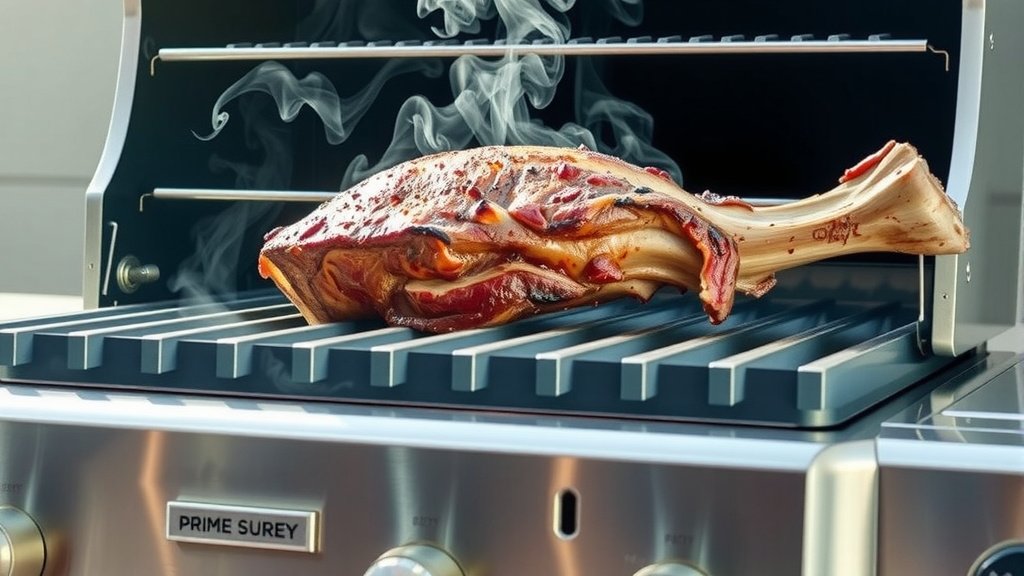
Cooking prime rib roast on a gas grill involves a two-zone cooking method: first, you sear the roast over direct high heat, then you move it to indirect low heat to slow-roast until it reaches your desired internal temperature.
Achieving a perfect prime rib requires careful temperature management, proper seasoning, and resting the meat to allow juices to redistribute, resulting in a tender, flavorful cut.
Here’s a quick overview of what you’ll learn for your gas grill prime rib:
- Choose a quality bone-in or boneless prime rib, aiming for even thickness.
- Season generously with salt, pepper, garlic, and herbs several hours ahead.
- Set up your gas grill for two-zone cooking: one side high heat, the other low or off.
- Sear the roast on all sides over direct high heat to create a beautiful crust.
- Move the roast to indirect heat, closing the lid, and cook slowly until internal temperature reaches your target.
- Rest the prime rib properly after cooking for maximum juiciness before slicing.
How To Cook Prime Rib Roast On Gas Grill?
You can absolutely cook a show-stopping prime rib on your gas grill. It’s all about controlling your heat zones and having a good meat thermometer.
Why Choose Your Gas Grill for Prime Rib?
Using a gas grill offers fantastic control over temperature, making it ideal for a large cut like prime rib. You get that lovely smoky essence without needing a full smoker.
Many home cooks find the gas grill a convenient and reliable way to cook larger roasts. Plus, it frees up your oven for other side dishes.
Selecting the Perfect Prime Rib
The journey to a perfect prime rib starts with a great cut of meat. Don’t rush this step.
Bone-In vs. Boneless
A bone-in prime rib often cooks more evenly and adds extra flavor. The bones provide natural insulation, protecting the meat.
Boneless cuts are easier to carve but may cook slightly faster. We found that bone-in roasts often deliver a richer taste (USDA).
Quality Matters
Look for well-marbled beef, meaning fine flecks of fat distributed throughout the meat. This marbling melts during cooking, keeping the meat moist and flavorful.
Choose a roast that is evenly thick across its length. This helps ensure even cooking.
Essential Tools and Ingredients Checklist
Before you begin, gather your supplies. Being prepared makes the process much smoother.
- Prime Rib Roast (2-7 pounds)
- Coarse salt, fresh black pepper
- Garlic powder or minced fresh garlic
- Fresh herbs (rosemary, thyme)
- Olive oil or neutral cooking oil
- Heavy-duty aluminum foil
- Large cutting board with a juice channel
- Sharp carving knife
- Instant-read meat thermometer (essential!)
- Heat-resistant gloves
- Gas grill with full propane tank
Prepping Your Prime Rib Roast
Proper preparation ensures maximum flavor and a tender roast. This isn’t a step you want to skip.
Seasoning Secrets
Generously season your prime rib. Don’t be shy with the salt; it helps create a fantastic crust.
Mix coarse salt, fresh cracked black pepper, garlic powder, and your favorite herbs. Many experts say to rub this mixture all over the roast.
For best results, season the roast at least 6 hours, or even a full day, before cooking. This dry brining helps tenderize the meat (Cook’s Illustrated).
Bring it to Room Temperature
Take the prime rib out of the fridge at least two hours before grilling. This allows it to come closer to room temperature.
A roast that starts at room temperature cooks more evenly. Cold spots can make parts of your roast undercooked.
Setting Up Your Gas Grill for Success
Your grill setup is paramount for prime rib. You need two distinct heat zones.
Two-Zone Cooking Setup
Turn one side of your gas grill to high heat, creating a direct cooking zone. Leave the other burners off, creating an indirect zone.
This method lets you sear quickly then roast slowly. It’s the secret to a beautiful crust and tender interior.
Preheating is Key
Preheat your grill to high heat on the direct side for about 10-15 minutes. You want it screaming hot for the initial sear.
A hot grill ensures a quick, strong sear. This locks in juices and creates that irresistible savory crust.
The Grilling Process: Sear and Slow Roast
Here’s where the magic happens. It’s a two-stage process for incredible results.
The Searing Stage
Place the prime rib directly over the high heat burner. Sear all sides for 2-3 minutes per side until a nice, brown crust forms.
Don’t crowd the grill; give the roast plenty of space. This initial sear creates a rich, flavorful exterior.
Indirect Roasting
Once seared, move the prime rib to the indirect side of the grill. Turn off all burners except for the one keeping the indirect side warm.
Maintain the grill temperature between 225°F and 250°F. Close the lid and let it roast slowly until it reaches your desired internal temperature.
Cooking time will vary based on the size of your roast and desired doneness. A 4-pound roast might take 1.5 to 2.5 hours.
Use your instant-read thermometer often, especially towards the end. Insert it into the thickest part of the meat, avoiding any bones.
Target Internal Temperatures
Knowing your target temperature is essential for perfect doneness. Remember, the temperature will rise slightly during resting.
| Doneness Level | Grill Temperature Target | Resting Temperature |
|---|---|---|
| Rare | 120-125°F | 125-130°F |
| Medium-Rare | 125-130°F | 130-135°F |
| Medium | 130-135°F | 135-140°F |
| Medium-Well | 135-140°F | 140-145°F |
Resting Your Prime Rib
This step is non-negotiable! Remove the roast from the grill when it’s about 5 degrees below your target temperature.
Tent it loosely with foil and let it rest on a cutting board for 20-30 minutes. This resting period allows the juices to redistribute throughout the meat.
Cutting too early means all those delicious juices will run out. A properly rested roast means a moist and tender slice every time.
Slicing for Perfection
After resting, carve your prime rib against the grain for maximum tenderness. Use a sharp carving knife for clean cuts.
If you have a bone-in roast, slice the meat off the bones first. Then slice the meat into your desired thickness.
Conclusion
Cooking a prime rib roast on your gas grill might seem daunting, but it’s completely achievable with the right approach. By mastering the two-zone cooking method, carefully monitoring internal temperatures, and allowing for proper resting, you can create an incredibly tender and flavorful roast. Your gas grill offers precise control, making it an excellent tool for this impressive meal. Get ready to impress your guests with a beautifully cooked prime rib, right from your own backyard.
What kind of prime rib roast should I buy for grilling?
For grilling, choose a high-quality prime rib roast with good marbling. A bone-in roast typically offers more flavor and cooks more evenly, but a boneless cut is easier to carve. Aim for a roast that has an even thickness for consistent results.
How far in advance should I season my prime rib?
It’s best to season your prime rib roast at least 6 hours, and ideally 24 hours, before grilling. This allows the salt to penetrate the meat, helping to tenderize it and enhance its flavor through a process called dry brining.
Can I use wood chips for smoke flavor on a gas grill?
Yes, you can add a smoky flavor to your prime rib on a gas grill. Place dry wood chips (like hickory or oak) in a foil packet with a few holes, or use a smoker box. Position this packet directly over a burner on the direct heat side of your grill while the roast cooks indirectly.
What if my prime rib is cooking too fast or too slow?
If your prime rib is cooking too fast, reduce the heat on your active burner to lower the overall grill temperature. If it’s cooking too slow, slightly increase the heat on your active burner. Always monitor with a reliable meat thermometer and adjust as needed.
How do I prevent my prime rib from drying out on the grill?
To prevent drying, ensure you cook the prime rib to the correct internal temperature for your desired doneness and avoid overcooking. Always use a two-zone setup for indirect roasting, which helps retain moisture. Most importantly, always rest the roast for 20-30 minutes after grilling to allow juices to redistribute.
