
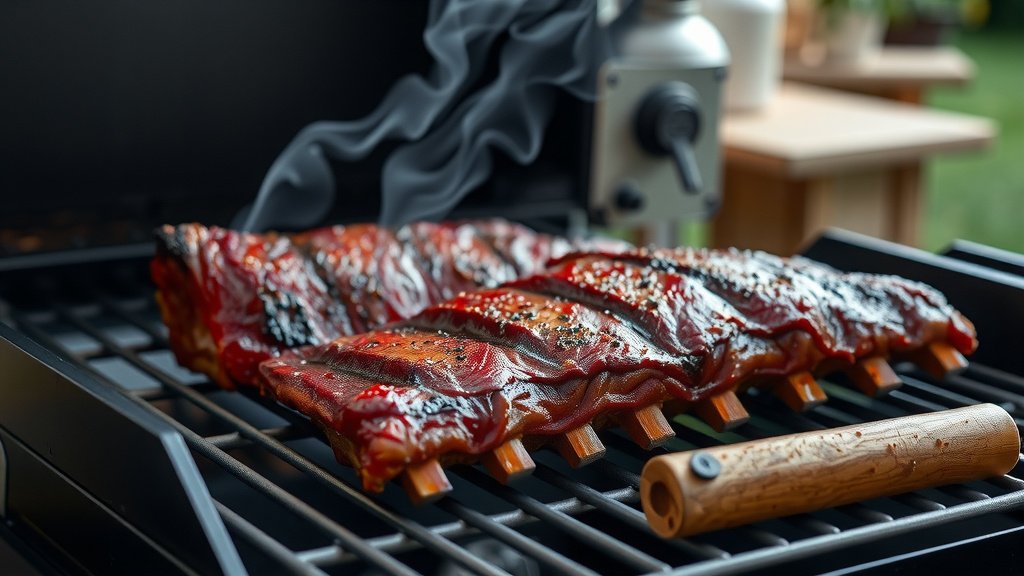
Cooking ribs on a pellet grill at 300 degrees Fahrenheit typically takes around 3 to 4 hours for spare ribs and 2 to 3 hours for baby back ribs.
This timing helps you achieve tender, flavorful ribs while maintaining a nice bark, especially when you follow key steps like wrapping.
- TL;DR:
- Cooking ribs at 300 degrees Fahrenheit on a pellet grill offers a slightly faster cook time than lower temperatures.
- Expect baby back ribs to cook in 2-3 hours and spare ribs in 3-4 hours, though exact times can differ.
- Wrapping your ribs in foil or butcher paper is a popular technique to keep them moist and tender.
- Look for a bone pull-back of about half an inch and a bend test for perfect tenderness.
- Always check for an internal temperature around 203-205°F for fall-off-the-bone results.
How Long To Cook Ribs On Pellet Grill At 300?
You can expect spare ribs to cook in about 3 to 4 hours and baby back ribs in 2 to 3 hours when your pellet grill is set to 300°F. This temperature offers a great balance of speed and flavor for many backyard chefs.
Why 300°F for Ribs?
Setting your pellet grill to 300°F offers a slightly quicker cook compared to the traditional 225-250°F range. This temperature helps break down the connective tissues in the meat efficiently. We found this temperature helps you achieve tender ribs without spending your entire day waiting by the smoker.
The Science of Tenderness
At 300°F, the collagen within the ribs converts into gelatin more quickly. This process is what gives your ribs that signature fall-off-the-bone texture you crave. It’s all about heat and time working together.
Preparing Your Ribs for the Pellet Grill
Great ribs start with great preparation. Don’t skip these simple steps if you want to achieve amazing results from your pellet grill.
Trim and Clean Your Ribs
First, inspect your ribs. You might need to trim off any really thick fat pockets or loose bits of meat. Removing the membrane from the back of the ribs is also important. This thin, silver-skin layer can make ribs tough and stop your rub from really soaking in.
Apply Your Favorite Rub
Once trimmed, generously apply your chosen dry rub. Don’t be shy here! A good rub brings so much flavor to your ribs. We found that letting the rub sit on the ribs for at least 30 minutes, or even a few hours in the fridge, can deepen the taste.
The 3-2-1 Method (Modified for 300°F)
The 3-2-1 method is a famous technique for smoking ribs. When cooking at 300°F, we’ll make a few adjustments to this classic approach to match the higher heat.
Phase 1: Smoke (1.5-2 hours)
Place your prepared ribs directly on the grill grates. Keep them bone-side down. This initial phase lets the smoke penetrate the meat and develop that beautiful bark. For baby back ribs, aim for 1.5 hours; for spare ribs, go for 2 hours.
Phase 2: Wrap (1-1.5 hours)
After the initial smoke, it’s time to wrap them up. Use heavy-duty aluminum foil or butcher paper. You can add a splash of apple juice, cider vinegar, or even a pat of butter inside the wrap for extra moisture and flavor. This helps tenderize them quickly.
Phase 3: Unwrapped (30-45 minutes)
Finally, unwrap your ribs and place them back on the grill. This last phase helps firm up the bark and lets you apply your favorite BBQ sauce if you like. Watch them closely during this stage to prevent them from drying out or burning. This is where magic happens with the sauce.
Key Timings and Internal Temperatures
Knowing when your ribs are truly ready is more important than just watching the clock. We found paying attention to both time and temperature is the best way to go.
| Rib Type | Approximate Cook Time (300°F) | Internal Temp for Tenderness |
|---|---|---|
| Baby Back Ribs | 2-3 hours | 203-205°F |
| Spare Ribs | 3-4 hours | 203-205°F |
| St. Louis Style Ribs | 3-4 hours | 203-205°F |
How to Check for Doneness
A good instant-read thermometer is your best friend here. Insert it between the bones, avoiding direct contact with bone. You’re aiming for an internal temperature of around 203-205°F. Many experts say this temperature range helps achieve maximum tenderness.
The Bend Test
Another reliable test is the “bend test.” Pick up a rack of ribs with tongs in the middle. If they bend easily and the meat starts to crack, they are likely ready. The bones should look like they are about to pull away from the meat. This shows excellent tenderness.
Resting Your Ribs for Perfection
Just like a steak, ribs need to rest after cooking. This step is often overlooked but it is super important. Don’t rush this process.
Why Resting Matters
When you remove ribs from the grill, the internal temperature continues to rise slightly (carryover cooking). Resting allows the juices within the meat to redistribute. This results in much moister and more flavorful ribs. We found resting them loosely tented in foil for 15-20 minutes can make a huge difference.
Troubleshooting Common Rib Issues
Even experienced grillers run into problems sometimes. Don’t worry, most issues have easy solutions.
Ribs Are Too Dry
If your ribs are dry, you might have cooked them too long or skipped the wrapping phase. Next time, be sure to wrap them tightly during the middle cooking stage. Adding some liquid inside the wrap also adds great moisture.
Ribs Are Not Tender Enough
If your ribs are still tough, they simply need more time on the grill. Tenderness comes from breaking down that collagen. Lower the temperature slightly and give them another 30-60 minutes. Research often connects patience with perfectly tender results.
Tips for Using Your Pellet Grill Effectively
Pellet grills make smoking ribs straightforward, but a few tips can make your experience even better. They are fantastic tools for consistent heat control.
- Keep Your Hopper Full: Running out of pellets mid-cook is a real bummer. Always ensure you have enough for the whole process.
- Clean Your Grill Grates: Start with clean grates to prevent sticking and ensure even heat transfer. This is a basic but often forgotten step.
- Monitor Temperature: While your grill maintains temperature, an external probe can verify accuracy. This helps you stay in control.
- Use a Water Pan: A small pan of water inside the grill can help maintain humidity. This prevents the ribs from drying out too quickly, especially in dry climates.
Final Checklist Before You Start Grilling
Before you fire up that pellet grill, take a quick look at this checklist. Being prepared helps you have a smooth and enjoyable cooking session, leading to delicious results.
- Ribs trimmed and membrane removed?
- Rub applied and given time to set?
- Pellet hopper full of your favorite wood pellets?
- Grill grates clean and ready?
- Instant-read thermometer handy?
- Foil or butcher paper ready for wrapping?
Conclusion
Cooking ribs on a pellet grill at 300°F is a fantastic way to achieve tender, smoky results in a reasonable amount of time. Remember, the exact cook time will always depend on your specific ribs and grill, but following the general guidelines of 3-4 hours for spare ribs and 2-3 hours for baby back ribs, combined with wrapping and diligent temperature checks, will lead you to success. Enjoy the process, and get ready to impress your friends and family with some truly delicious, fall-off-the-bone ribs!
What kind of pellets are best for ribs?
For ribs, many pitmasters recommend fruitwoods like apple or cherry, or milder hardwoods like hickory or oak. These pellets offer a balanced smoke flavor that pairs wonderfully with pork, enhancing the meat without overpowering it.
Can I cook ribs at 300°F without wrapping them?
You certainly can cook ribs at 300°F without wrapping, but they may end up drier and less tender. Wrapping helps trap moisture and speed up the tenderizing process. If you choose not to wrap, consider spritzing your ribs with apple cider vinegar or water every hour to keep them moist.
How do I prevent my ribs from drying out at 300°F?
To prevent dry ribs, the most effective method is wrapping them in foil or butcher paper during the middle phase of cooking. You can also place a water pan inside your pellet grill to add humidity to the cooking environment. Avoid overcooking past the target internal temperature.
Is 300°F too hot for smoking ribs?
While 225-250°F is a common low-and-slow temperature, 300°F is not too hot for ribs, especially on a pellet grill. It’s often called a “hot and fast” method for smoking. It still allows for good smoke flavor and renders the fat well, just in a shorter timeframe than traditional low and slow.
My ribs look done but aren’t tender. What’s wrong?
If your ribs look cooked but still aren’t tender, they likely haven’t reached the correct internal temperature for collagen breakdown. Continue cooking them, perhaps wrapped, until they hit the 203-205°F range and pass the bend test. Sometimes, good things just take a little more time.
